
Last updated November 21, 2026
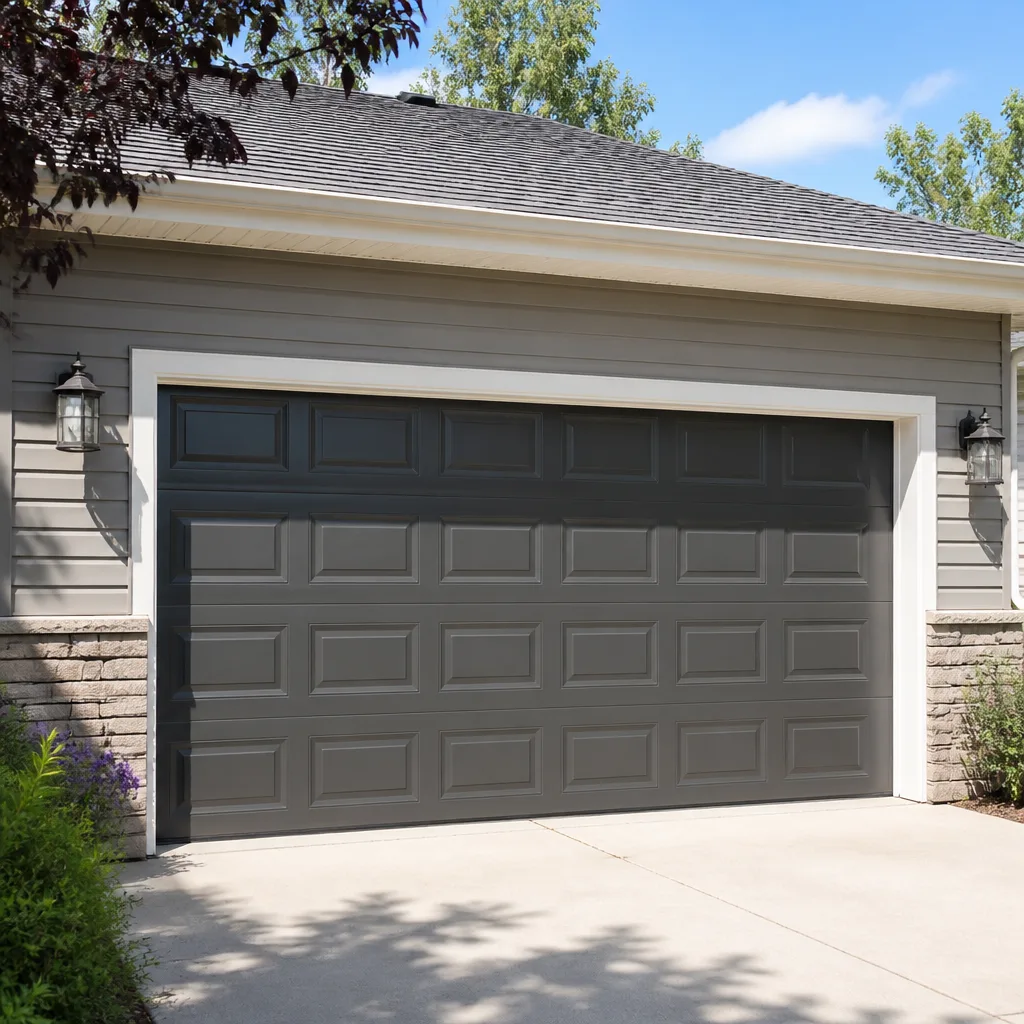 Raised-panel steel
 Carriage house
 Modern flush
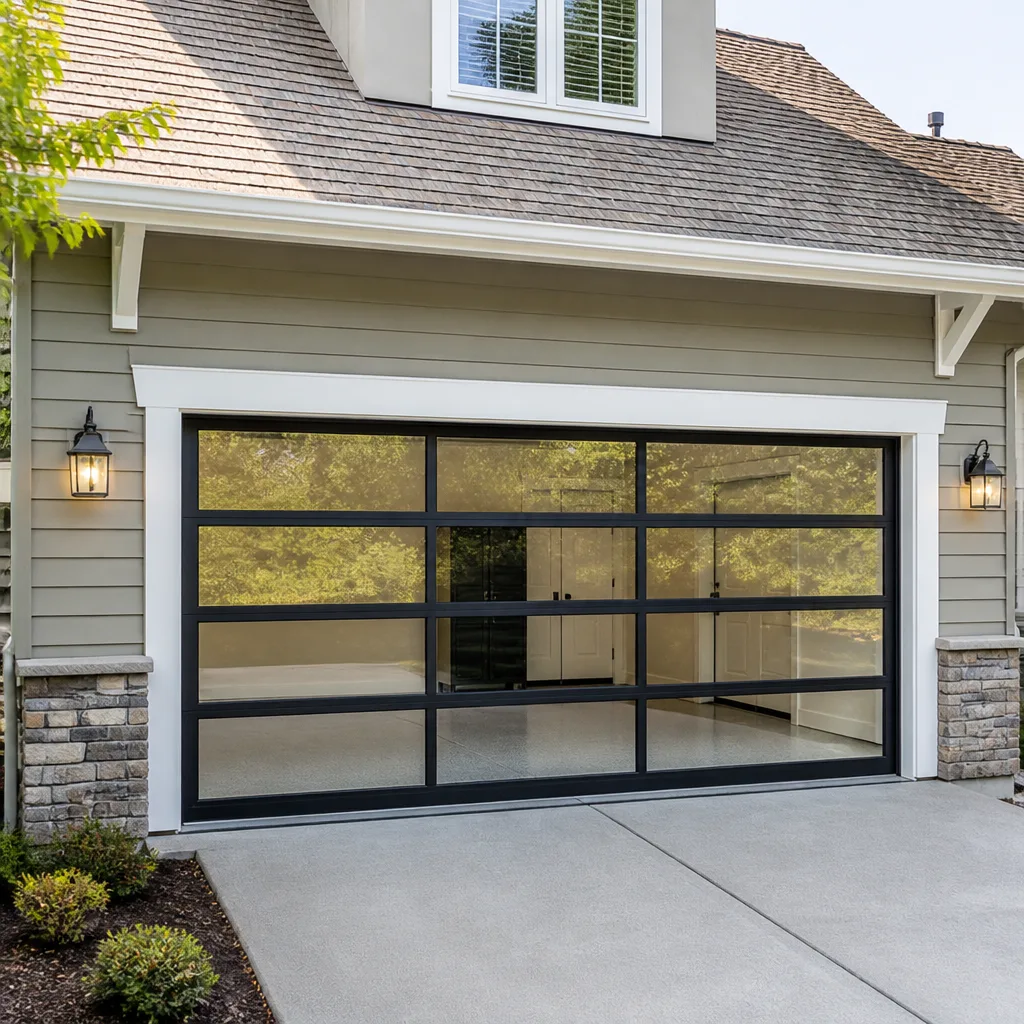 Full-view glass
 LiftMaster openers
 Chamberlain openers
Full 25-point door and opener safety check with every visit - springs, cables, rollers, tracks, and your LiftMaster or Chamberlain opener included
You get a price before we start. It does not change when the pro arrives.
Get your free estimateSeasonal Garage Door Care for Spring Branch: Year-Round Homeowner’s Guide
Most “winterize your garage door” advice was written for Minnesota. In Spring Branch, the enemy isn’t freezing. It’s the long stretch of 90°F-plus heat that pushes opener logic boards toward failure and swells wooden door panels from June through September, followed by a storm season that tests every hinge, roller, and anchor bolt on the door. Generic four-season checklists miss all of this. They tell you to clear snow and check for ice dams when what you actually need is a summer heat protocol, a pre-hurricane hardware check, and a lubrication reset for the brief cool months. This guide maps maintenance to the real Houston-area climate calendar, one month at a time, for the specific weather Spring Branch actually gets.
Quick Answer
Garage door care in Spring Branch follows the Gulf Coast climate, not the four-season model: check hardware and test the manual release before storm season in May, watch for heat-related opener and panel problems through summer, inspect for hidden damage after any major wind or rain event, and re-lubricate in late fall before cooler temperatures set in. Year-round, keep the door balanced, the tracks clean, and the safety reverse working. Following this calendar catches small problems before they strand your car.
Styles & brands we work with
- Raised-panel steel
- Carriage house
- Modern flush
- Full-view glass
- LiftMaster openers
- Chamberlain openers
Table of Contents
- Why Spring Branch Garage Doors Age Differently
- Pre-Hurricane Season Prep: The May Checklist
- Summer Heat Protocol: June Through September
- Post-Storm Inspection: What to Check After a Big Rain or Wind Event
- Cool-Weather Lubrication Reset: November Through February
- The Month-by-Month Task Calendar
- The Year-Round Basics That Never Change
- When to Call a Professional
Why Spring Branch Garage Doors Age Differently
Spring Branch doesn’t have four distinct seasons. It has a long hot stretch, a humid shoulder season, storm season, and a short cool window. Each phase works on the door in a different way, and most national maintenance content ignores the way the Houston-area climate calendar actually runs.
Here’s what that climate does to a garage door over a year:
- Sustained heat expands metal tracks and can soften or warp wooden panels. Rolling resistance goes up, and the opener motor works harder than its rating assumes.
- Humidity feeds rust on hinges, springs, and any bare steel. In our experience, hardware that would last years in a dry climate can start pitting here within one humid season if it’s never greased.
- Storm season brings wind-driven rain, flying debris, and pressure changes that find every loose anchor. A door that works fine on a calm day can still flex and rack in a gust if its hardware has worked loose.
- The brief cool stretch contracts metal and thickens grease that was fine in July. Bearings that spun free in summer suddenly feel stiff.
None of this means the door is failing. It means the door needs different attention at different points on the calendar. A door in Spring Branch that gets a springtime hardware check and a fall lubrication reset handles all four phases without drama. One that only gets looked at when it breaks tends to fail in July, which is the worst time to be without a car in the driveway. We work on the brand already on your garage, from LiftMaster and Chamberlain openers to Clopay and Amarr doors, so the advice below applies whether you’re maintaining a modern insulated door or an older panel unit.
Pre-Hurricane Season Prep: The May Checklist
Storm prep is less about the door itself and more about every piece that holds it in its tracks. Furniture, not the motor. A door can cycle perfectly on a calm day and still be coming apart at the attachments. May is the right month to fix that, before anything forms in the Gulf.
- Torque-check the track anchor bolts. Loose bolts let the track shift in wind. Use a socket and check every bracket along both vertical and horizontal tracks for snugness. Don’t overtighten into stripped threads; tighten, don’t crank.
- Inspect the hinges and rollers. Cracked hinges, worn roller bearings, or a roller that’s jumped its track are all storm liabilities. Replace anything worn, don’t wait.
- Test the manual release cord. Pull the red handle with the door closed, then try the door by hand. It should lift and lower smoothly. If it sticks or the cord won’t engage, the door can’t be freed by hand when the power is out, which is the whole point of the release.
- Check the door’s alignment and balance. Open the door by hand halfway and let go. It should hold its position. A door that drifts down is spring-tired and will work harder in storm conditions.
- Clear the weather seal. Look for gaps at the bottom and sides. A worn seal lets wind-driven rain in and drives the door against its stops.
- Trim back vegetation and clear debris from the roof line above the door. Branches that whip in a gust are how debris ends up under the door and in the tracks.
One caution about wind rating. A door that “works fine” may still not meet wind load specs for storm conditions if its panels, anchors, or hardware are worn or under-specified. We don’t certify or re-engineer a door for wind rating, but if your door was installed decades ago, the hardware may be past its design life. If you want certainty on wind load, ask your city’s building department what the current requirements are for your address, and have a specialist inspect the door’s condition against them.
Summer Heat Protocol: June Through September
This is peak season for opener failures in Spring Branch, and heat is the reason. Opener logic boards and capacitors live in a garage that can hit well above the outdoor temperature, and sustained 90°F-plus weather pushes older components past their comfort zone. Motors work harder when the door is stiffer, and heat makes the door stiffer.
Watch for these signals through the summer months:
- The opener runs but the door barely moves, or stops halfway. That’s a sign the drive train is straining. If it’s a chain or belt drive, the door may be binding in its tracks as the metal expands.
- The opener housing feels hot to the touch after a cycle. A little warmth is normal. Very hot, especially paired with clicking or a refusal to start, points to a struggling component.
- The door is harder to lift by hand than it was in spring. Thermal expansion can close tolerances and bind rollers. Catch this before it strips a drive gear, which turns a simple adjustment into garage door opener repair.
- The safety reverse stops working. Heat doesn’t usually cause this directly, but the same summer humidity and dust that build up in the photo eyes do. Clean the lenses and re-test monthly.
What you can do yourself in summer: keep the tracks clean and free of grit (dust and pollen build up fast in Spring Branch), wipe the photo-eye lenses, and listen to the opener at the start of each cycle. If you hear a grinding or rattling that wasn’t there in spring, that’s a mechanical problem forming. On modern Wi-Fi-enabled openers from LiftMaster or Chamberlain, check the app’s cycle count and fault logs. Those give you early warning before the door stops mid-cycle.
What you shouldn’t do in summer: keep cycling a door that binds, or force the opener to push through resistance. Straining a motor in peak heat is how a cheap adjustment turns into a garage door repair call.
Post-Storm Inspection: What to Check After a Big Rain or Wind Event
After any major rain or wind event in the Houston area, do a walkaround before the door is used. The most common post-storm failures aren’t the doors that snapped in the storm. They’re the ones that took a glancing hit, looked fine, and fell apart weeks later when the hidden damage finally let go.
Run through this inspection in order:
- Look at the tracks for bends or misalignment. A track that’s slightly out of line, or bent inward where debris struck it, will catch a roller. The door may still open and close for a while, but the roller grinds against the metal every cycle.
- Check the bottom seal for grit and debris. Small stones and twigs caught under the seal can cause the door to reverse, or worse, wear the seal and the threshold.
- Test the balance by hand. Disengage the opener with the manual release and lift the door halfway. If it feels heavier or drifts, the springs may have taken a hit, even if they didn’t snap.
- Inspect the hinges and the curtain for dents and creases. A panel that’s creased from impact can be out of square with the panel next to it, which stresses the hinges every time the door moves.
- Look for water intrusion at the weather seal and the framing. If water got past the seal, the wood behind it can swell, and the door stops closing flush.
- Run the opener and watch the whole cycle. Any jerk, hesitation, or unusual noise is a cue to stop and have it checked before the next cycle makes it worse.
Here’s what we’ve seen in Spring Branch after storm events: a door that passed a casual look test with a bent track still “worked” for a few weeks, then started catching a roller and eventually stopped. The problem was easy to fix the day after the storm and much more involved by the time it progressed. If your door took a hit, don’t assume the absence of a visible dent means everything’s fine.
Cool-Weather Lubrication Reset: November Through February
Lubrication isn’t a once-and-done job. The grease you applied in July was chosen for a hot garage and it felt thin in the heat. As temperatures drop in late fall, that same grease thickens, and bearings that spun free in summer start to drag. The rollers, hinges, and spring coils need a product that stays supple when the mercury dips, not one that turns into paste.
Here’s the reset routine for the cool stretch:
- Use a garage-door-specific lubricant or a lithium grease rated for the temperature range you’ll actually see. Avoid heavy automotive grease, which is exactly what thickens too much in cooler weather.
- Apply to the hinges, rollers, torsion spring coils (for torsion setups), and the bearing plates. A few drops per hinge and a light coat on the spring coils. Don’t over-apply; excess grease attracts grit from the Spring Branch air and turns into a grinding paste.
- Wipe the tracks clean, then apply a thin film of lubricant. Tracks themselves don’t need heavy grease, but a light coat keeps rollers moving smoothly through the temperature shift.
- Cycle the door slowly by hand to work the lubricant in. Then cycle it with the opener a few times and listen for grinding or squeaks that suggest a bearing or roller is worn, not just dry.
- Check the spring coils for heavy rust. Humidity and the cool-weather condensation window are hard on bare steel. Rust on the coils is a cue to have the springs inspected before they fail.
One warning about the springs: the torsion springs on most doors are under extremely high tension, and adjusting or replacing them is a genuinely dangerous job. Never attempt to loosen, adjust, or lubricate a torsion spring by hand while it’s under load. That’s work for trained technicians, and it’s the reason spring repair is its own specialty rather than a general handyman task.
The Month-by-Month Task Calendar
Here’s the Spring Branch-specific calendar, built around the climate phase that actually matters in each month rather than the generic national template. Treat it as a rough guide; a very old door or a door that’s had a previous failure may need checks more often.
- January: Finish the fall lubrication if you didn’t. Check spring coils for rust. Test the safety reverse.
- February: Inspect the weather seal for cracks and gaps after the cool stretch. Clean the tracks.
- March: Start listening for any new noise from the opener. Cycle the door and check balance by hand.
- April: Deep-clean the tracks and rollers. Test the manual release. Note any sluggishness building before summer heat.
- May: The pre-hurricane hardware check: anchor bolts, hinges, rollers, weather seal, manual release, and vegetation clearance.
- June: Summer heat protocol begins. Clean the photo eyes. Watch the opener for strain. Keep the tracks clean monthly.
- July: The hottest month. Minimize unnecessary cycles if the door is binding. If the opener is older, listen closely for grinding.
- August: Continue the heat protocol. Check the door’s balance by hand again; the heat has been on it for months.
- September: Late-season heat check. Watch for thermal binding in older doors with tight tolerances.
- October: Post-storm-season inspection. Check for hidden track damage and creased panels. Clean out the tracks.
- November: Cool-weather lubrication reset. Use the right viscosity product and apply it to hinges, rollers, springs, and bearings.
- December: Recheck the safety reverse, weather seal, and spring coils for rust. Cycle the door slowly and listen.
Two jobs on this calendar deserve their own specialist call regardless of month: the spring repair or replacement (never a DIY project on torsion springs) and the opener logic board, if the opener is failing. When you’re ready to replace an aging door rather than repair it, garage door installation is a proper scheduled project rather than a maintenance task, and it’s worth getting a written measurement and price rather than trying to fit a new door into the old hardware.
The Year-Round Basics That Never Change
Some checks apply every month in Spring Branch, regardless of what the calendar says. They’re the baseline that keeps the door safe and makes the seasonal work worthwhile.
- Balance test. Disengage the opener, lift the door to halfway, and let go. A balanced door holds. One that drifts points to tired springs.
- Safety reverse test. Place a small object in the door’s path and run the close cycle. The door should reverse on contact. If it doesn’t, stop using the opener until it’s inspected.
- Photo eye check. Wipe the lenses. In a humid climate, dust and moisture collect quickly.
- Track cleanliness. Sweep or vacuum the tracks monthly, especially after windy periods when grit and pollen blow in.
- Visual inspection of the hinges, rollers, cables, and spring coils. Anything that’s cracked, frayed, or pitted is a candidate for replacement before it becomes a failure.
These are the checks a homeowner can safely run. What you should never do yourself: touch a torsion spring under load, try to rewind a cable drum, or force a door that won’t move by hand. Those are exactly the jobs where a specialist’s experience matters most. Our technicians have up to 12 years of experience with the most commonly installed residential brands, and the difference between a safe fix and an injury here is mostly in knowing where not to put your hands.
Common Mistakes to Avoid
- Assuming “it works” means “it’s fine.” A door that cycles smoothly on a calm day can still have working-loose anchor bolts and a failing hinge. The pre-hurricane check in May exists precisely because function doesn’t prove structural condition.
- Using the wrong lubricant. Heavy automotive grease applied in July can thicken and drag in cooler months. Use a product rated for the temperatures you actually see, and apply it sparingly.
- Skipping the post-storm inspection. A bent track or a creased panel often “works” for weeks before it fails. Look straight after the storm, not when the door stops.
- Cycling a binding door in peak summer heat. Straining the opener against resistance is what turns an adjustment into a drive-gear or logic-board replacement, especially in July and August.
- Neglecting the weather seal. A worn seal lets wind-driven rain in and lets the door slam the threshold on every cycle. It’s cheap to replace and easy to overlook.
- Attempting torsion spring work yourself. The springs are under very high tension and can release violently. This is a trained-technician job, and it’s the biggest safety mistake in the list.
- Running the door after an impact without checking the manual release. If the door is jammed and the release won’t engage, forcing the opener can damage the assembly and create a bigger repair.
See the difference
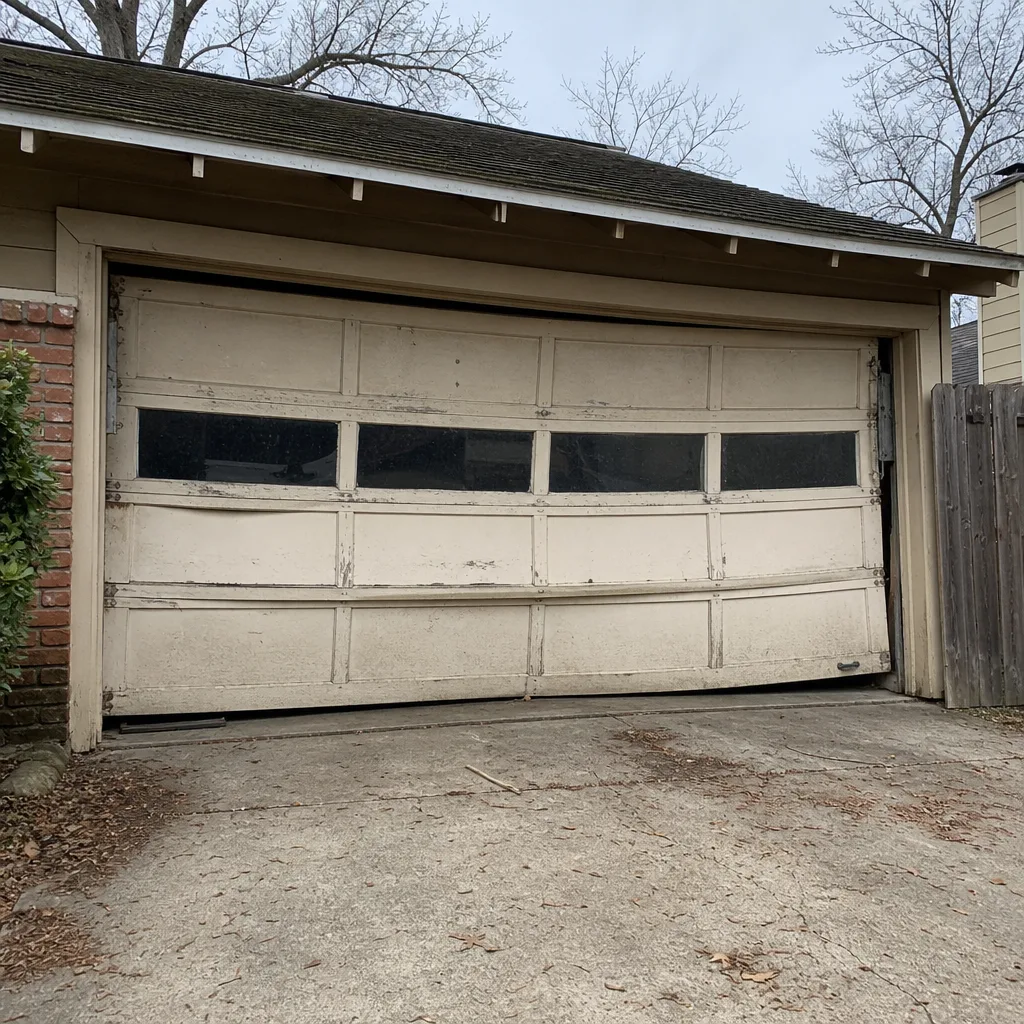 Before
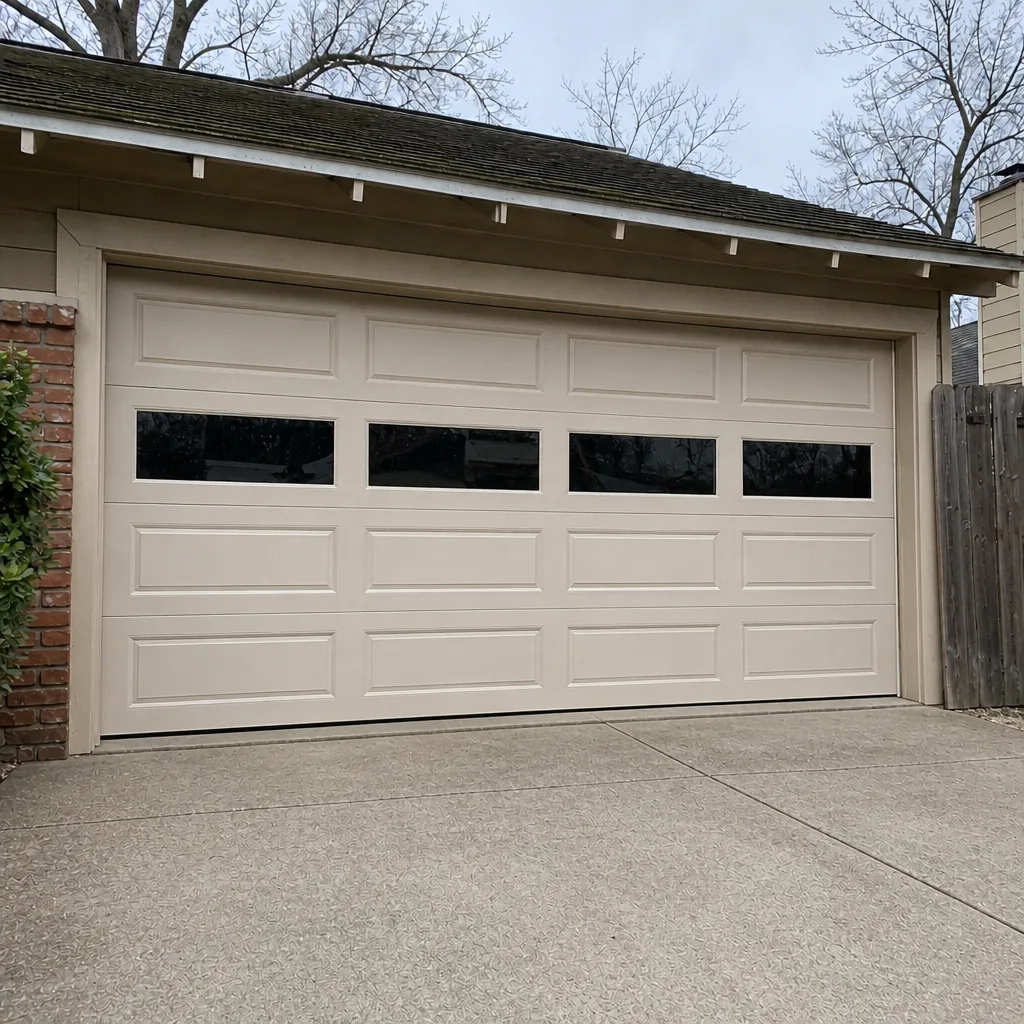 After
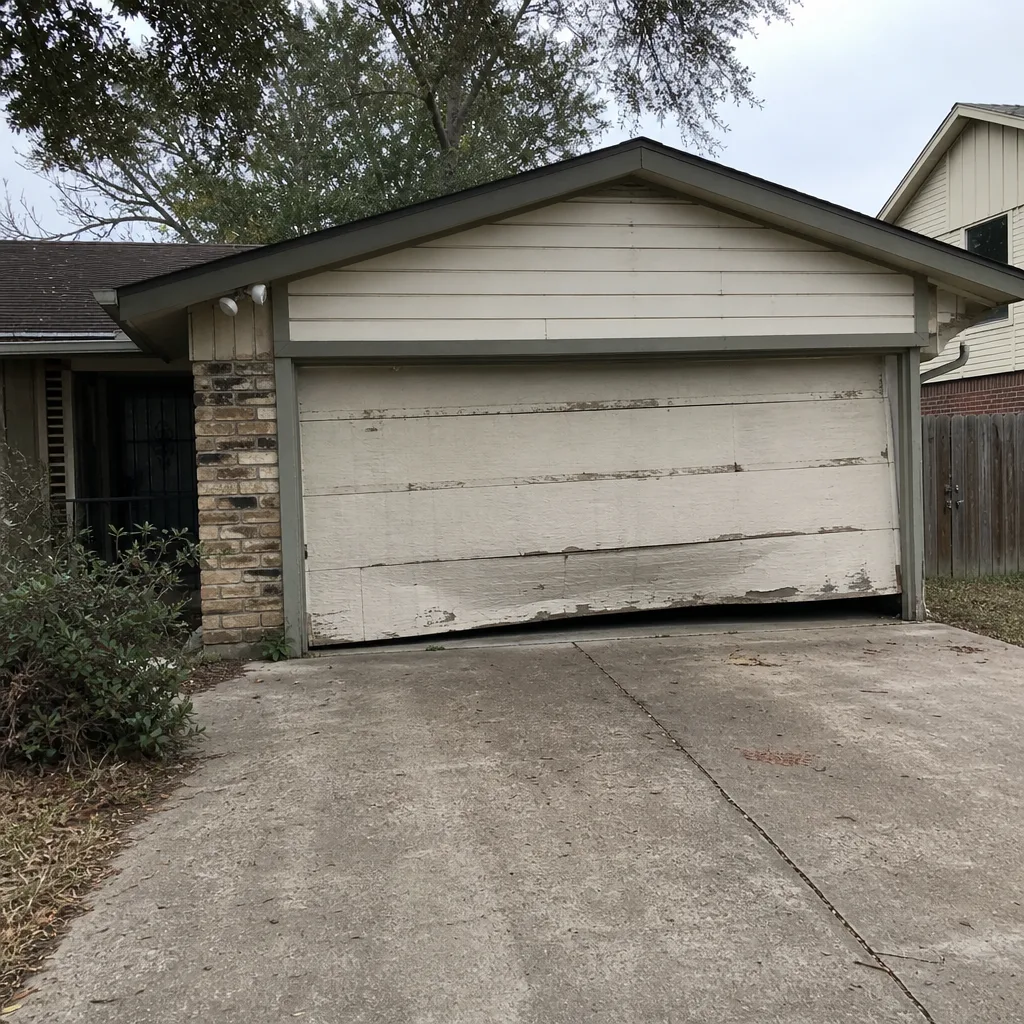 Before
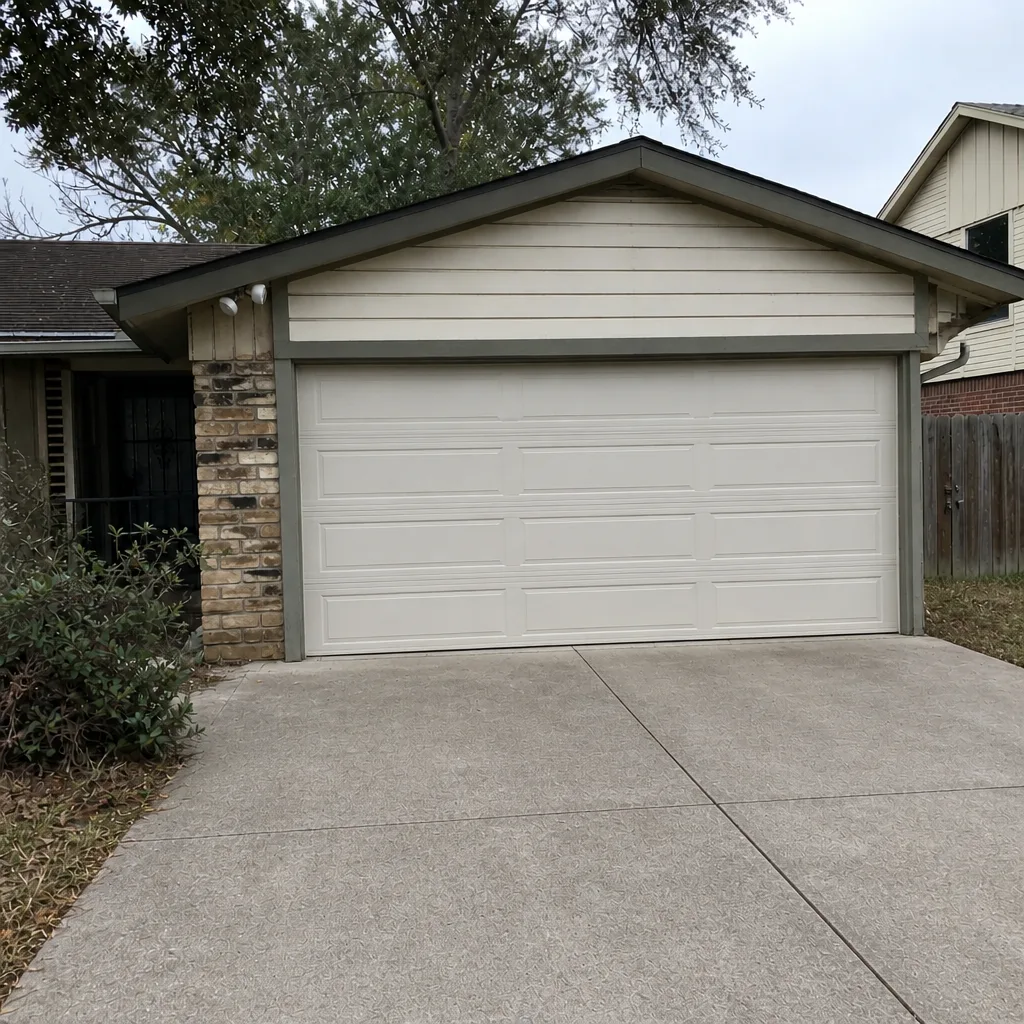 After
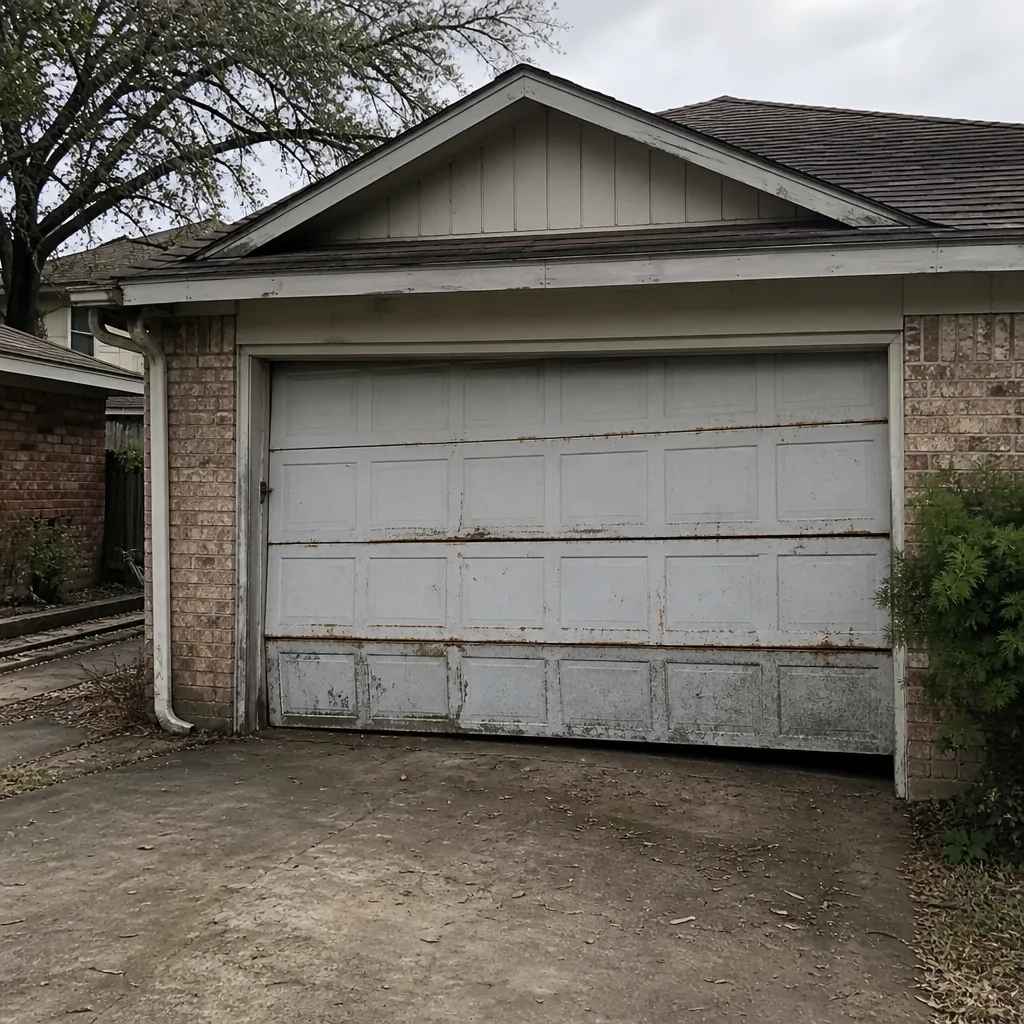 Before
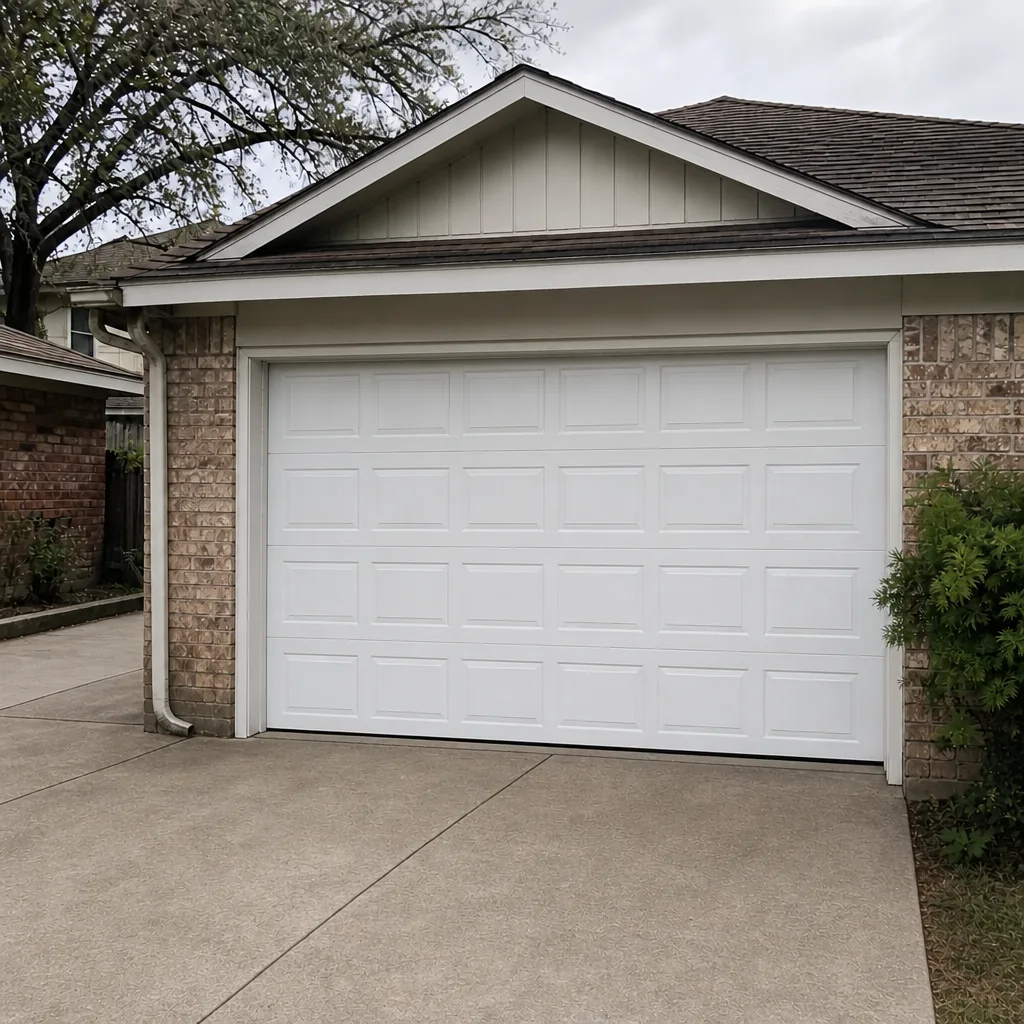 After
When to Call a Professional
Some jobs in this guide are safe to do yourself, and some are not. Call a professional when the door won’t balance by hand, when a torsion spring is broken or visibly rusted, when the opener grinds or stops mid-cycle, when a track is bent or misaligned, or when a post-storm inspection finds hidden damage you can’t safely fix. Also call if the safety reverse fails, if the manual release won’t engage, or if the door has taken a visible impact. Spring Branch Garage Door Repair offers free estimates in Spring Branch, and the price is quoted and agreed before any work starts. Call (844) 660-0146 for an exact quote. Estimates are free.
Frequently Asked Questions
Once a year is the baseline for a homeowner-maintained door, with seasonal spot checks in between. The calendar above splits the work into spring and fall resets plus a pre-hurricane check, which fits the local climate better than a single annual tune-up. If the door is older, or if it’s had a spring or opener issue in the past, check it more often, especially before and during the summer heat.
Heat. The garage gets hotter than the outside air from June through September, and opener logic boards and capacitors are the components most sensitive to sustained high temperatures. A door that’s stiffer in the heat also makes the motor work harder. If an older opener is already marginal, the summer is usually when it shows. Call (844) 660-0146 for an exact quote if you’re seeing overheating, repeated stops, or clicking.
No. Hidden damage from a storm often doesn’t show up in normal operation for weeks. A slightly bent track or a creased panel can catch a roller every cycle without failing immediately. Inspecting straight after the event usually catches the problem while it’s still a simple fix. If you’re not sure what you’re looking at, a professional inspection is the safer choice.
A garage-door-specific lubricant or a lithium grease rated for the temperature range you’ll actually see. The key mistake is using heavy automotive grease, which thickens in cooler weather and drags on the bearings. Apply a few drops per hinge and a light coat to the spring coils, not a heavy layer. Over-application attracts grit and makes the problem worse.
Yes. Torsion springs under load, cable drums, and anything involving the door’s balance mechanism are not DIY jobs. The springs are under very high tension and can release violently, and cables can snap back. Leave those to trained technicians. Track cleaning, seal replacement, photo-eye cleaning, and lubrication are the safe homeowner tasks.
It depends on the job, and we price per job by written estimate, so the numbers vary with the door and the repair. A simple tune-up, a spring replacement, and an opener repair all sit in different ranges. The written estimate sets the final price, and the price is agreed before any work begins. Call (844) 660-0146 for an exact quote. Estimates are free.
The Bottom Line
Garage door care in Spring Branch isn’t a four-season checklist. It’s a heat-and-humidity calendar: a May hardware and manual-release check before storm season, a summer watch for opener strain and thermal binding, a post-storm inspection within days of any major event, and a cool-weather lubrication reset with the right viscosity product. Run the basic year-round checks (balance, safety reverse, photo eyes, track cleanliness) monthly, and never touch a torsion spring yourself. A door that gets this routine rarely strands you, and when something does fail, a specialist can tell you exactly what it needs. One call covers repair, opener work, parts, and installation, so you’re not handed off to a second contractor.
Written by the team at Spring Branch Garage Door Repair.
Call (844) 660-0146. We answer 24/7. Fast dispatch from 7am to 7pm, Sunday through Friday. Free estimates, and the price is quoted and agreed before any work starts. For the full range of what we handle, see Spring Branch Garage Door Repair.