
Last updated November 21, 2026
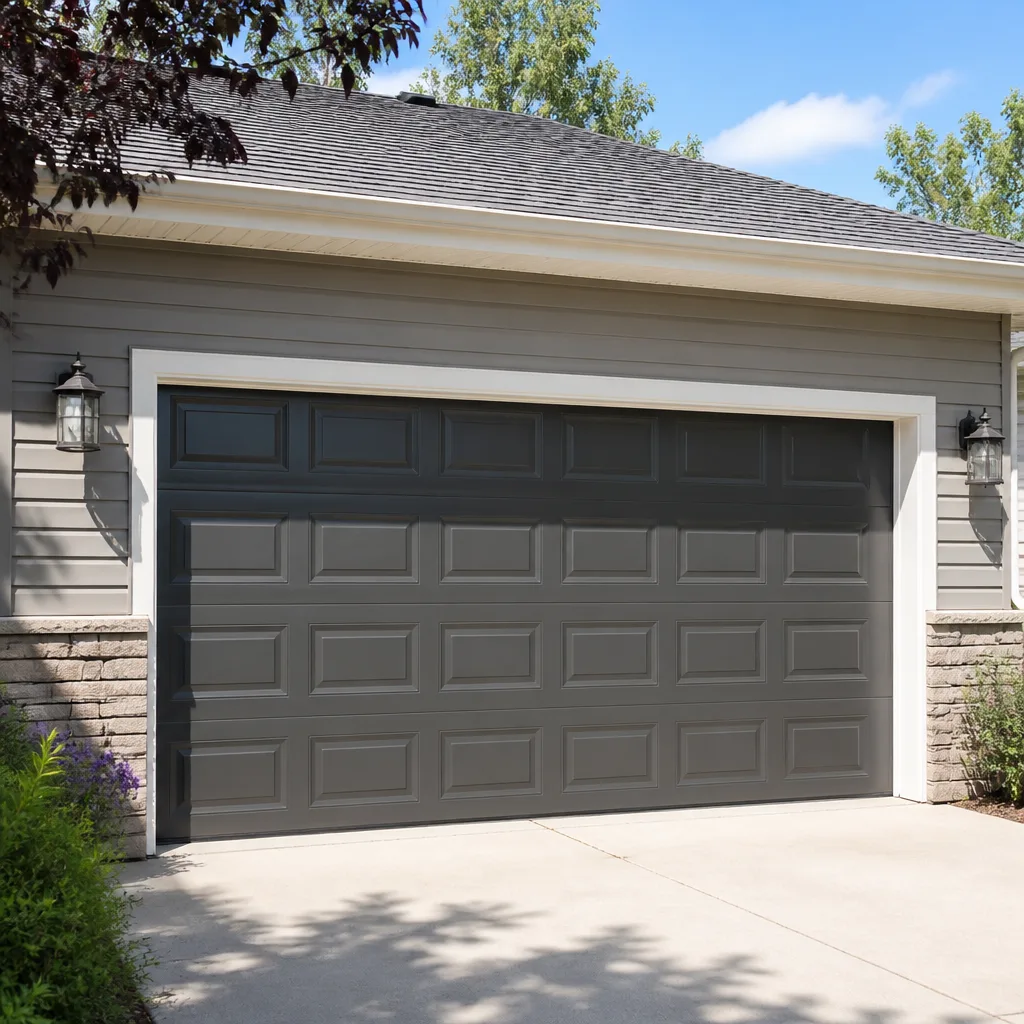 Raised-panel steel
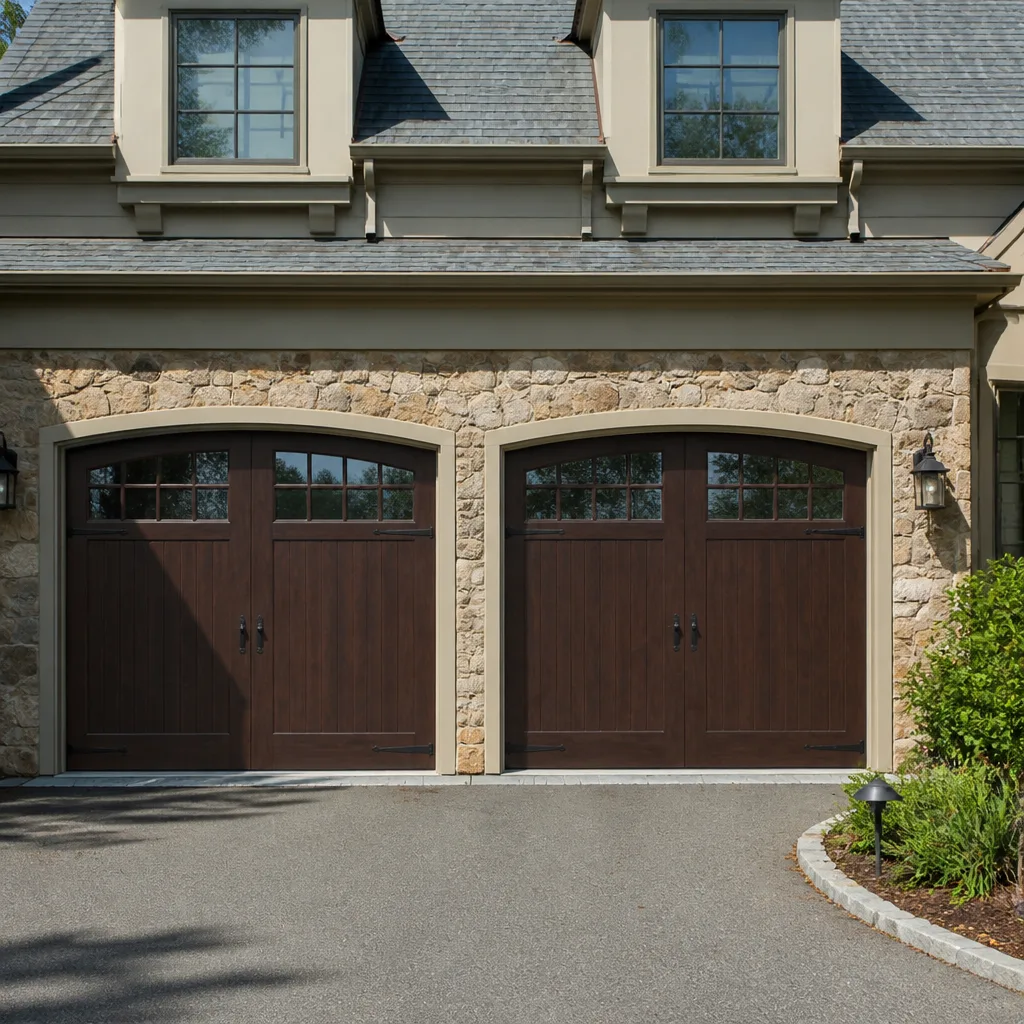 Carriage house
 Modern flush
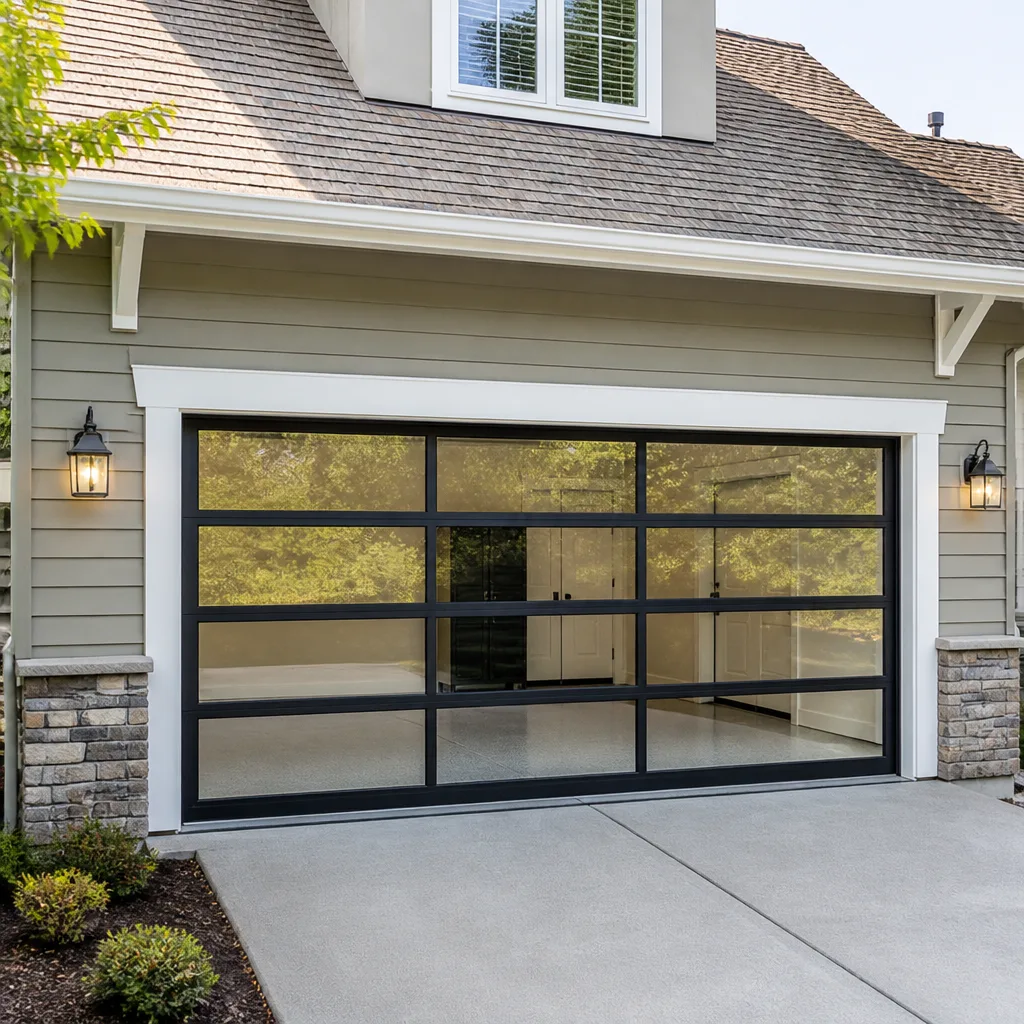 Full-view glass
 LiftMaster openers
 Chamberlain openers
Full 25-point door and opener safety check with every visit - springs, cables, rollers, tracks, and your LiftMaster or Chamberlain opener included
You get a price before we start. It does not change when the pro arrives.
Get your free estimateDIY vs Professional Garage Door: The Spring Branch Homeowner’s Decision Guide
Most homeowners assume the garage door is a simple machine, so fixing it must be simple too. That’s the misconception that lands people in trouble. A standard sectional door weighs well over a hundred pounds, and it moves on stored mechanical energy that has to be released and recaptured in a controlled way every time the door opens. Springs and cables are where that energy lives, and they’re the parts most likely to fail without warning. This guide walks through the garage door jobs that are genuinely safe for a homeowner to handle, the ones that are not, and how to tell the difference before you pick up a wrench. We work on garage doors across Spring Branch, and we’d rather you know where the line is than find out the hard way.
Quick Answer
Lubrication, weather stripping, sensor alignment, and remote reprogramming are safe for most homeowners with standard tools and no special training. Torsion and extension spring replacement, cable work, and anything involving the door’s counterbalance system are not – the stored energy in a wound torsion spring can cause serious injury in an instant, and a botched repair often damages secondary parts. When the job touches springs, cables, or the lifting mechanism, call a professional.
Styles & brands we work with
- Raised-panel steel
- Carriage house
- Modern flush
- Full-view glass
- LiftMaster openers
- Chamberlain openers
Table of Contents
- The Task-by-Task Decision Matrix
- The Jobs That Are Genuinely Homeowner-Safe
- Why Spring Replacement Is a Different Category
- The Hidden Cost of a Failed DIY Attempt
- When Manufacturer Guides Are Enough and When They Aren’t
- What Matters in Spring Branch
- Opener and Remote Work: Where the Line Blurs
- Common Mistakes to Avoid
The Task-by-Task Decision Matrix
Treating “DIY vs professional” as one question misses the point. Garage door work breaks down into tasks with very different risk profiles, and the right answer differs for each. Here’s the honest breakdown we use when talking a homeowner through a problem over the phone.
| Job | Skill Required | Tools Needed | Injury Risk | Warranty Impact if DIY |
|---|---|---|---|---|
| Lubricating hinges, rollers, and tracks | None | Garage door lubricant | Low | None |
| Replacing weather stripping | Beginner | Utility knife, weather seal | Low | None |
| Aligning safety sensors | Beginner | Screwdriver, level | Low | None |
| Reprogramming a remote or keypad | Beginner | None | Low | None |
| Adjusting travel limits on a known opener | Intermediate | Screwdriver, owner’s manual | Low to moderate | Follow the manual or the opener warranty terms can be affected |
| Replacing a torsion or extension spring | Advanced, trained only | Winding bars, specialty tools | Severe | Often voids component warranty if done wrong |
| Cable replacement or rerouting | Advanced, trained only | Specialty tools, tension control | Severe | Often voids component warranty if done wrong |
| Replacing panels, tracks, or hinges under load | Advanced | Assorted | Moderate to severe | Varies |
| Full door or opener installation | Advanced | Full tool set, lifting help | Moderate to severe | Varies; permitted work needs a licensed pro |
Read across each row and the pattern becomes obvious. Everything with no stored tension is fair game for a careful homeowner. Everything that winds, tensions, or holds up the door’s weight belongs to someone trained to work around that energy. As a garage door specialist working in Spring Branch and the surrounding neighborhoods, we’ve seen both outcomes – clean fixes and expensive recovery jobs – and the line between them maps closely to this table.
The Jobs That Are Genuinely Homeowner-Safe
We’re not going to tell you every garage door task needs a professional. Some don’t, and paying a service call for a five-minute fix wastes your money. Here are the tasks where DIY is reasonable, with notes on how each one usually goes.
Lubrication
Once or twice a year, apply a proper garage door lubricant to the hinges, rollers, and bearing plates. Avoid heavy grease, which attracts dust and grit over time, and avoid spraying anything on the tracks – tracks should be clean and dry, not slick. A door that’s been lubricated regularly runs quieter and strains the opener less, which is one of the simplest ways to get more life out of the hardware that’s already on your garage.
Weather Stripping
Worn weather seal at the bottom of the door lets in drafts, water, and pests. The replacement process is straightforward:
- Look at how the current seal attaches – most slide into a channel, some are nailed or stapled to a retainer.
- Measure the door width and buy the matching seal type.
- Remove the old seal and clean the channel or retainer.
- Slide or fasten the new seal on, trimming the ends cleanly.
- Close the door and check for even contact along the floor.
This is one of the few jobs where a homeowner can genuinely improve the door’s performance with a utility knife and twenty minutes of patience.
Safety Sensor Alignment
The two small sensors at the bottom of the tracks need to see each other. If the door reverses on its own or won’t close, a bumped sensor is often the reason. Check that both are pointed at each other, clean the lenses, and confirm the indicator light on each sensor is solid rather than blinking. Most are held by a bracket that allows small adjustments by hand or with a screwdriver.
Remote and Keypad Reprogramming
Adding or replacing a remote usually means holding a button on the opener motor head and then pressing the remote within a set window. The exact sequence differs by brand. If your opener is a LiftMaster or Chamberlain, the procedure is well documented and easy to follow. For older Craftsman units, the process follows the same idea but the button layout is different. Both are safe to do yourself.
Why Spring Replacement Is a Different Category
It helps to understand what a torsion spring actually is. It’s a tightly wound coil of steel mounted above the door on a shaft, and it’s under heavy rotational tension at all times – that tension is what makes the door feel light when you lift it by hand. A torsion spring does the heavy lifting so you don’t have to. It stores enough energy to lift a two-car door, and that energy is present whether or not the door is moving.
Extension springs, which sit along the horizontal tracks on some doors, work on the same principle in a stretched format. They can fail violently if they aren’t properly restrained. Both types must be released and re-tensioned in a controlled sequence with the right tools, usually two winding bars that let the technician hold and move the spring in small increments.
This is why we treat spring replacement as a trained-only task, not a step up from the homeowner-safe jobs above. The failure mode is instantaneous, and the energy involved is routinely underestimated. This isn’t a scare tactic – it’s a description of how the mechanism stores and releases force. Working with that force requires understanding it, and that understanding comes from training and repetition. Our technicians have up to 12 years of experience working specifically with the mechanics of garage door repair, and spring work is one of the jobs that separates a trained technician from someone who assumes a garage door is like any other home repair. It’s also a named specialty for us because it’s the most commonly mishandled part of the system.
Two points get lost in the DIY discussion. First, a damaged spring can usually be replaced for a reasonable, predictable cost when the failure is caught early. Second, a spring replacement that goes wrong tends to damage other components – cables, drums, and the door panels themselves – turning a small repair into a larger one. The math is different when you account for both.
The Hidden Cost of a Failed DIY Attempt
The usual assumption is that a DIY attempt at a garage door fix saves money or, at worst, breaks even if it fails. That’s rarely how it works out. Here’s what typically happens when a homeowner takes on a job that goes sideways.
- Wasted parts. The spring, cable, or other component purchased for the project is unusable once it’s been mishandled – either damaged in the attempt or bent out of spec.
- Secondary damage. A tensioned cable that’s released wrong can whip and damage panels, tracks, or the opener rail. A door that’s dropped under load can twist panels and bend hardware.
- Opener strain. If a door is left unbalanced or a damaged spring is ignored, the opener motor carries the full door weight. That shortens the opener’s life or ends it outright.
- Compromised warranty. Many manufacturers specify that spring and counterbalance work must be done by a trained technician for the warranty to remain valid. A DIY attempt can leave you paying for parts that would otherwise have been covered.
- Delayed repair. A failed DIY attempt often means a second call, a longer wait, and a wider scope once the pro arrives.
The pattern is consistent. What looks like a straightforward swap becomes a multi-part repair once the door is back in a serviceable state. The actual job rarely grows by a small amount; usually the whole scope shifts because the damage has compounded. Working with a local specialist to get a written estimate before things go wrong is the cheaper path. In Spring Branch, where many homes were built with single or two-car doors that see years of use, that call usually prevents the scenario entirely.
When Manufacturer Guides Are Enough and When They Aren’t
Good manufacturer documentation exists, and it isn’t a secret. LiftMaster, Chamberlain, and other major brands publish installation and troubleshooting guides that cover the safe, homeowner-level tasks well. Those guides are enough in specific situations:
- Programming a remote or keypad on a supported opener.
- Adjusting travel limits or force settings on a newer opener that documents the process.
- Replacing weather stripping or bottom seals.
- Cleaning and aligning sensors.
Those same guides are not a substitute for training when the task involves springs, cables, or any component under tension. The fact that the manual explains how a spring is wound doesn’t mean the manual teaches the physical skill required to do it safely. That’s the part homeowners often skip when they read a document and decide the job looks manageable on paper.
Local code and warranty terms add another layer. Installation of a new door, or replacement of structural components in some municipalities, may require a permit and an inspection. Always check with your local building department to see what applies at your address. Manufacturer warranties can also specify the level of technician needed for certain work – a detail worth reading before you start. When those questions come up, talking to a garage door specialist covers the practical side without guesswork.
Some brands are more DIY-friendly at the documentation level than others. A Raynor or Clopay door comes with install materials that are well organized, and the manufacturer’s guidance on adjusting hardware is generally solid. That doesn’t change the safety lines, but it does make the homeowner-safe tasks easier to manage. For the rest, our technicians carry hands-on knowledge of all eight major brands – LiftMaster, Chamberlain, Genie, Clopay, Amarr, Wayne Dalton, Craftsman, and Raynor – so we can work on whatever brand is already on your garage without needing to learn it on-site.
What Matters in Spring Branch
Spring Branch’s mild winters mean garage doors here generally hold up well through the cold months. But the summer heat and humidity are another story. Heat causes metal to expand slightly, and rubber seals and weather stripping dry out faster in a hot garage than many homeowners expect. That’s why bottom seals and hinge lubrication tend to fail first in this climate, and why calling a pro to reschedule spring work around the cooler parts of the year isn’t a bad idea when the door is still working.
The housing mix in Spring Branch includes a lot of mid-century homes and newer construction side by side, which means the same neighborhood can contain a door from the 1970s and a door installed last year. Older doors often carry extension springs; newer ones almost always use torsion springs. Knowing which system is on your door matters for how a repair is approached and what parts are involved. We handle both types in Spring Branch regularly, and a pro can tell at a glance which system you have and whether the door’s overall balance is where it should be.
Another local factor is the number of homes where the garage is essentially another entrance. When your garage door is the way most people enter, a failed door is a daily problem, not a weekly one. That raises the practical cost of a slow fix. When it’s a quick, safe repair, we answer the phone and can often schedule same-day service in Spring Branch. Fast dispatch runs 7am to 7pm, Sunday through Friday.
Opener and Remote Work: Where the Line Blurs
Opener repairs sit on both sides of the DIY line. Changing a remote battery, reprogramming a keypad, and reconnecting a Wi-Fi opener to your home network are all safe to do yourself. Diagnosis of a failed opener is a different matter. A dead opener can be a bad logic board, a faulty capacitor, a worn gear, a damaged safety sensor, or a problem at the wall control – and swapping parts at random rarely fixes the underlying issue.
What we usually see on the repair side is homeowners who’ve tried three or four fixes without success before calling. That’s not wasted effort on their part, but it does mean the actual problem is now harder to isolate because components have been swapped. When the opener itself is the problem, we work on the brand already on your garage, whether that’s a modern Wi-Fi-enabled LiftMaster, a legacy Chamberlain, a Genie, or an older Craftsman. Our technicians have hands-on experience with all four of the most common opener brands, which means diagnosis usually starts with the known failure patterns for that specific unit. For homeowners dealing with an opener that won’t respond, a call to garage door opener repair is the shortest path to a working door.
If you’re planning a full replacement, the same logic applies to garage door installation – it’s a measured, ordered, and scheduled job, not a same-day repair.
Common Mistakes to Avoid
These come up often enough that they’re worth naming. Each one is easy to prevent with a small amount of foresight.
- Winding a torsion spring without the correct winding bars. Screwdrivers and improvised tools slip, and slipping is how injuries happen. The correct tool is not optional for this job, and DIY replacements should never attempt it.
- Ignoring a broken spring and letting the opener do the work. A door with a broken spring is dramatically heavier. The opener wasn’t designed to lift it, and the motor usually fails within a short time if it’s used while the spring is broken.
- Lubricating the tracks. It’s the opposite of what tracks need. Grease on the tracks collects grit and causes rollers to slide instead of roll, which accelerates wear.
- Replacing a single spring in a matched pair. The other spring has been through the same cycles and is likely due to fail soon. Replacing them together is generally the smarter call.
- Reprogramming without the right manual. Opener brands differ in button sequences, and a wrong sequence can leave you unable to re-pair a remote. Keep the owner’s manual on hand when reprogramming.
- Assuming a door that opens is safe. A door that’s out of balance, with a fraying cable, or that’s noisy in a new way is under extra stress. Those signals usually point to a problem worth checking before it becomes a failure.
- Skipping the manual and guessing on travel limits. Setting the door to close too hard can damage weather seal, strain the opener, and affect the safety reverse system. Follow the documented sequence, and if the manual doesn’t match what you see on the opener, call a pro.
- Not checking the building department for permits. Full installations may require a permit and inspection, depending on your city’s rules. Verifying before the work starts saves a headache later.
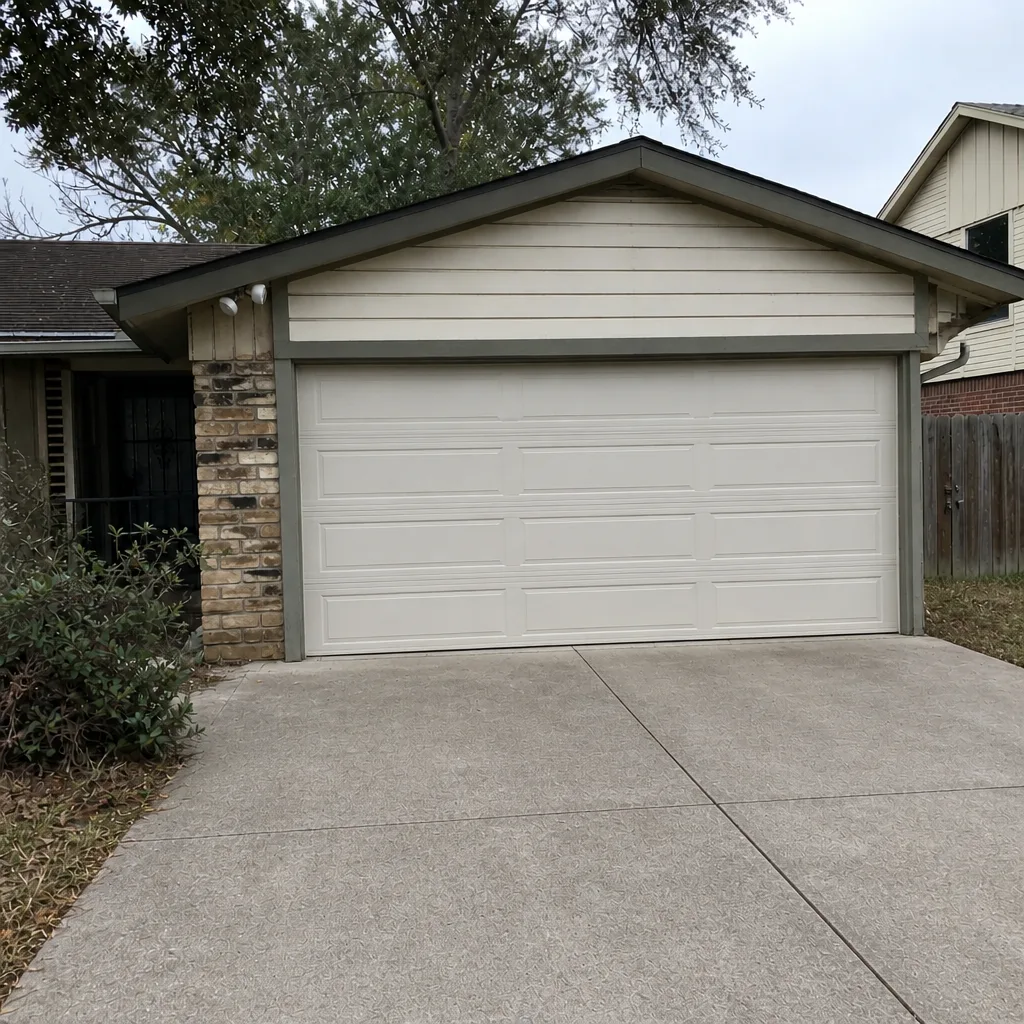
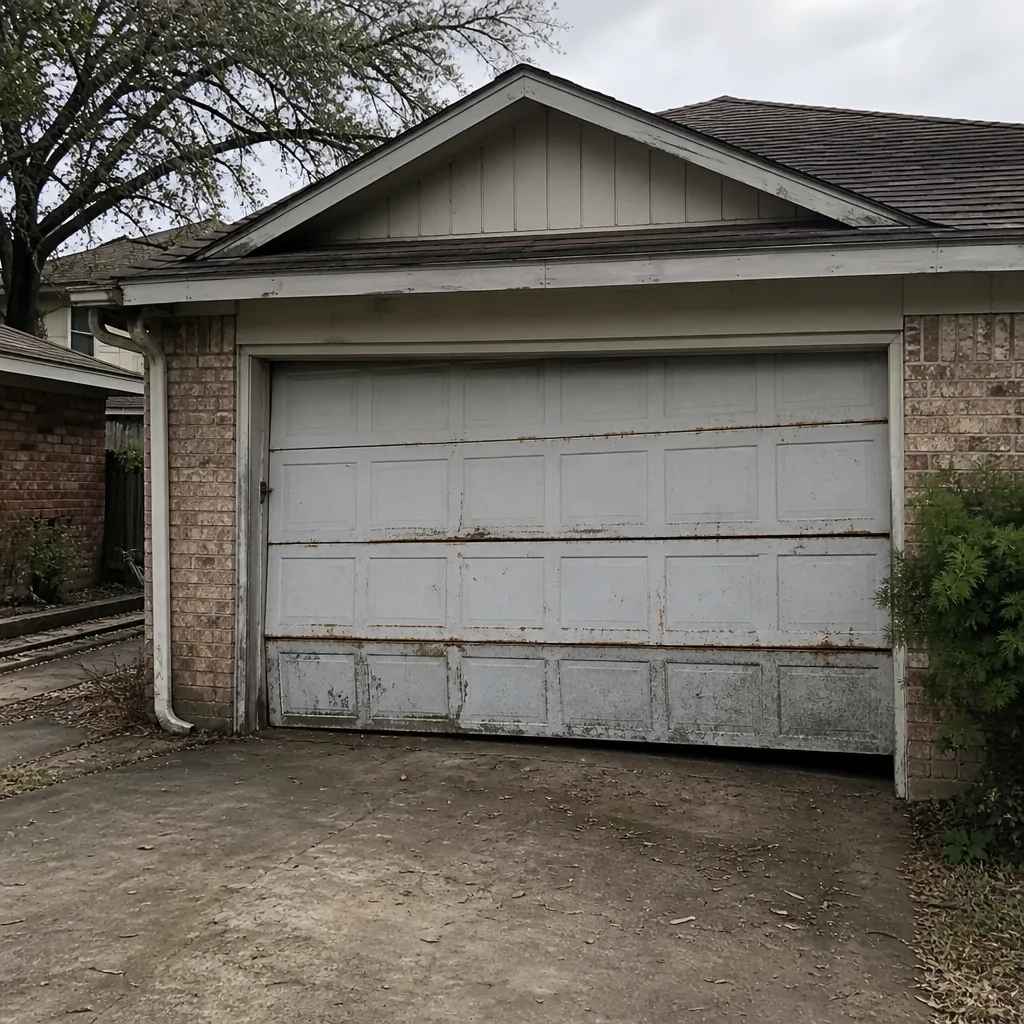
See the difference
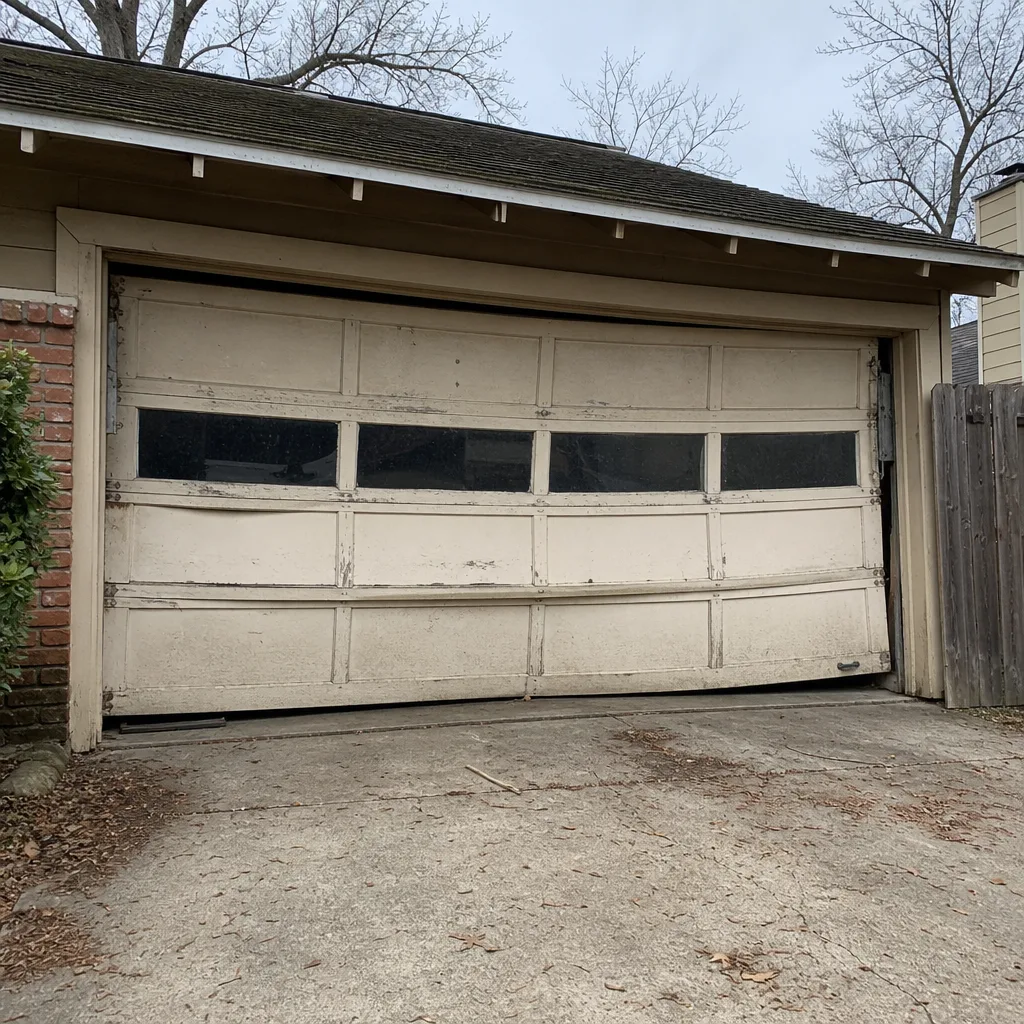 Before
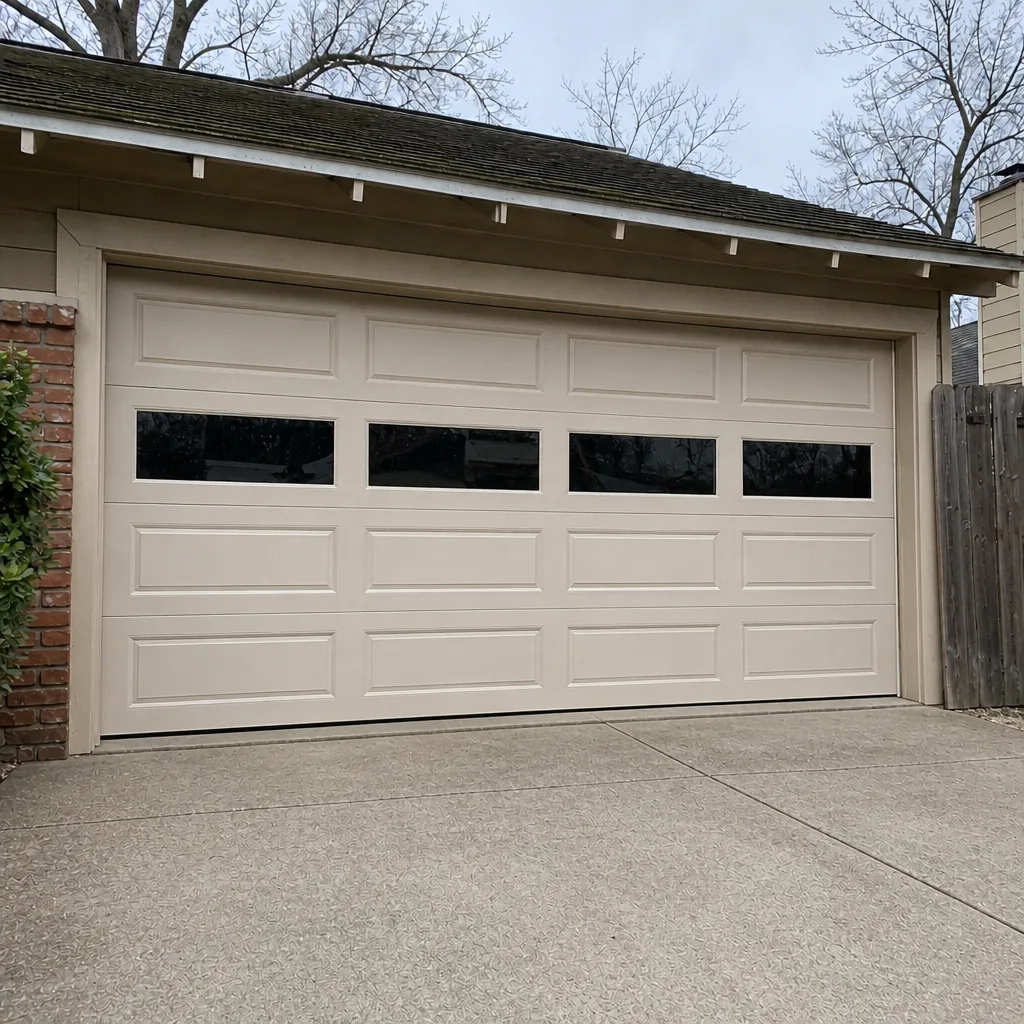 After
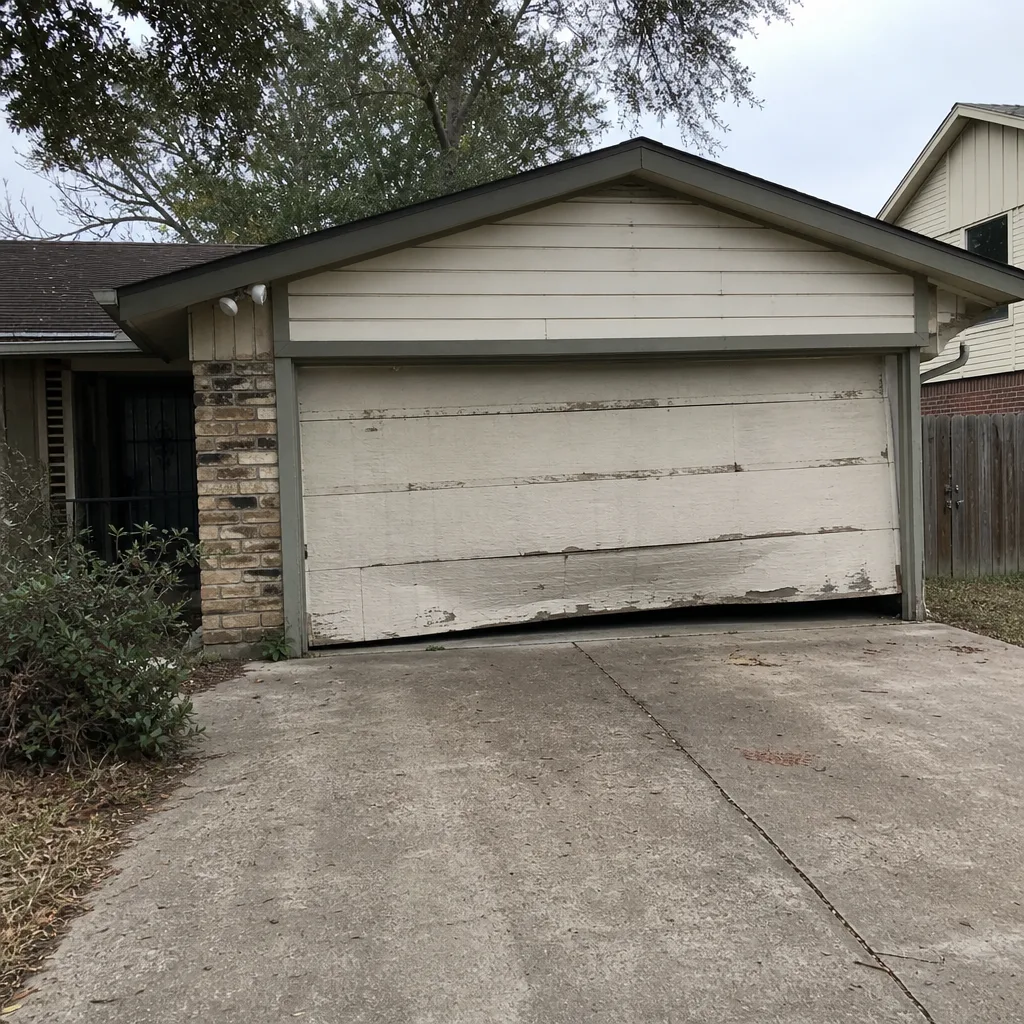 Before
 After
 Before
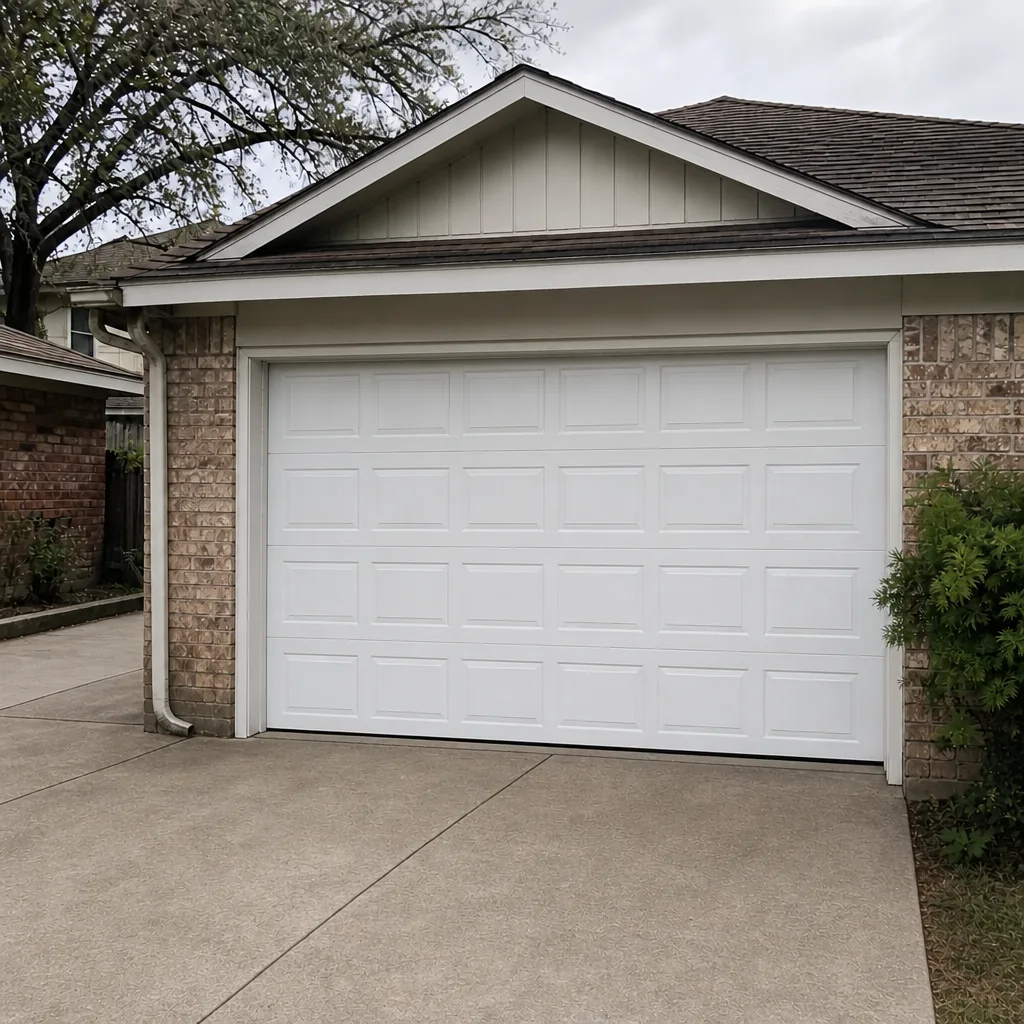 After
When to Call a Professional
Some problems are a phone call, not a project. If a spring has snapped, the door won’t stay open or won’t open at all, the door is hanging unevenly, a cable is frayed or off the drum, the opener keeps reversing or the motor runs but nothing moves, call a professional. Those symptoms point to components under load or to systems that need proper diagnosis. We also get calls after a DIY attempt has gone sideways – those calls are usually more involved than the original problem would have been.
Spring Branch Garage Door Repair offers free estimates in Spring Branch. We answer 24/7, with fast dispatch from 7am to 7pm, Sunday through Friday. Call (844) 660-0146. The written estimate is the price – nothing is quoted over the phone and nothing starts until you’ve agreed to the price in writing.
Frequently Asked Questions
No – spring replacement is not a safe DIY task. Torsion and extension springs are under heavy stored tension, and releasing or re-tensioning them requires specific tools and training to do safely. A failed attempt can cause serious injury and often damages cables, panels, or the opener. Call (844) 660-0146 for an exact quote – estimates are free.
Weather stripping, lubrication, sensor alignment, and remote or keypad reprogramming are all safe for a careful homeowner with standard tools. Those tasks don’t involve stored tension or the door’s counterbalance system. Anything involving springs, cables, or the lifting mechanism belongs to a trained technician. Call (844) 660-0146 if you’re unsure which category your repair falls into.
Spring replacement is priced per spring, and most doors use a matched pair that’s replaced together. Because the price depends on the type of spring and the door, the written estimate sets the final number. Call (844) 660-0146 for a free estimate – we’ll walk through what’s involved before anything starts.
No – the written estimate you agree to before the work starts is the price. We inspect the door, confirm what’s needed, and quote in writing before starting. If we discover something additional during the job, we come back to you before doing extra work. Call (844) 660-0146 for an exact quote – estimates are free.
No – manufacturer guides explain how components function, but they don’t teach the physical skill needed to safely release and re-tension a spring. The guides are useful for remote programming, sensor adjustment, and weather stripping. For spring and cable work, a trained technician is the right call. Call (844) 660-0146 for help.
The local professionals we connect you with are licensed and insured as their state requires, and our technicians have up to 12 years of experience with springs, cables, and openers. We work on all eight major brands found in Spring Branch homes. Call (844) 660-0146 to set up a free estimate.
Yes, same-day service is often available for spring and repair calls. We answer 24/7, with fast dispatch from 7am to 7pm, Sunday through Friday. Call (844) 660-0146 for an exact quote and the next opening.
The Bottom Line
The DIY question depends on the task. Weather stripping, lubrication, sensor alignment, and remote programming are worth doing yourself – they’re fast, safe, and save a service call. Springs, cables, and the door’s lifting mechanism are where the line sits, and crossing it isn’t worth the risk. The failure mode is instant, the energy involved is enormous, and a botched repair often damages secondary parts. For anything under tension, call a pro. For free estimates in Spring Branch, call (844) 660-0146. We answer 24/7, with fast dispatch from 7am to 7pm, Sunday through Friday. The written estimate is the price, and nothing starts until you’ve agreed to it.
Written by the team at Spring Branch Garage Door Repair.