
Last updated November 21, 2026
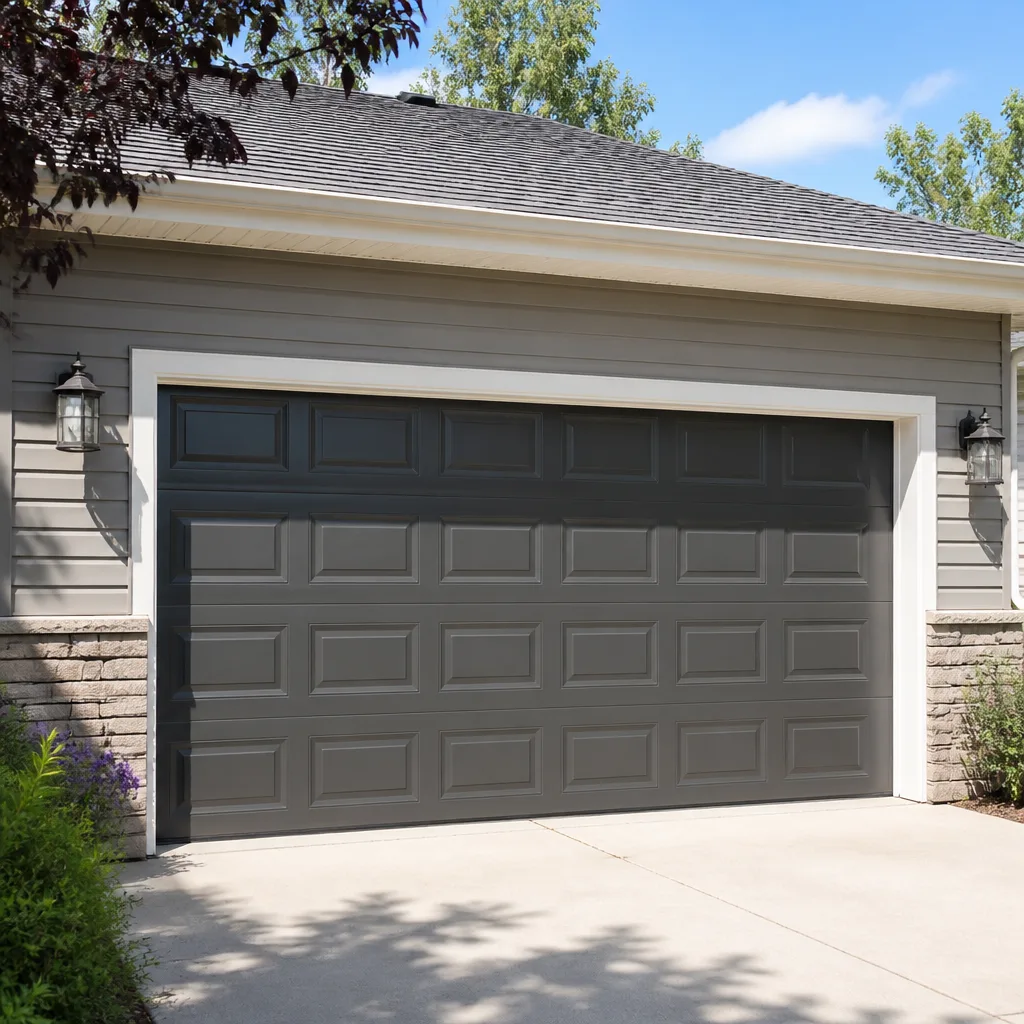 Raised-panel steel
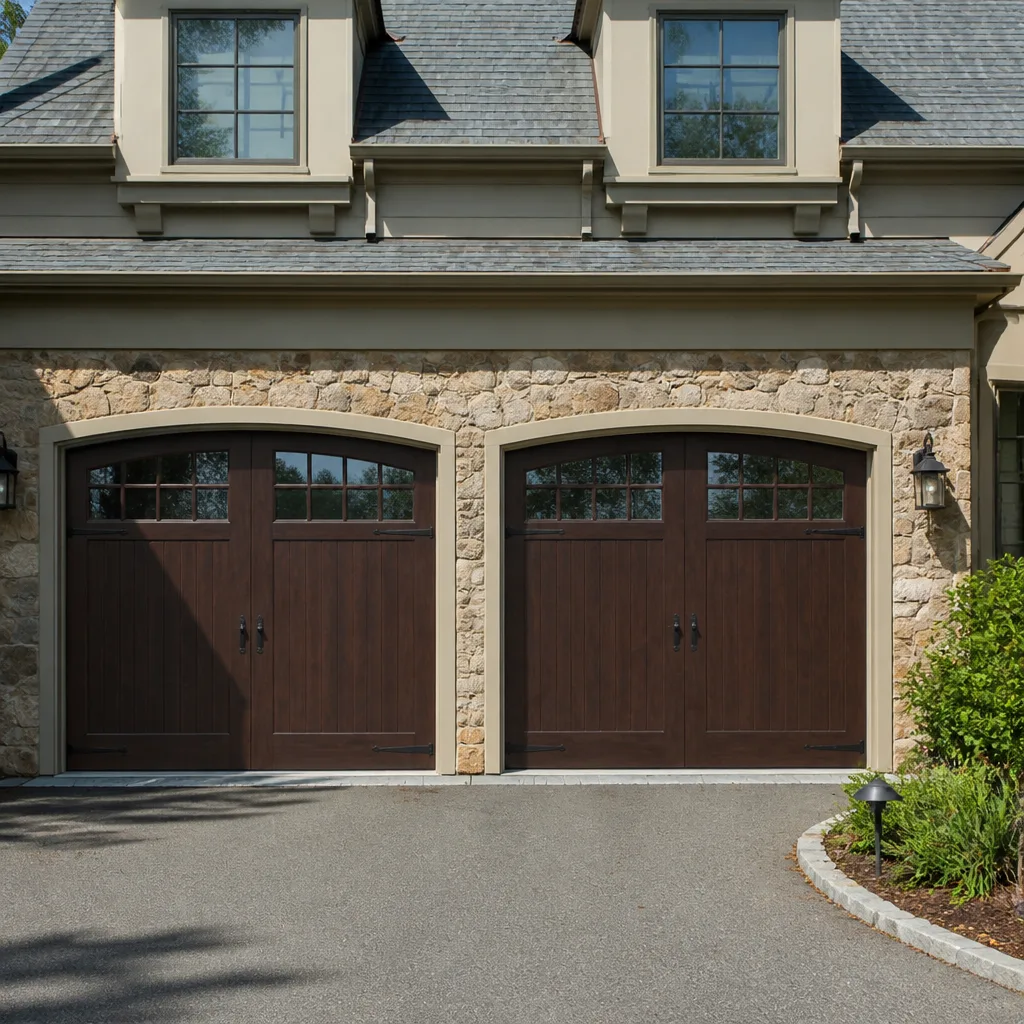 Carriage house
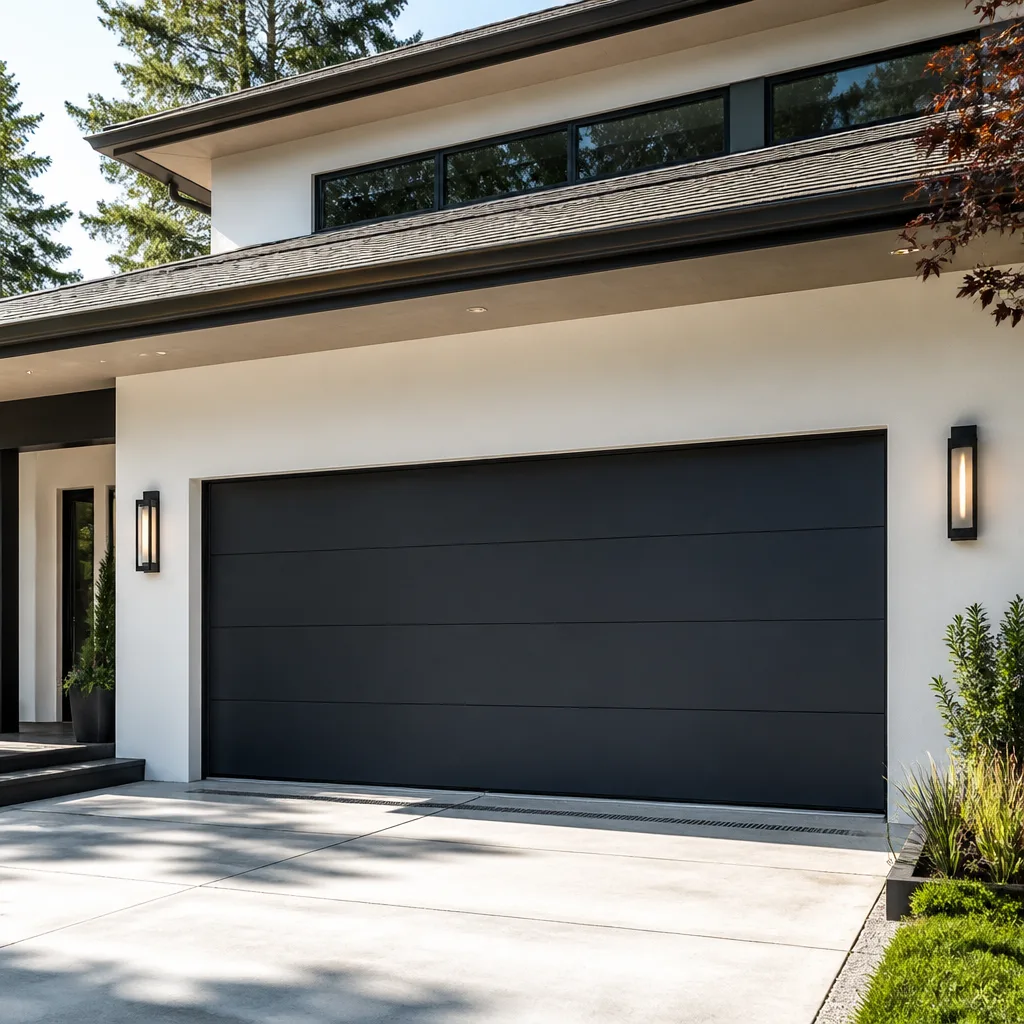 Modern flush
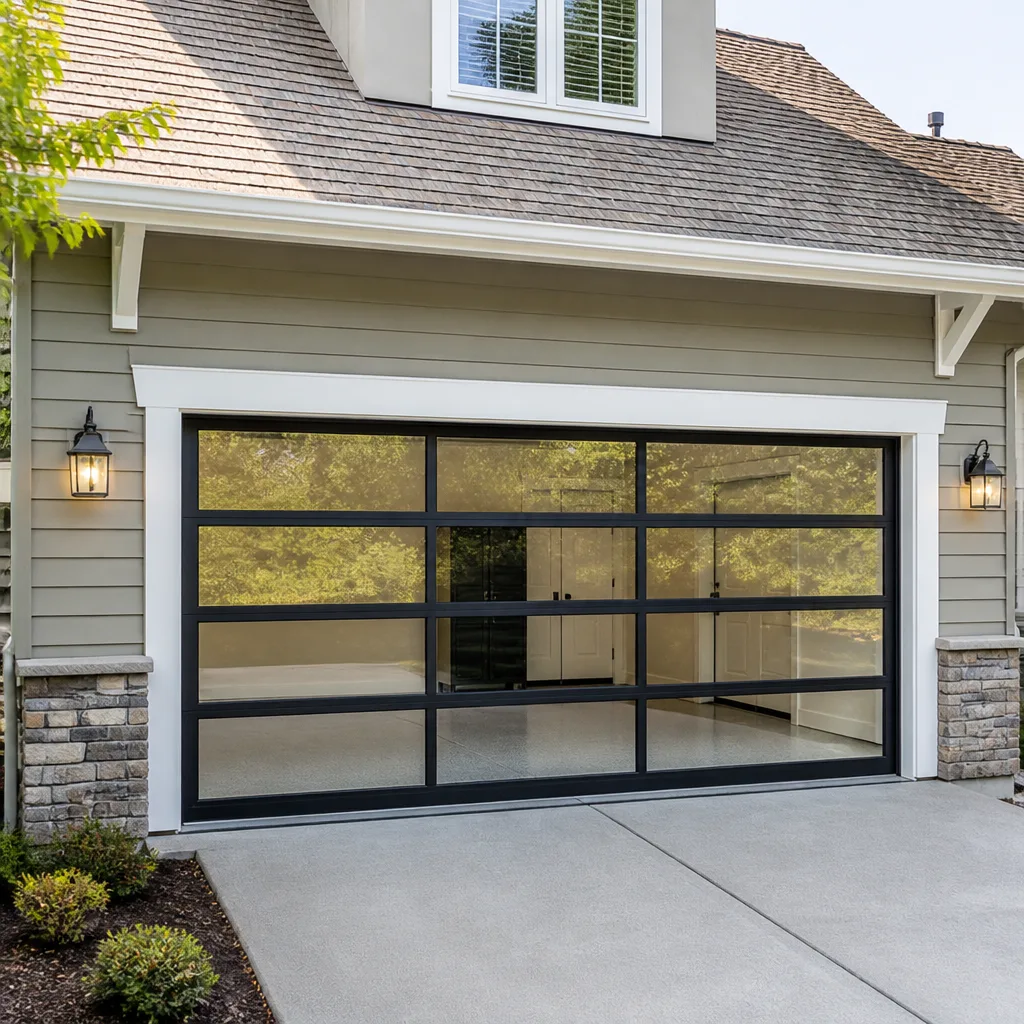 Full-view glass
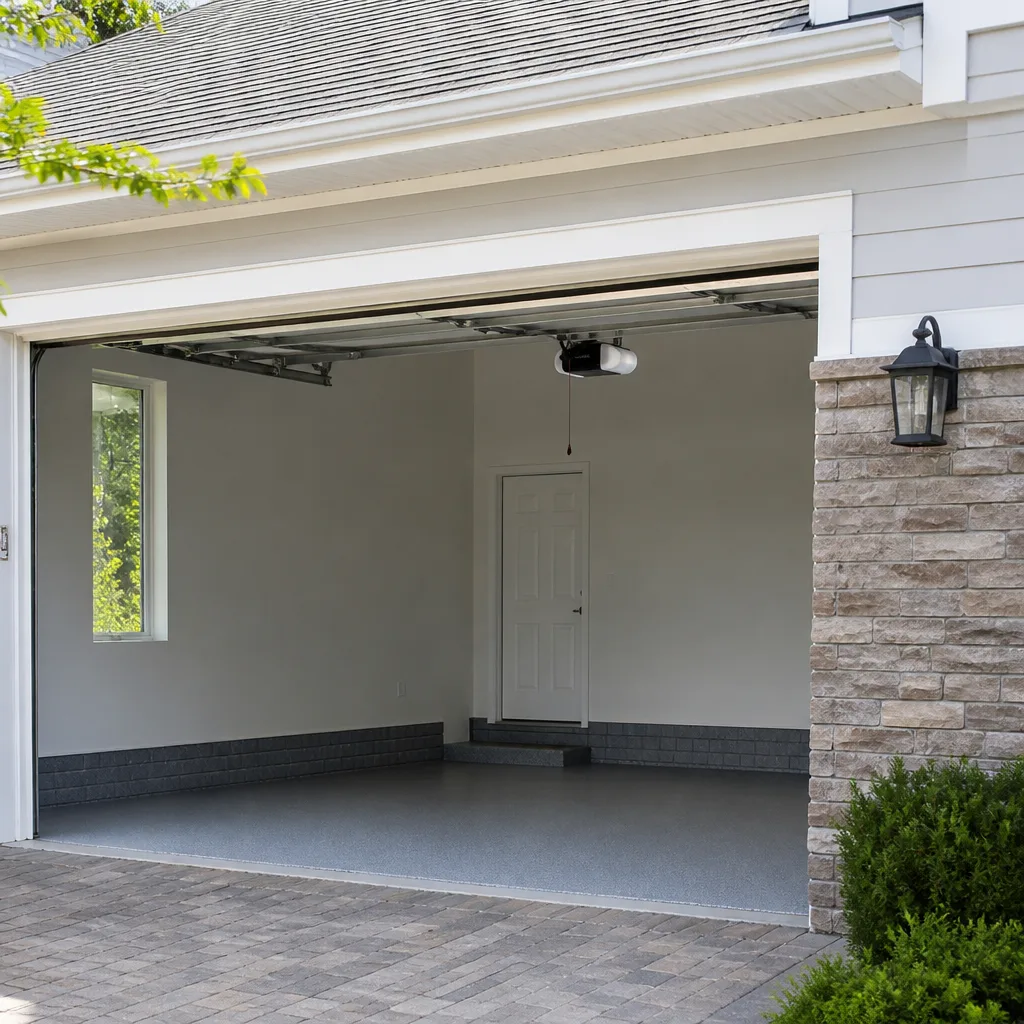 LiftMaster openers
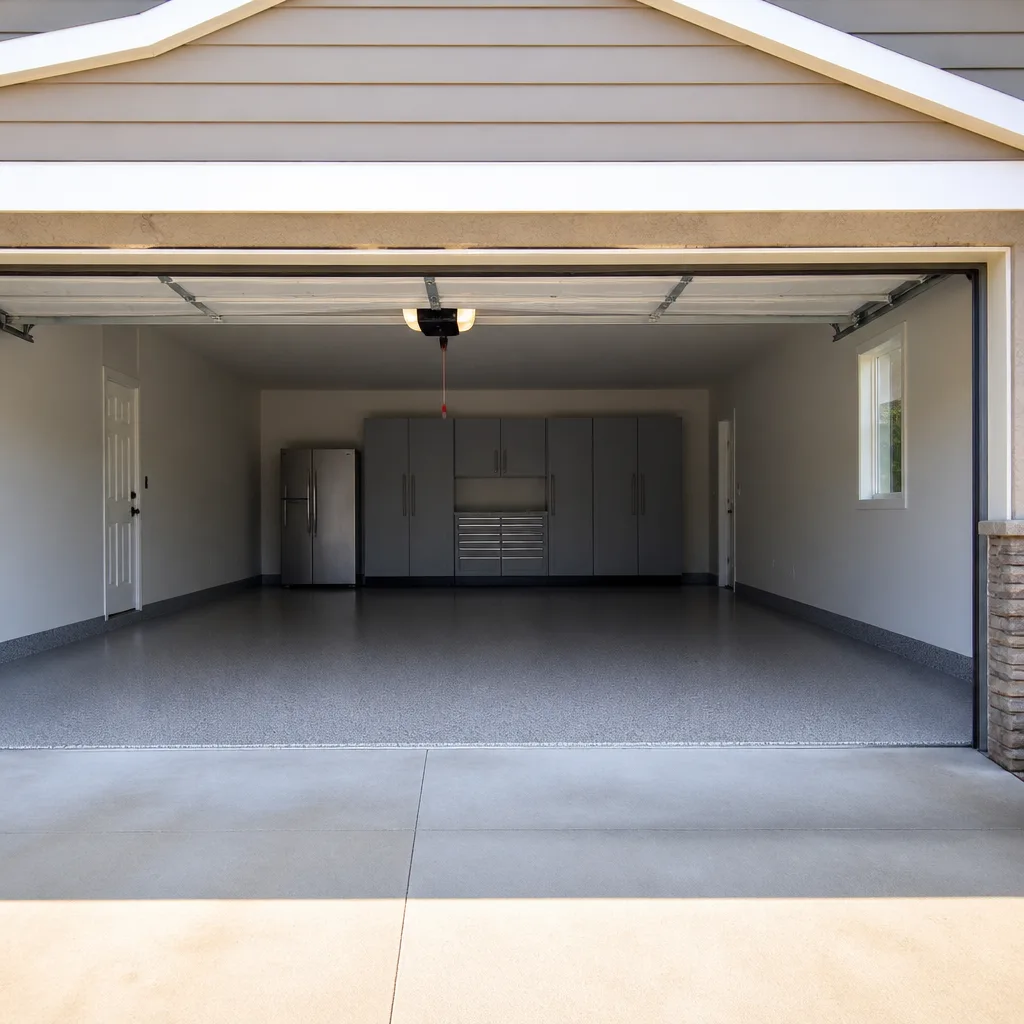 Chamberlain openers
Full 25-point door and opener safety check with every visit - springs, cables, rollers, tracks, and your LiftMaster or Chamberlain opener included
You get a price before we start. It does not change when the pro arrives.
Get your free estimateThe Complete Guide to Garage Doors in Spring Branch
Most Spring Branch homeowners don’t think about their garage door until it fails. That’s the problem. A typical door cycles around 1,500 times a year, which makes it the most-used moving part of the entire house. It carries more wear than your refrigerator, your water heater, or the car parked behind it. Yet it gets less attention than any of them. This guide treats the garage door as a home system: the door, the springs, the cables, the rollers, the tracks, and the opener all working together. We’ll cover how Spring Branch’s mix of older ranch homes and newer builds changes what you need, how long each component actually lasts, how heat and humidity here affect hardware, and how to read a quote so you know what’s essential. One call can cover all of it if you pick the right specialist.
Quick Answer
Your garage door is a mechanical system with a predictable service life, and knowing the lifespan of each part – springs, cables, rollers, and the opener – is the single best way to avoid surprise breakdowns. In Spring Branch, older ranch homes and newer construction need different door sizing, insulation, and opener choices, so the right answer depends on the age and build of your house. A full-service specialist should handle every stage from garage door repair through a new installation, so you never get handed off mid-job.
Styles & brands we work with
- Raised-panel steel
- Carriage house
- Modern flush
- Full-view glass
- LiftMaster openers
- Chamberlain openers
Table of Contents
- Why Spring Branch Homes Need a Different Approach
- How Long Each Garage Door Component Lasts
- The Spring: Your Door’s Most Dangerous Part
- Openers: Legacy vs. Smart Systems
- How Houston-Area Heat and Humidity Affect Your Hardware
- Why One Call Should Cover Everything
- How to Read a Garage Door Quote Line by Line
- Repair or Replace? Deciding What Your Door Needs
Why Spring Branch Homes Need a Different Approach
Spring Branch isn’t one kind of neighborhood. It’s a patchwork of postwar ranch homes, mid-century brick builds, and newer construction filling in the gaps. That mix matters because the garage door you need depends heavily on when the house was built and how the opening was framed.
Older ranch-style homes here often have a single-car or two-car garage with a low header and a standard opening size. Many of these doors were original equipment and have been patched or re-sprung over the years, sometimes with mismatched parts. When we look at a door like that, we’re assessing whether the existing tracks and framing can support a modern door and opener or whether the opening itself needs adjustment.
Newer construction tends to come with larger openings, higher ceilings in the garage, and clearance for a torsion spring setup rather than extension springs. Builders also increasingly spec insulated doors on new homes because the garage faces the house and insulation keeps that thermal barrier in place.
What this means for you as a Spring Branch homeowner:
- Older ranch homes: expect to evaluate track condition, header height, and whether the opener is past its service life before assuming a simple repair will do.
- Newer builds: expect a torsion setup, a higher opening, and a door sized for insulation. Opener compatibility with newer smart systems is usually straightforward.
- Renovated or expanded homes: the garage opening may not match the rest of the house, and a door that swings or binds often signals a framing issue rather than a door problem.
Because we work on the brand already on your garage, the door or opener you have doesn’t limit who can help. We handle equipment from Genie, Clopay, Amarr, Wayne Dalton, and the other major manufacturers found in Spring Branch homes.
How Long Each Garage Door Component Lasts
No garage door fails all at once. It wears out one part at a time, and each part has a rough service life. Knowing those ranges helps you plan and helps you recognize when a repair quote makes sense versus when you’re replacing something that had plenty of life left.
Realistic Lifespan Ranges
| Component | Typical Service Life | What Wears It Out |
|---|---|---|
| Torsion springs | 7-12 years | Number of cycles, not age |
| Extension springs | 5-10 years | Cycles plus visible rust |
| Cables | 8-15 years | Fraying, kinks, moisture |
| Rollers | 5-10 years | Bearing wear, dry lubrication |
| Hinges and brackets | 10-15 years | Metal fatigue, corrosion |
| Opener (motor unit) | 10-15 years | Use, board failure, motor wear |
| Door panels | 20+ years | Dents, rust, impact |
Two things are worth pulling out of that table. First, springs are rated by cycles, not by years. A door in a busy household that goes up and down several times a day will wear out its springs faster than the same door in a quieter home, no matter how old it is. Second, the opener usually outlasts the springs but not the door panels. That sequence matters when you’re deciding what to fix.
What we notice in Spring Branch is that homeowners often replace the opener when the real problem is the spring, or replace the door when the real problem is a worn roller and a bent track. Knowing the expected life of each part keeps you from paying for the wrong fix.
The Spring: Your Door’s Most Dangerous Part
Torsion and extension springs are the most mechanically dangerous part of any garage door. They hold the full weight of the door under tension. When one breaks, it releases stored energy suddenly, and a person standing in the wrong place can be seriously injured. This is exactly why spring work is a job for trained technicians and never a do-it-yourself project.
We name spring repair as a core service for a reason. It’s a high-risk, high-skill job that separates trained technicians from general repair services. Here’s how spring failure usually presents:
- A loud bang from the garage. A snapped spring often sounds like a gunshot and usually happens when the door is at rest.
- The door won’t lift, or lifts a few inches and stops. The opener strains against the full weight of the door, but the counterbalance is gone.
- A visible gap in the coil. On a torsion spring, a clean break in the coil is the clearest sign.
- The door hangs crooked or slams down. One spring failing on a two-spring setup unbalances the door.
If you recognize any of these, stop operating the door. Don’t try to force the opener, and don’t stand under the door. The safe move is to leave it closed and call a specialist. Our technicians have up to 12 years of experience with both torsion and extension systems, and we can inspect the springs, cables, and drums together because a snapped spring sometimes reveals a stretched cable or a bent track underneath.
Do Springs Come as a Pair?
When a door has two springs, they’re usually matched and share the load. If one fails, the other is typically near the end of its life too, so replacing both at once is the practical choice. That means a matched pair costs about twice a single spring. When we quote spring work, we tell you which situation you’re in and why.
Openers: Legacy vs. Smart Systems
The opener is the part of the system homeowners interact with most and understand least. There are two broad generations of equipment in Spring Branch homes, and they need different care.
Legacy openers. These are the screw-drive and chain-drive units from Craftsman, Genie, and older LiftMaster lines. They’re simple, repairable, and often still running decades after installation. When they fail, it’s usually the logic board, the gear, or the safety sensors rather than the motor itself.
Modern smart openers. These are the Wi-Fi-enabled units from LiftMaster, Chamberlain, and Genie that pair with a phone app, work with voice assistants, and report status remotely. They fail in different ways: connectivity drops, app pairing breaks, or a firmware issue leaves the unit unresponsive. Those aren’t mechanical failures, and they need an opener technician who knows the brand’s system, not a generalist.
Common Opener Problems and What They Mean
- Door goes down then reverses: usually a safety sensor alignment or obstruction issue, not the motor.
- Remote works intermittently: battery, interference, or a worn receiver. Often a quick fix.
- Motor runs but door doesn’t move: stripped gear or a broken trolley connection.
- Opener strains or hums: the door is binding or a spring has failed. The opener is telling you the door needs attention.
- Lights flash but nothing moves: safety reverse or lockout, often a sensor problem.
For any of these, garage door opener repair starts with diagnosing whether the fault is in the opener or the door. We work on LiftMaster, Chamberlain, Genie, and Craftsman systems, covering both modern Wi-Fi models and older analog units, so the brand on your ceiling doesn’t limit the repair.
How Houston-Area Heat and Humidity Affect Your Hardware
Spring Branch sits in the Houston metro, and the local climate is hard on garage door hardware in ways that national guides rarely mention. Long, hot summers and consistently high humidity accelerate corrosion on metal parts compared to drier parts of the country. A steel spring, a cable, and a set of hinges that might last a decade in a dry climate can show rust and seize up meaningfully sooner here.
What this looks like in practice:
- Rust on springs and cables. High humidity speeds up oxidation, and rust weakens the steel. Springs that look fine can fail sooner than their cycle rating suggests if they’re corroding.
- Dry, stiff rollers. Heat dries out lubrication faster, and dry rollers wear their bearings and make noise. A door that squeals or grinds is often just asking for lubrication and roller service.
- Warped or swollen panels. Wood and some composite doors absorb moisture and can warp over time, throwing the door out of balance.
- Opener strain in summer. Heat puts extra load on opener motors and electronics, and a marginal opener is more likely to fail during the hottest stretch of the year.
We’ve seen what the humidity does to hardware across Spring Branch, and it’s the single strongest argument for keeping an eye on your door rather than waiting for a failure. A simple annual check of the springs, cables, and rollers catches corrosion and wear before they cause a breakdown, and it costs far less than an emergency repair after the fact.
Why One Call Should Cover Everything
Garage door work has a way of revealing more than you expected. A snapped spring is a clear problem, but once a technician is inside the door, the real picture comes into focus. The bent track, the frayed cable, the worn roller, the opener that was straining against a dead spring for weeks. When these secondary problems surface, the cost of having the wrong provider on the job becomes obvious.
Here’s the pattern we see with piecemeal providers:
- The spring breaks and you call one company. They replace the spring and leave.
- The door still won’t run smoothly. The technician who replaced the spring didn’t diagnose the bent track underneath.
- You call a second company for the track. They don’t stock the part you need, so it’s a return visit.
- The opener fails a month later. Now you’re calling a third provider for an opener repair.
Each handoff adds a call, a wait, and a separate service charge, and no one is looking at the whole system. A specialist who handles repair, spring work, opener repair, parts, and installation under one roof can spot the secondary problem during the first visit and fix it the same day when the part is on hand.
Parts availability is the piece that turns “one call” into “solved today.” When the company stocks and sells garage door parts directly, you’re not waiting on a third-party order to arrive. The spring, roller, hinge, or opener part is there, and the job gets done in one visit instead of two. That’s the practical case for a full-service specialist over a general handyman, and it’s why we keep garage door parts on hand for common repairs.
How to Read a Garage Door Quote Line by Line
A garage door quote can look like a single number when it should be a list of parts and labor you can evaluate. Knowing what belongs on the quote and what’s padding is the best protection against an invoice that grows after the work starts.
What a Complete Quote Should Show
- Parts, itemized. Each spring, cable, roller, hinge, or opener part should be named, not lumped into a “repair” line. For a two-spring door, the quote should show whether one or both springs are being replaced and why.
- Labor, separately. Labor for a spring replacement is different from labor for a track adjustment, and a clear quote separates them.
- The reason for each part. A good quote tells you why the part is being replaced. “Bent track, door binding” is a reason. “Miscellaneous hardware” is not.
- Whether the price is final. The written estimate should be the price, agreed before any work starts.
Red Flags in a Quote
- Vague line items. If you can’t tell what’s being replaced, ask before you approve it.
- Major parts with no diagnosis. A quote that lists a new opener without explaining why the old one failed is worth a second look.
- No mention of the door’s make and model. A specialist should identify your door brand and opener brand before quoting, because parts differ by system.
- Pressure to decide on the spot. A clear estimate doesn’t need urgency to make sense.
The price you’re quoted is the price you pay. If the technician opens the door and finds a bent track the original quote didn’t cover, that should be explained and agreed with you before any extra work happens, not added to the invoice after the fact. Call (844) 660-0146 for a free estimate and a written price before anything is touched. We answer 24/7, and dispatch runs from 7am to 7pm, Sunday through Friday.
Repair or Replace? Deciding What Your Door Needs
Homeowners ask us all the time whether a failing door should be repaired or replaced. The honest answer depends on which part is failing and how the rest of the system is holding up. Here’s how to think about it.
Repair usually wins when: the door panels are sound, the tracks are straight, and the failure is a worn mechanical part like a spring, cable, roller, or opener. These are individual components with defined service lives, and replacing the exact part is faster and less costly than a new door.
Replacement usually wins when: the door panels are warped, dented, or rotting, multiple components are failing at once, or the existing door is under-sized or uninsulated for how you use the garage. In those cases, continuing to repair a system that’s near the end of its life just spreads the cost out without solving the underlying problem.
When you do decide on garage door installation, the brand question comes up. Clopay, Amarr, and Wayne Dalton all make residential doors in a range of insulation levels and styles, and the right choice depends on your opening size, how you use the garage, and how much insulation the space needs. Installation is measuring, ordering, and scheduling, so it’s not a same-day job; it’s a measured, quoted, scheduled project with a written price.
How the Process Works
- Measure and assess. We measure the opening, check the framing, and confirm the door type the garage can support.
- Recommend a door. Based on insulation need, style, and brand, we explain the options and the trade-offs.
- Written price. You get a written estimate before anything is ordered, so there are no surprises.
- Schedule and install. The door is ordered and the installation is scheduled, then completed with the opener set up and safety-checked.
Common Mistakes to Avoid
- Forcing the opener when a spring has failed. The opener is designed to move a balanced door, not lift its full weight. Running it against a dead spring can burn out the motor and turn a spring job into a spring-plus-opener job.
- Replacing the opener when the door is the problem. If a door binds, drags, or reverses, the issue is often the door or the sensors, not the motor. Diagnose first, then replace.
- Ignoring rust on springs and cables. Houston-area humidity corrodes metal, and rust weakens the parts that hold your door up. A rusty spring is closer to failure than its age suggests.
- Choosing a generalist for spring work. Spring repair is a high-risk job. A handyman who treats it like a routine fix can leave the door unbalanced or unsafe, and the risk to you is real.
- Accepting a quote without itemization. A single lump-sum number hides what’s being replaced. Ask for parts and labor separately, and for the reason behind each part.
- Overlooking the door’s make and model. Parts differ by brand. A specialist who knows Genie, Clopay, Amarr, and Wayne Dalton equipment can source the right part the first time.
- Putting off a door that won’t close smoothly. Binding, scraping, and wobbling are early warnings. Address them before the wear spreads to the opener, cables, or tracks.
See the difference
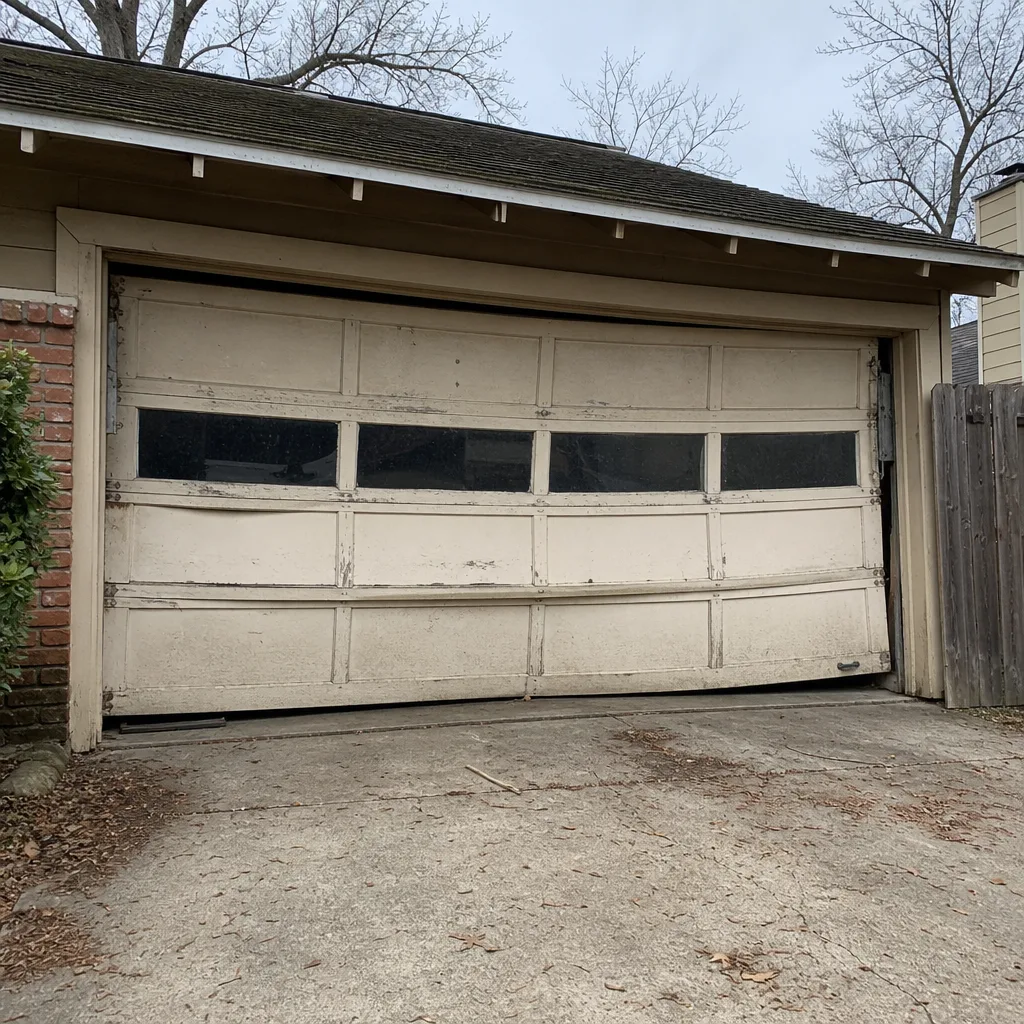 Before
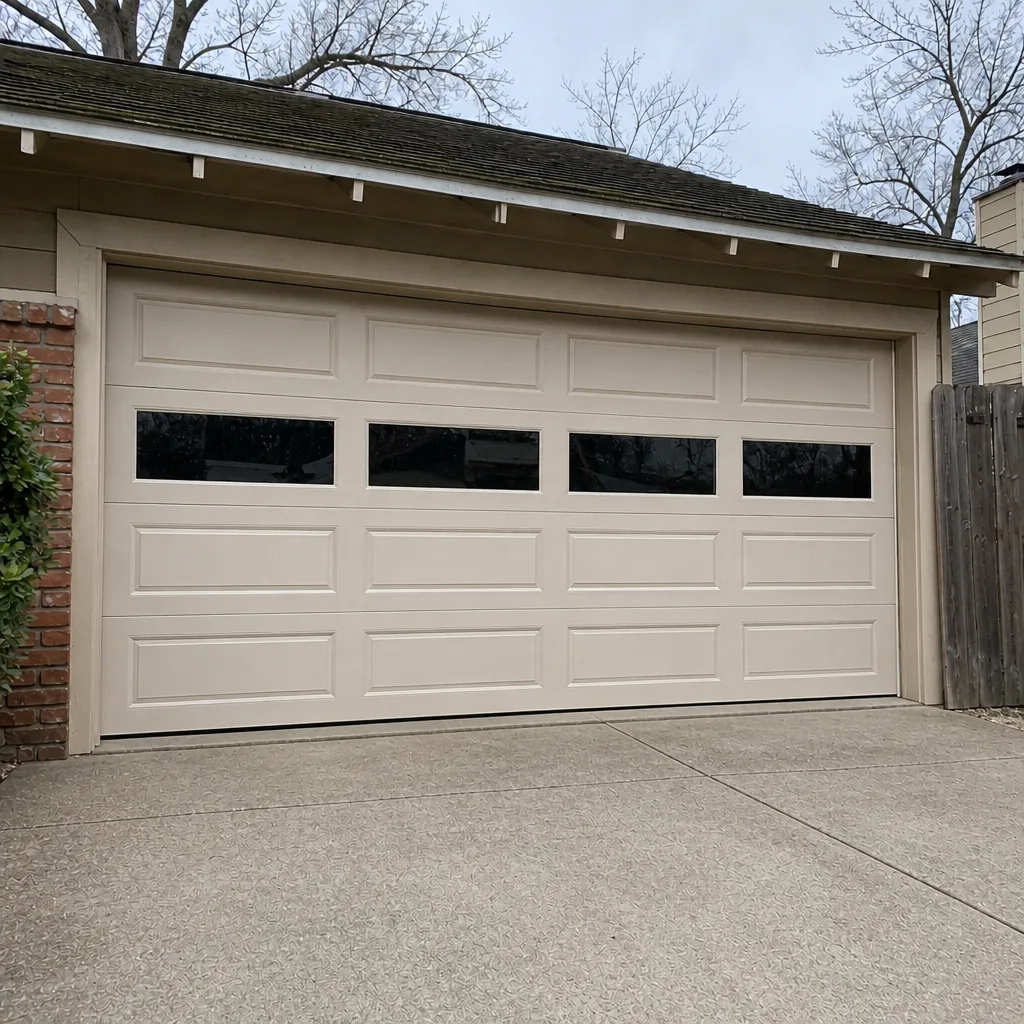 After
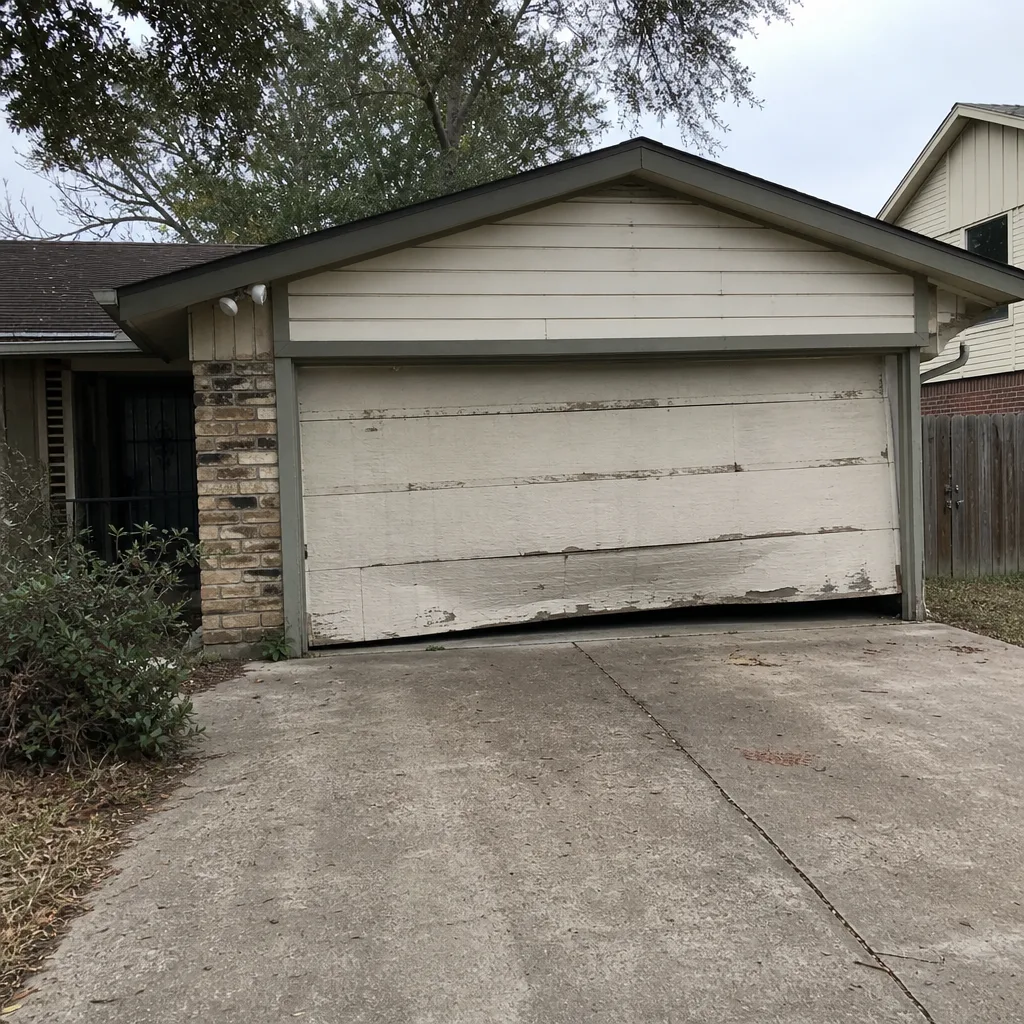 Before
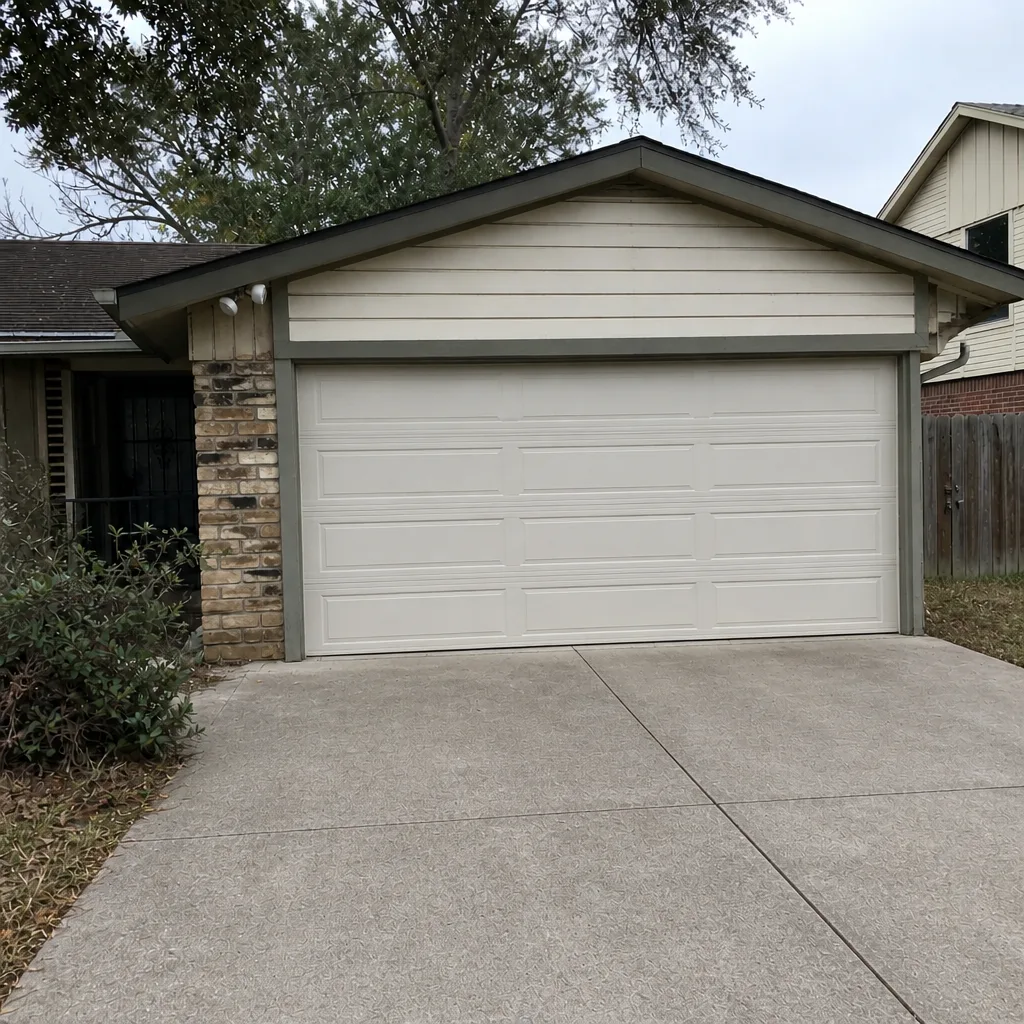 After
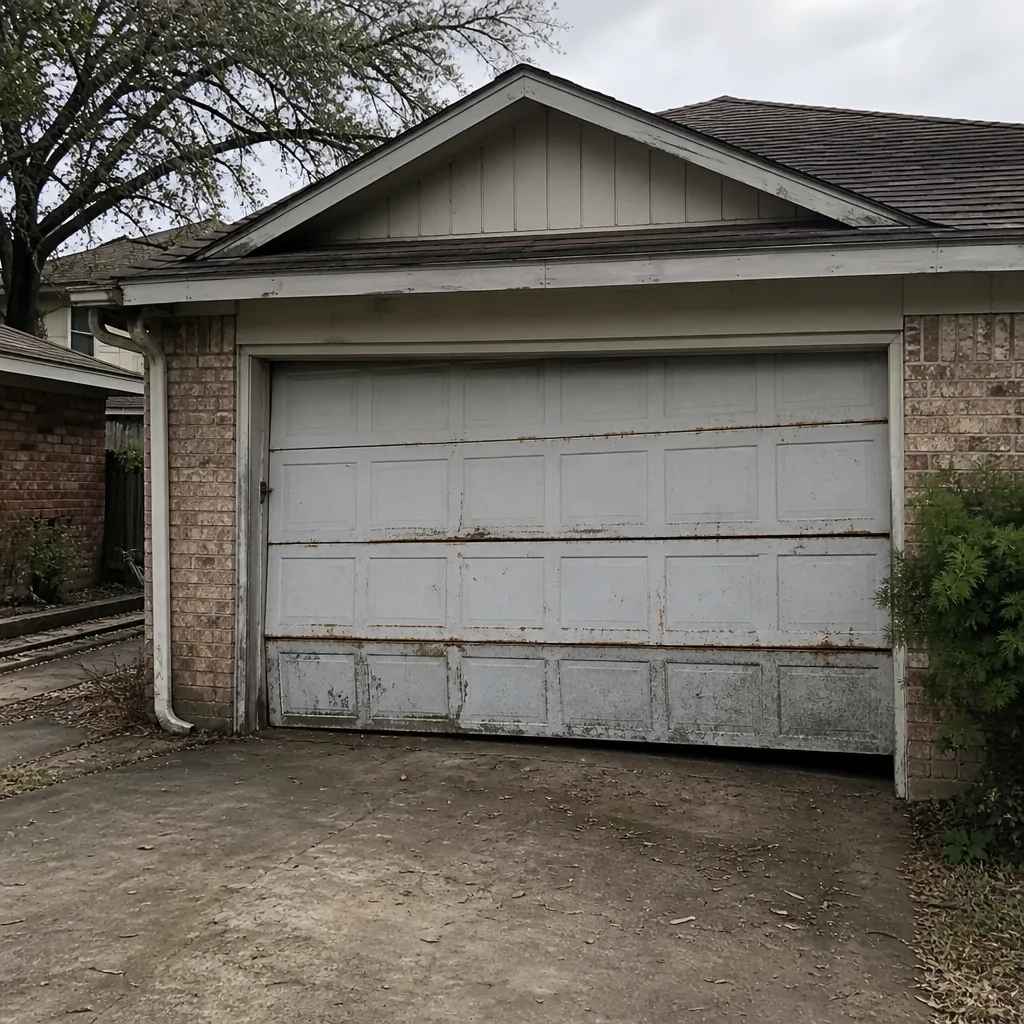 Before
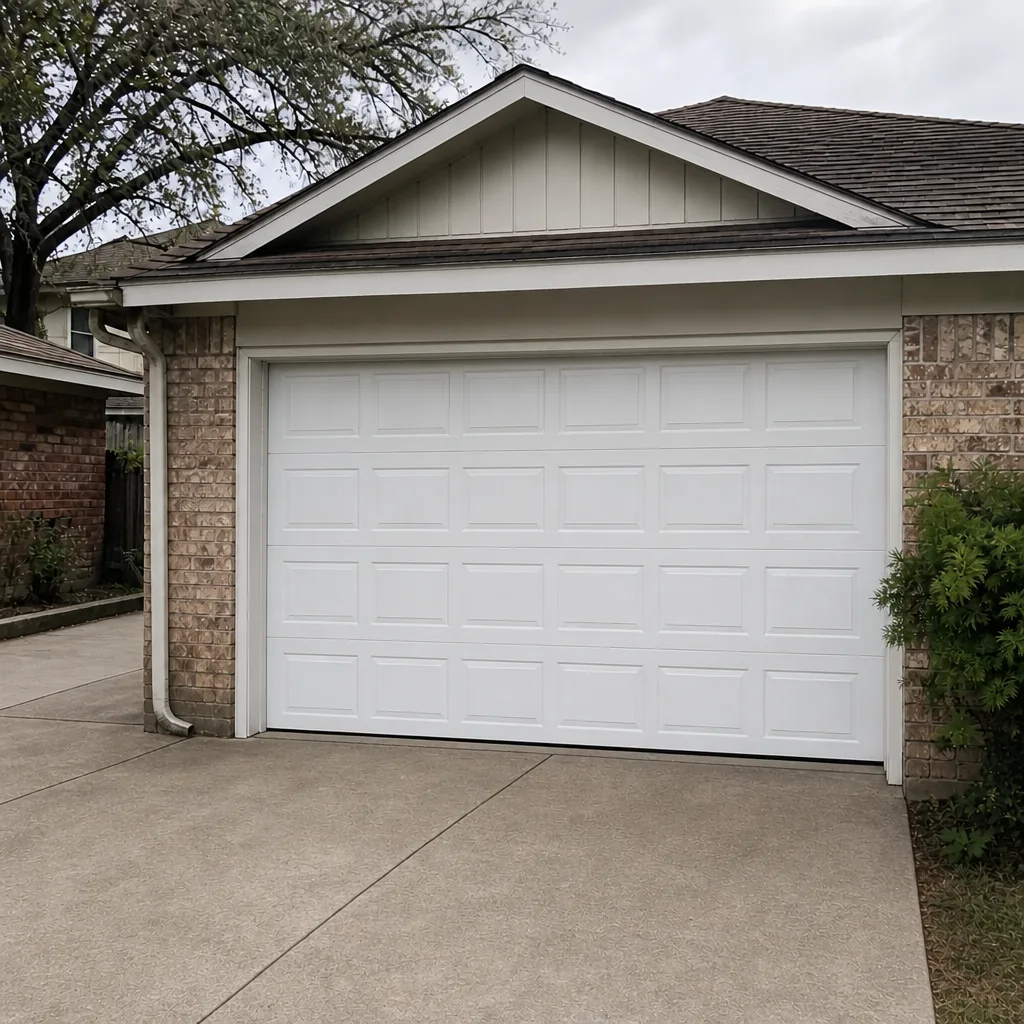 After
When to Call a Professional
Some garage door issues are safe to observe, and some need a technician right away. Call a professional if you hear a bang from the garage and the door won’t lift, if the door hangs crooked or slams down, if the cables look frayed or kinked, if the door reverses unexpectedly, or if the opener runs but nothing moves. Any of these signals a safety system under stress, and the door should stay closed until a technician inspects it. Spring, cable, and opener failures are the most common reasons homeowners reach out. Spring Branch Garage Door Repair offers free estimates in Spring Branch, and we can look at the whole system rather than just the failed part. Call (844) 660-0146. We answer 24/7. Fast dispatch from 7am to 7pm, Sunday through Friday.
Frequently Asked Questions
Spring repair is priced per job by the written estimate, and a two-spring door usually needs both springs replaced because they’re matched and share the load, so a pair costs about twice a single spring. The estimate is free, and the price is agreed before any work starts.
Yes, same-day repair is often possible for stuck doors and broken springs. We answer 24/7, and dispatch runs from 7am to 7pm, Sunday through Friday. A call outside dispatch hours is booked into the next opening. Call (844) 660-0146 for an exact quote.
No, the written estimate is the price. If the technician finds something the original quote didn’t cover, like a bent track under a broken spring, it’s explained and agreed with you before any extra work happens. You’re never billed for something you didn’t approve.
The local professionals we connect you with are licensed and insured as their state requires, and our technicians have up to 12 years of experience. Ask about credentials when you call, and we’ll tell you what applies to the work on your door.
Yes. We work on LiftMaster, Chamberlain, Genie, Craftsman, and the other major opener brands, covering both modern Wi-Fi-enabled systems and older analog units. The brand on your ceiling doesn’t limit the repair.
Installation is measured, ordered, and scheduled rather than same-day, because the door has to be sized to your opening and ordered in the right style. After measuring, you get a written price, then the install is scheduled and completed as one project.
The Bottom Line
Your garage door is a system, not a single part, and treating it that way is the difference between a quick fix and a cycle of repeat repairs. Know the service life of your springs, cables, rollers, and opener, and watch for the corrosion that Houston-area humidity accelerates. Spring Branch homes vary widely by age and construction, so door sizing, insulation, and opener compatibility depend on the house you’re in. When something fails, choose a specialist who can handle repair, spring work, opener repair, parts, and installation without handing you off, and read every quote line by line. That’s how you keep one call from turning into three.
Contact Us
Spring Branch Garage Door Repair is a residential garage door specialist covering repair, opener repair, spring replacement, parts, and new door installation across LiftMaster, Chamberlain, Genie, Clopay, Amarr, Wayne Dalton, Craftsman, and Raynor equipment. When your door stops working, we can look at the whole system and tell you what it needs. Call (844) 660-0146 for a free estimate. We answer 24/7. Fast dispatch from 7am to 7pm, Sunday through Friday. For a full look at everything we handle, start at Spring Branch Garage Door Repair.
Written by the team at Spring Branch Garage Door Repair.