
Last updated November 21, 2026
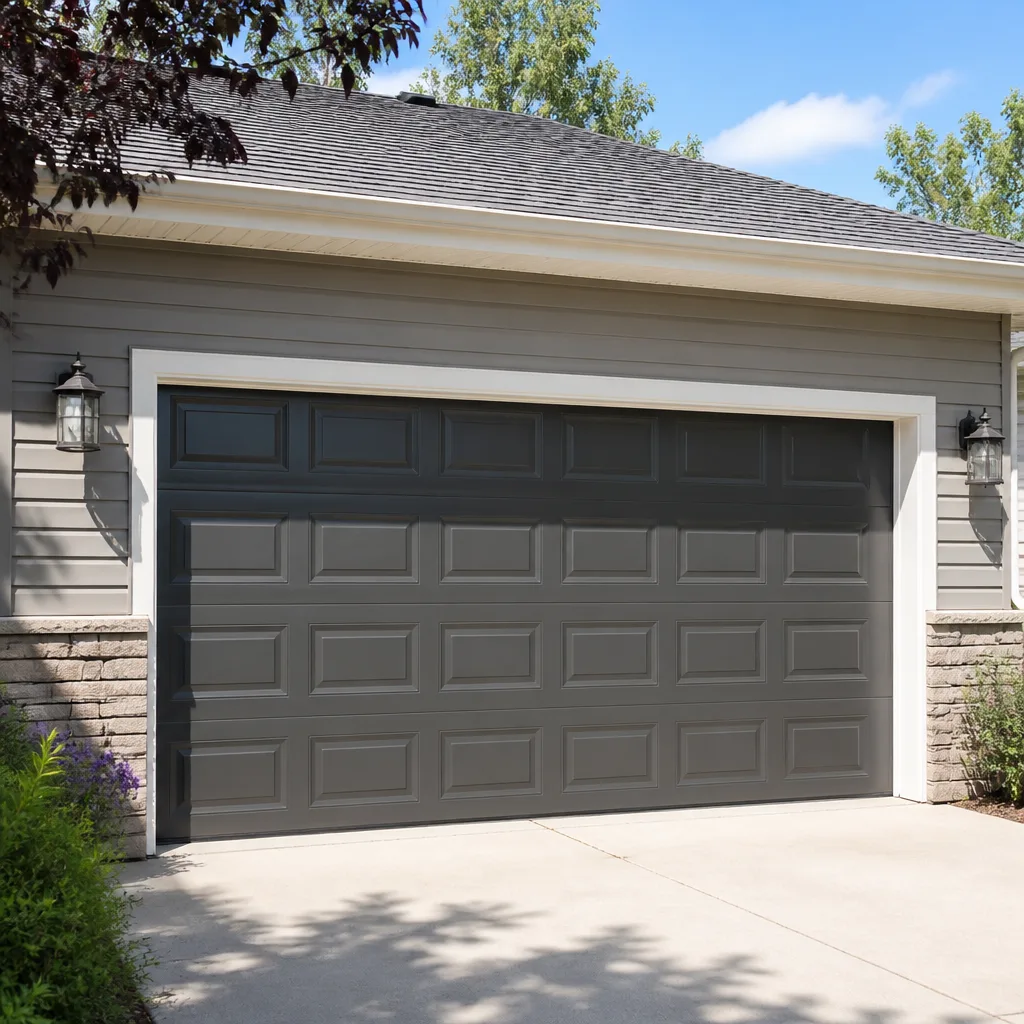 Raised-panel steel
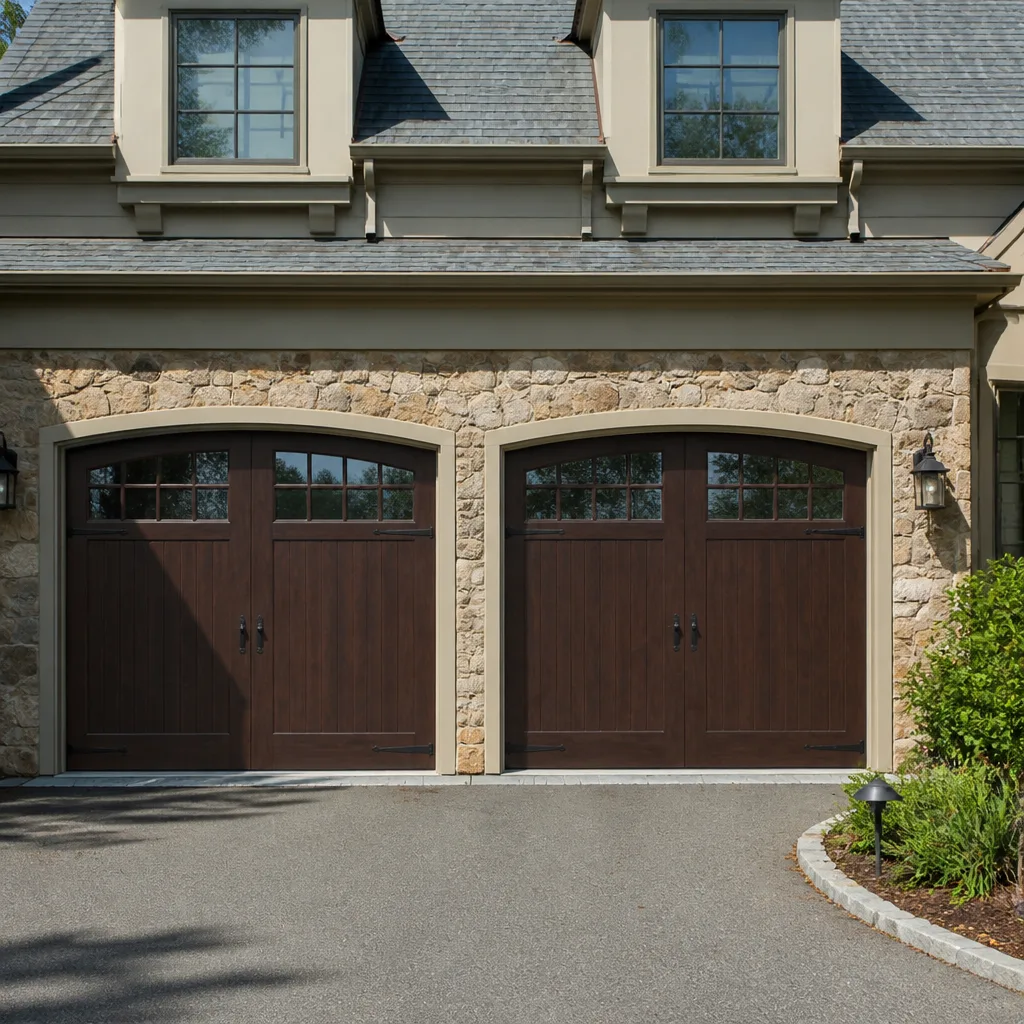 Carriage house
 Modern flush
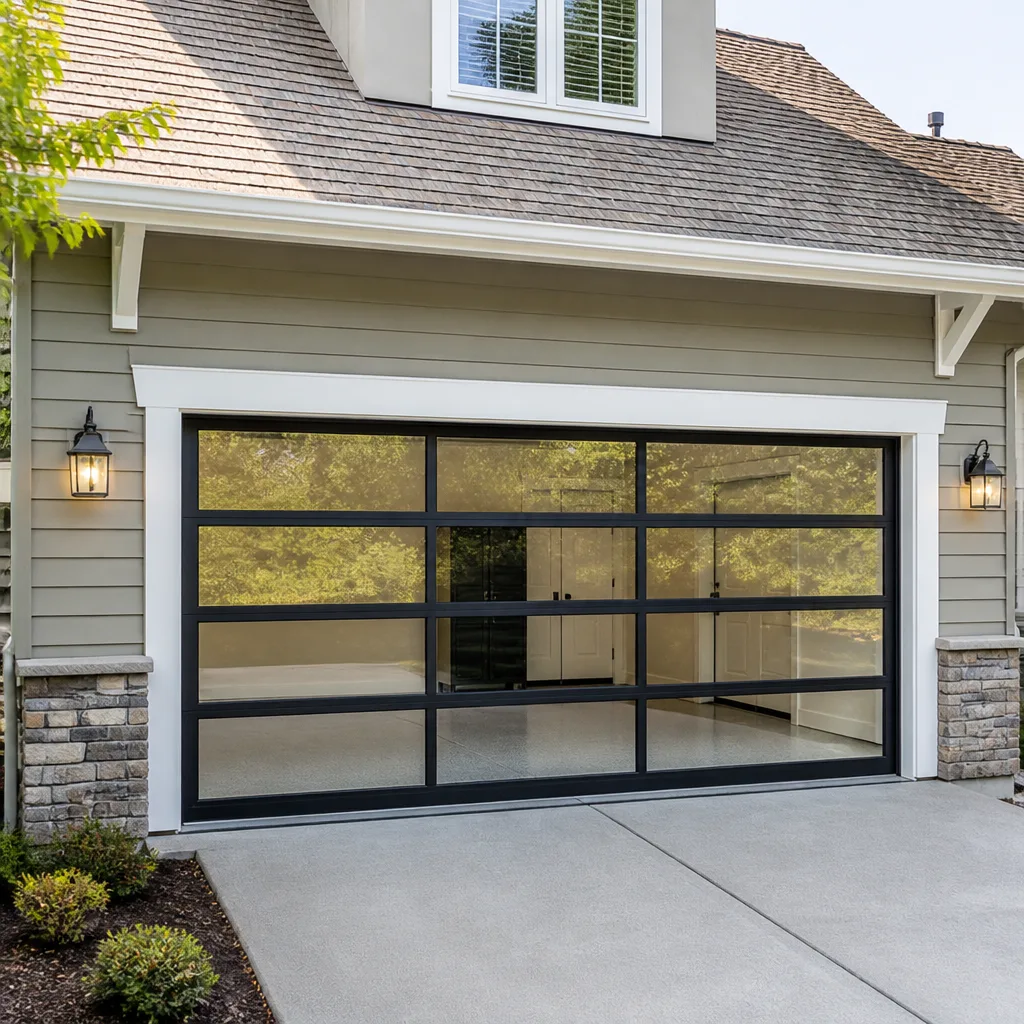 Full-view glass
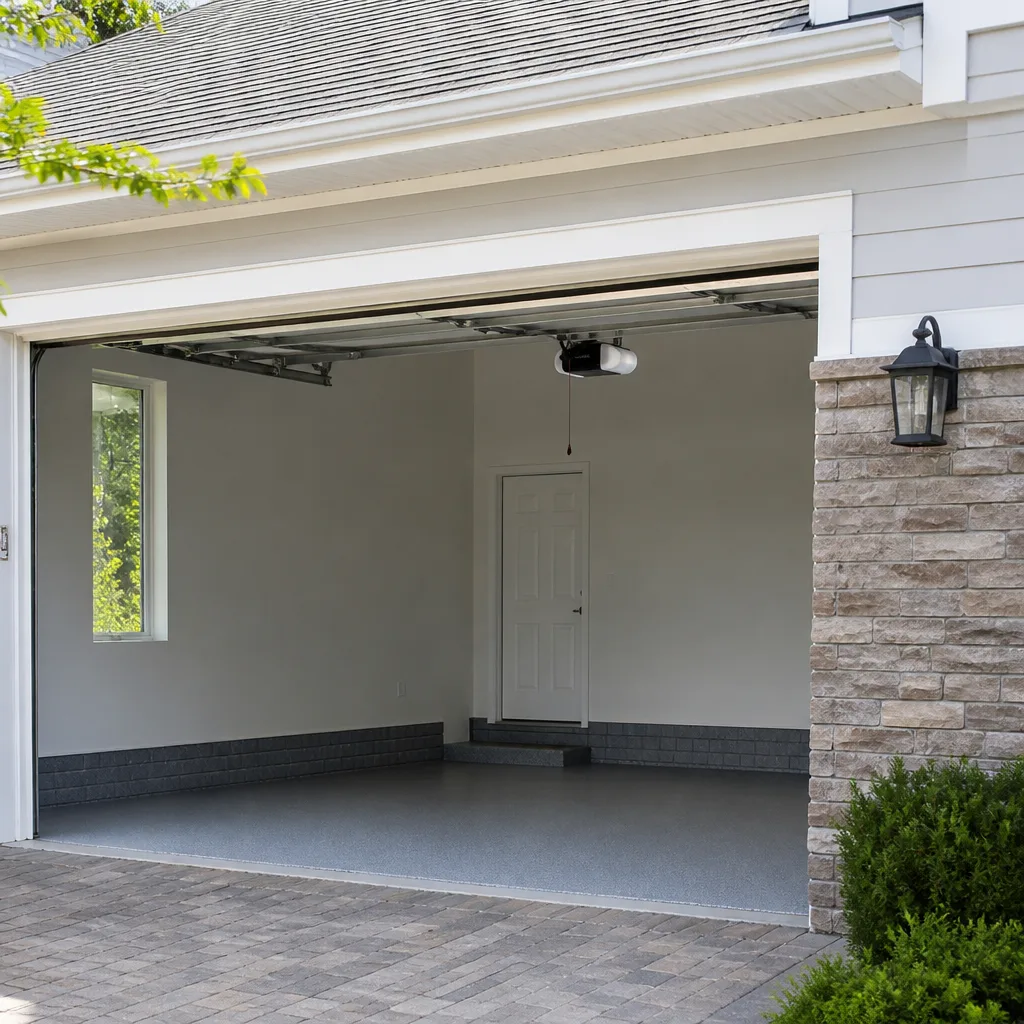 LiftMaster openers
 Chamberlain openers
Full 25-point door and opener safety check with every visit - springs, cables, rollers, tracks, and your LiftMaster or Chamberlain opener included
You get a price before we start. It does not change when the pro arrives.
Get your free estimateHow to Hire a Garage Door Contractor in Spring Branch: A Step-by-Step Guide
The most common complaint in garage door contractor reviews isn’t bad work. It’s contractors who diagnose one problem, start the job, and then find a second issue they’re not equipped to fix. A snapped spring turns out to sit next to a bent track. A dead opener turns out to be a door problem. Suddenly your “one visit” repair becomes three visits with two companies, and nobody wants to own the final result. Hiring well is less about finding a license and more about asking the questions that reveal whether a contractor can finish what they start. This guide gives you those questions, plus how to read a quote, check insurance, and judge reviews in Spring Branch before you commit.
Quick Answer
To hire a garage door contractor in Spring Branch, verify the company’s state licensing and insurance, ask whether they stock and sell parts directly, confirm they handle the full scope of repair, opener work, and installation, and demand a written line-item quote with named brands and part specifications. The right contractor can diagnose, supply parts, and finish the job in one visit rather than passing you to a second company mid-project. Never accept a verbal estimate or a vague parts description.
Styles & brands we work with
- Raised-panel steel
- Carriage house
- Modern flush
- Full-view glass
- LiftMaster openers
- Chamberlain openers
Key Takeaways
- A full-service contractor handles diagnosis, parts, repair, and installation without handing you off. A service-only company often can’t sell you the door or parts you end up needing.
- Five questions separate the pros from the part-timers: brands stocked, spring sizes carried, license and insurance proof, scope of work, and how the quote is written.
- Vague line items, parts listed only as “standard,” and diagnostic-fee-applied-to-service language are the three biggest red flags in a garage door quote.
- General liability insurance and workers’ compensation are different policies. Ask for certificates for both.
- Reviews with no negatives at all are often a filtering artifact, not proof of perfection.
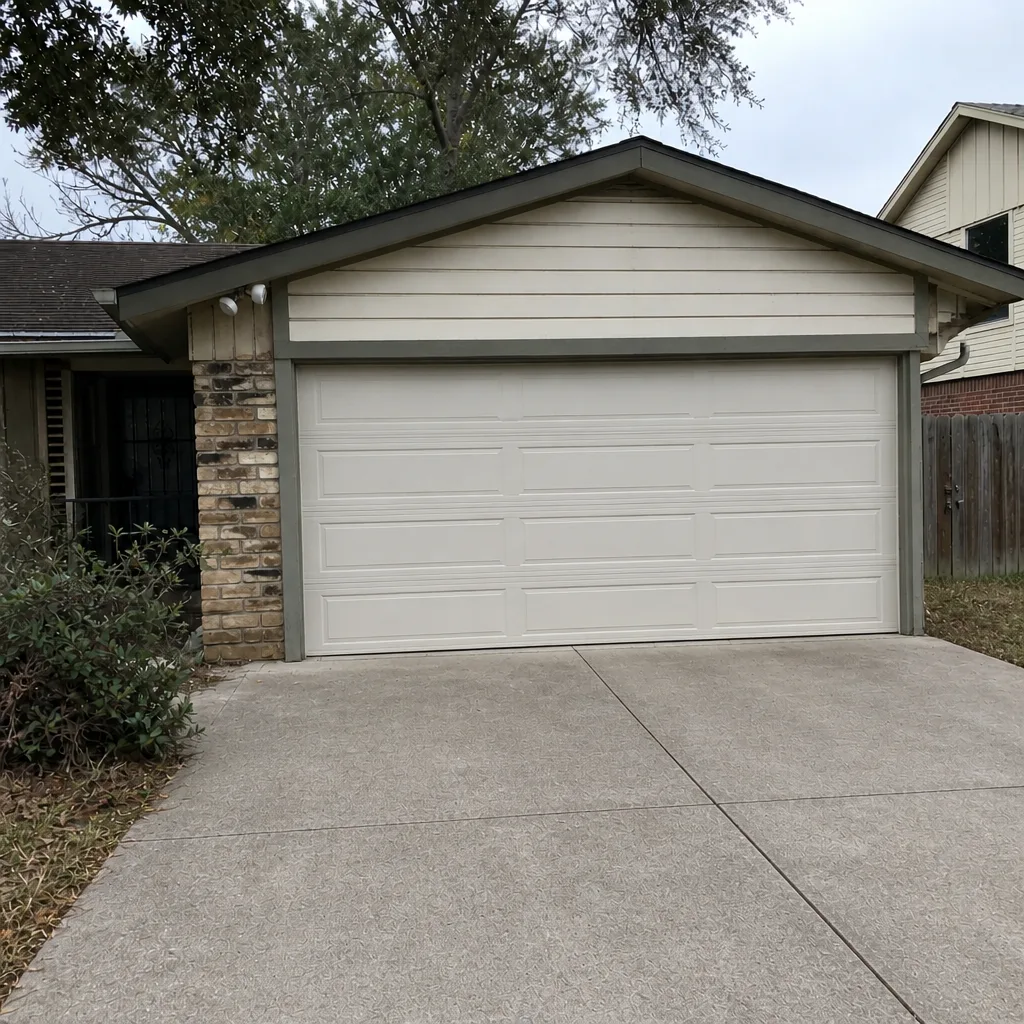
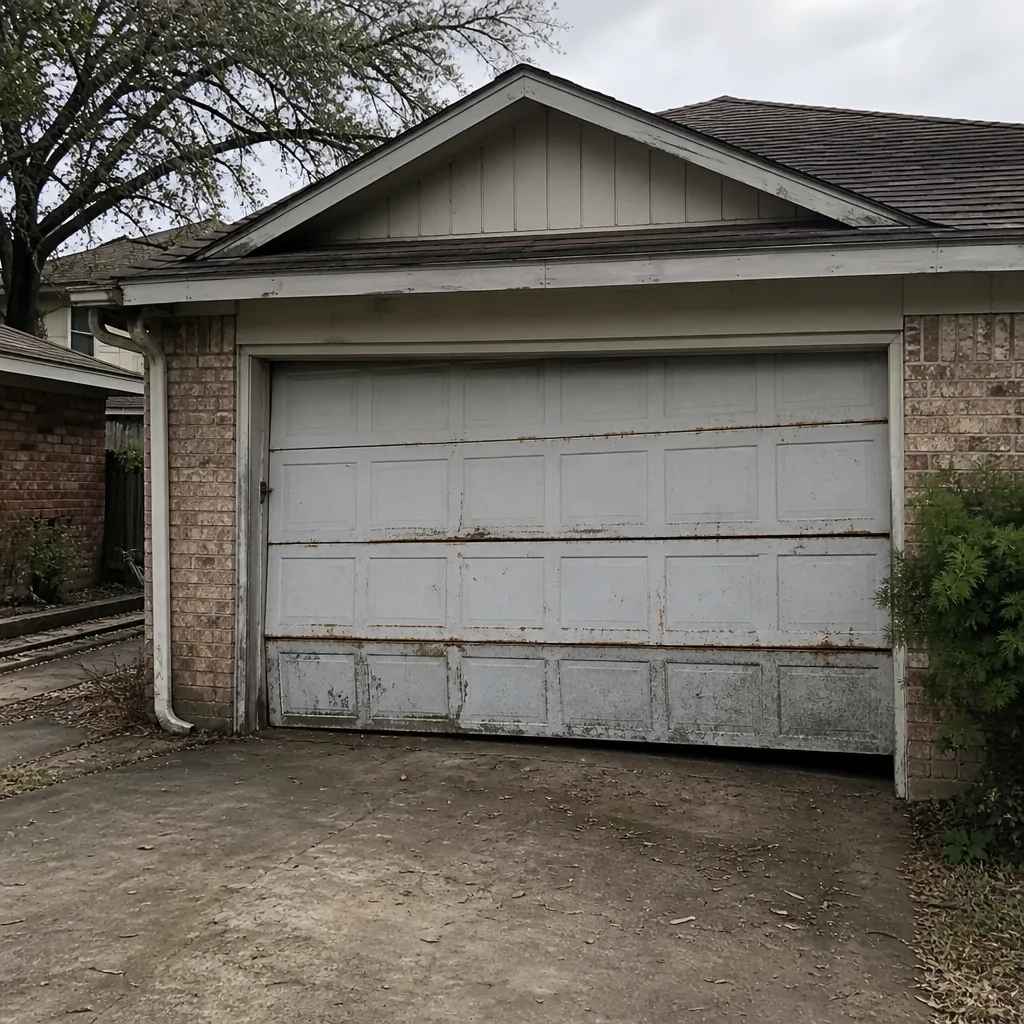
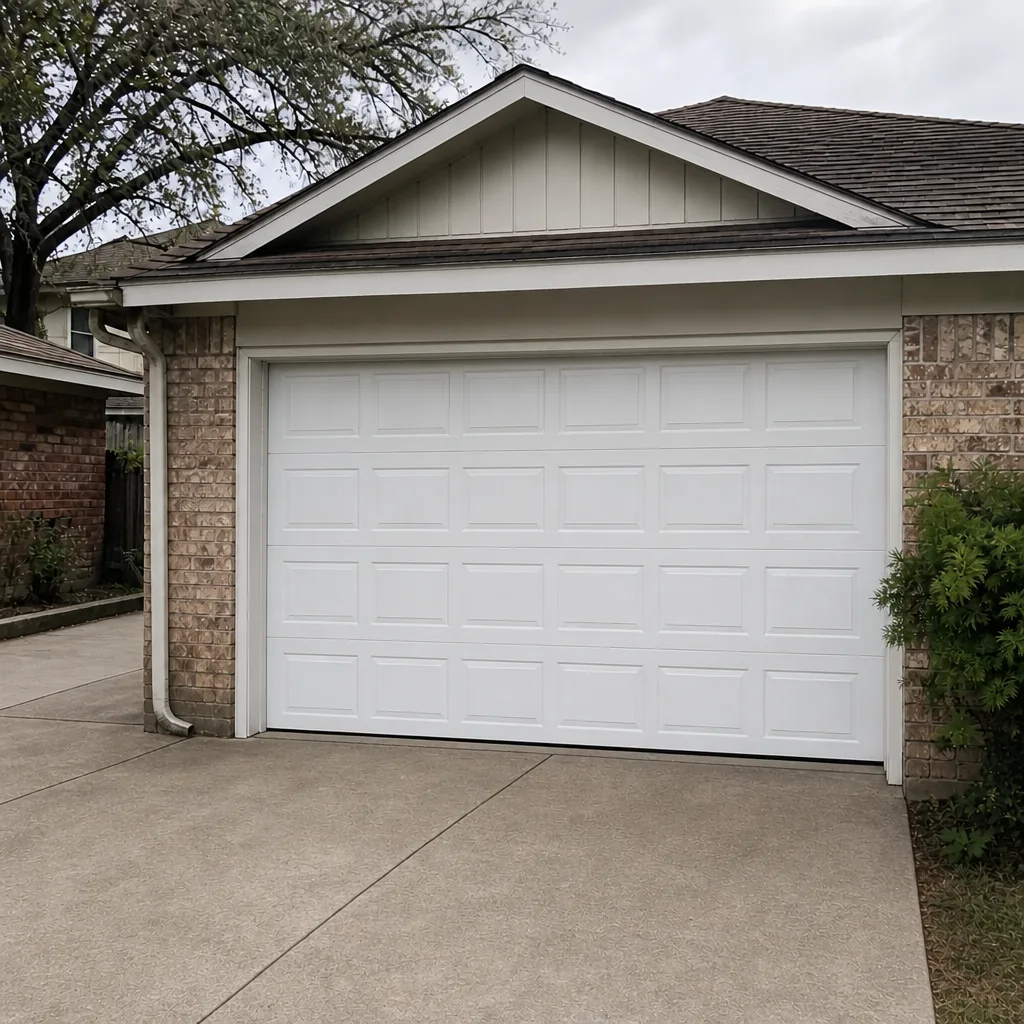
See the difference
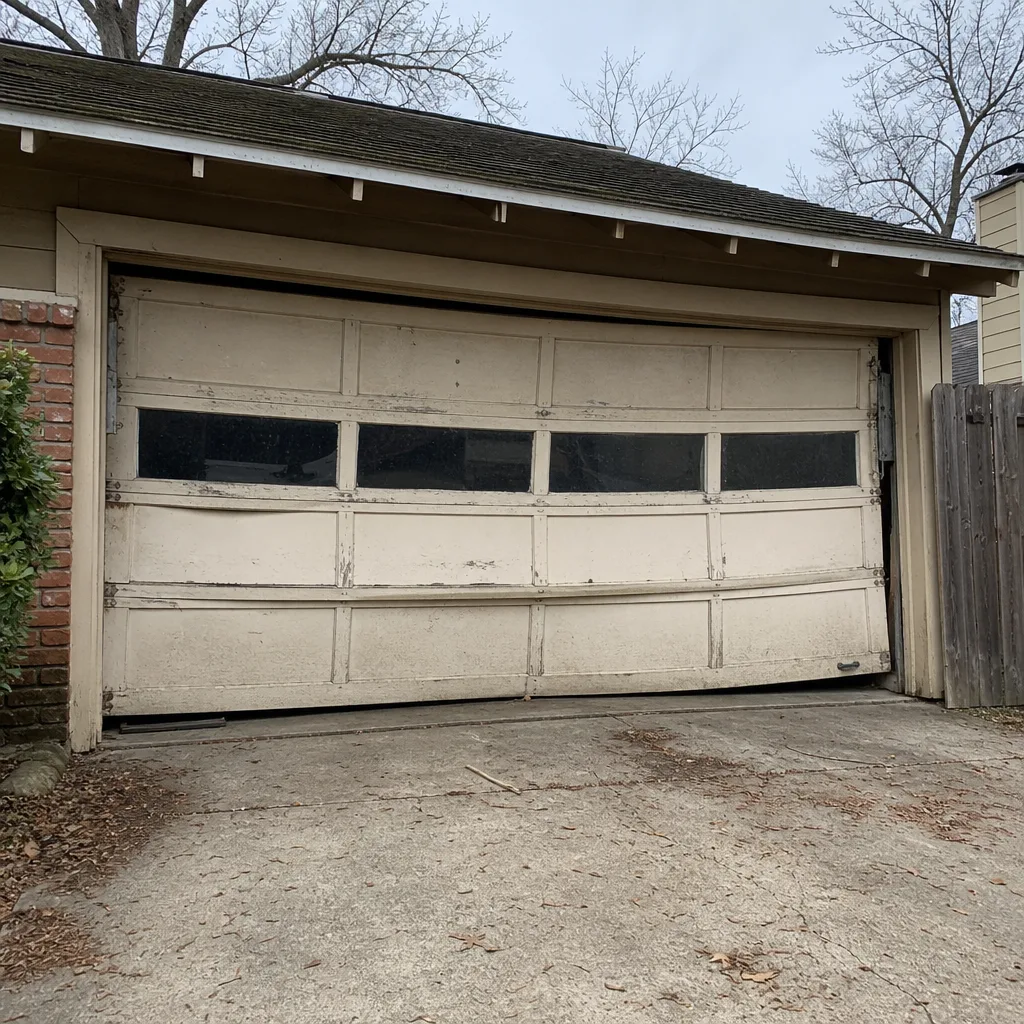 Before
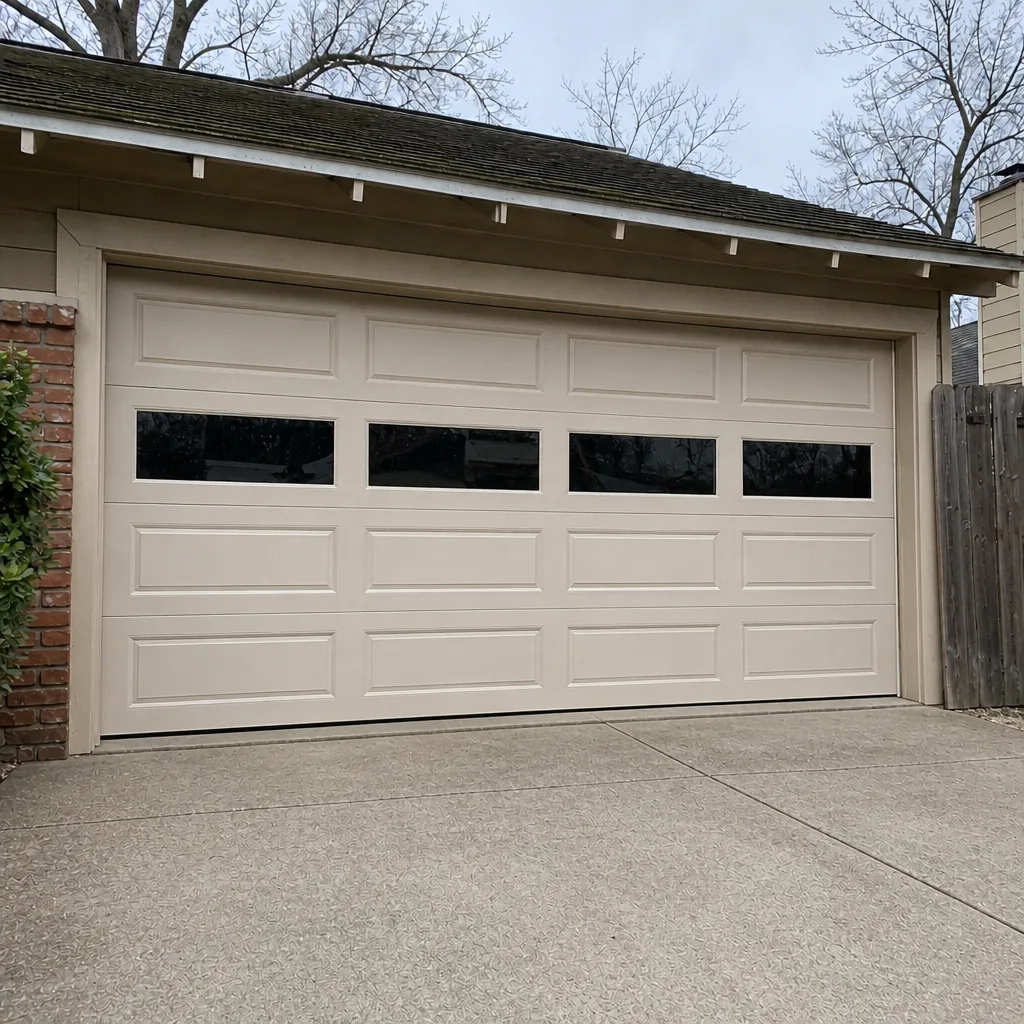 After
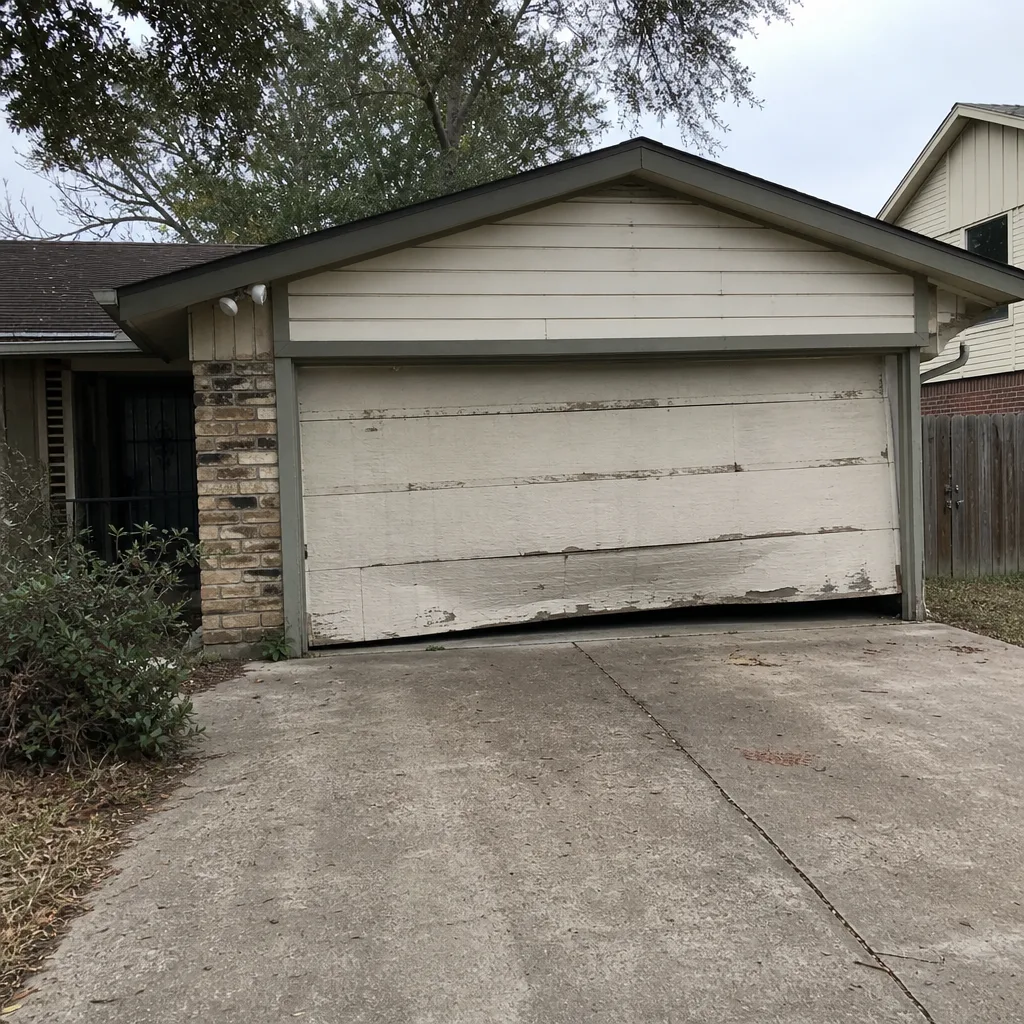 Before
 After
 Before
 After
Table of Contents
- Quick Answer
- The Five Questions to Ask Before You Agree to a Quote
- How Do You Verify a Texas Garage Door Contractor’s License and Insurance?
- What Are the Red Flags in a Garage Door Quote?
- What’s the Difference Between a Company That Sells Doors and One That Only Services Them?
- Why Brand Knowledge and Parts Stock Matter More Than You Think
- How to Read Online Reviews for Garage Door Contractors
- Why Spring Work Is the Job That Separates Trained Technicians from General Handymen
- When to Call a Professional
- Frequently Asked Questions
The Five Questions to Ask Before You Agree to a Quote
These five questions are the core of this guide. Ask them on the phone before anyone comes out. How a contractor answers tells you more than any ad or website. A confident, specific answer signals experience. A vague or evasive one tells you they’re guessing.
- “Which brands of parts do you stock?” A contractor who can name the brands they carry, and explain why, knows the equipment in your garage. If they only say “whatever the supplier has,” expect a second visit or an incompatible part.
- “Do you carry springs in multiple sizes?” Garage door springs come in different wire gauges, lengths, and wind directions. A contractor who carries only one or two sizes will either force a mismatch or order in and reschedule. Ask specifically how many sizes they keep on hand.
- “What’s your license and insurance situation?” Ask for the license number and both insurance certificates. We’ll explain exactly what to check in the next section.
- “Will you handle the full scope, or do you refer out?” If you need a door replaced and an opener installed, a service-only company will finish the repair and hand you to someone else. Ask up front whether they can do repair, opener work, parts, and installation.
- “How will the quote be written?” You want a line-item written quote naming brands and part specs, not a one-line “repair garage door.” Ask to see an example before they start.
In Spring Branch, many homes have original doors from the 1980s and 1990s that have been patched over time. A contractor who carries parts in multiple sizes and knows the common brands installed in this area can finish a repair in one visit. One who doesn’t will be back. Or you’ll be calling someone else. Either way, you pay twice.
How Do You Verify a Texas Garage Door Contractor’s License and Insurance?
Ask for the license number in writing and verify it directly with the state licensing board before work starts. A legitimate contractor will give you the number without hesitation. If they deflect or say “we’re licensed and insured” without producing anything, that’s your answer: move on. Texas does not license garage door contractors under a single statewide trade license the way some states do, so the exact credential depends on the scope of work; ask the contractor which license they hold and verify it with the issuing body.
Insurance is the part most homeowners skip. It’s also the part that matters most if something goes wrong.
General liability insurance covers damage to your property: a dented door panel, a broken window, a scraped car in the driveway. Workers’ compensation insurance covers the technician if they’re injured on your property. These are two separate policies, and a contractor can carry one without the other.
Ask for certificates of insurance for both. Check three things on each certificate:
- The policy is current, not expired.
- The business name on the certificate matches the name on the quote.
- The coverage limits are stated, not blank.
A contractor with general liability but no workers’ comp leaves you exposed if a technician is hurt on your property. That’s a real risk with garage door work, where heavy springs and doors under tension are involved. Ask the question directly. A professional answers it plainly.
For a market like Spring Branch, where homes are spread across older and newer subdivisions, contractors who work here regularly know the permit requirements for structural changes like track relocation or header modification. Most cities require a permit for structural work, so ask your city’s building department whether your specific project needs one before work begins.
What Are the Red Flags in a Garage Door Quote?
The three biggest red flags are vague line items, parts described only as “standard,” and diagnostic-fee-applied-to-service language. Each one is a signal about how the contractor operates. Individually, any one deserves a question. Together, they’re a reason to get a second quote.
Vague line items
Look at the quote. Does it say “repair garage door” on one line? Or does it break out the spring, the labor, the part specification, and the brand? A one-line quote for a multi-part job is a red flag because you can’t verify what’s being replaced and you can’t compare it to another quote. Write down what you want itemized before you accept anything.
Parts described only as “standard”
A spring is not a generic part. Springs have a wire gauge, an inside diameter, a length, and a wind direction. A torsion spring and an extension spring aren’t interchangeable. If the quote says “standard spring,” ask which spec. A contractor who can recite the spec knows the part. One who can’t is guessing, and a mismatched spring fails early or doesn’t fit at all.
Diagnostic fee applied to service
This language means the contractor is motivated to recommend service once they’re in your garage. The fee you paid to diagnose becomes a credit, but only if you buy the repair. That creates pressure to approve work you may not need. Ask instead for a free estimate and a written quote before any work begins. The price should be set per job by that written quote, not adjusted after the fact.
Other warning signs
- No written quote, just a verbal number.
- A price quoted sight-unseen without measuring the door or checking the spring.
- Pressure to approve additional work on the spot.
- Inability to name the brands they work on.
- A contractor who won’t give you the license number.
In Spring Branch, door widths and heights vary across older and newer neighborhoods, so an accurate quote requires measuring the actual door. A price given before anyone looks is a guess.
What’s the Difference Between a Company That Sells Doors and One That Only Services Them?
A company that sells and installs doors can typically also service and repair them. A company that only services doors usually cannot sell you a replacement or supply certain parts. The difference matters most when a repair turns into a replacement mid-job.
Consider what happens when a technician diagnoses a problem that can’t be repaired economically. A service-only company finishes the repair they can do, then refers you to a door seller for the replacement. You’ve now dealt with two companies, two quotes, and two schedules. A full-service company can move from repair to replacement without a handoff.
This is where Spring Branch Garage Door Repair frames its approach: one call covers the full scope, so you aren’t handed off at any stage. The company handles repair, garage door opener repair, parts supply, and garage door installation under one roof. Customers in Spring Branch don’t get passed to a second contractor when the scope changes.
Ask any contractor this question directly: “If the door can’t be repaired, can you replace it?” The answer tells you whether you’re hiring a specialist or a service desk with a referral list.
For homeowners planning a replacement, this distinction saves time. You’re not shopping for a door seller after the diagnosis. You’re already talking to someone who can measure, order, and install.
Why Brand Knowledge and Parts Stock Matter More Than You Think
Most residential garages in Spring Branch have equipment from a handful of major manufacturers. Knowing which brand is on your door and which opener is running it isn’t trivia. It’s the difference between a first-visit fix and a return trip.
LiftMaster and Chamberlain are common in newer homes, and Genie openers show up frequently as well. Raynor doors appear on plenty of older builds. Each brand has its own parts, diagnostic quirks, and repair considerations. A contractor who works across these brands can walk into any garage and know what they’re looking at.
Garage door repair in Spring Branch often comes down to parts availability. A spring that isn’t in stock means a return visit. An opener gear that isn’t on the shelf means waiting on a supplier. The contractor who stocks and sells parts directly shortens the repair to one visit.
Ask the contractor on the phone:
- Which door brands do you work on? (Listen for a specific list, not “all brands.”)
- Which opener brands do you service? (LiftMaster, Chamberlain, Genie, and Craftsman are common answers.)
- Do you stock parts, or do you order them?
- How many spring sizes do you keep on hand?
A full-service contractor answers these with specifics. A part-timer answers them with generalities. The difference shows up on the invoice and on the calendar.
How to Read Online Reviews for Garage Door Contractors
Read reviews for pattern, not for star average. A 4.6 rating with twenty detailed reviews tells you more than a 5.0 with six one-line entries. Here’s what to weigh and what to ignore when you’re vetting contractors in Spring Branch.
What to weight
- Detailed reviews about the same problem you have. If you have a snapped spring, read the spring reviews. A review that explains what the technician did and how the quote was handled is worth ten generic “great service” entries.
- Reviews that mention the quote process. Did the price match? Was it written down? Did anyone try to add work on the spot?
- Reviews that mention parts availability. “Fixed it same day” and “had to come back with the part” tell you about stock.
- Reviews with a mix of ratings. A business that handles a complaint well is more trustworthy than one with no complaints at all.
What to ignore
- A perfect 5.0 average with no negatives. That’s often a filtering artifact. Review platforms allow businesses to solicit reviews, and a page with no imperfect rating usually reflects a solicitation strategy, not a flawless record.
- Single-line reviews with no detail. Five stars and nothing else tells you nothing.
- Reviews from far outside the service area. For a local contractor, reviews should read like they came from local homeowners.
- Ratings with no explanation of the job. A star count without a story isn’t evidence.
When you’re deciding between two contractors in Spring Branch, call both. Ask the five questions from earlier. The reviews give you a starting point. The phone call gives you the real answer.
Why Spring Work Is the Job That Separates Trained Technicians from General Handymen
Garage door spring repair is the most dangerous job in the trade, and it’s the fastest way to tell a trained technician from a generalist. Torsion springs and extension springs store enormous energy. When a spring breaks or is mishandled, the release can cause serious injury. This is not a job to attempt without the right tools, training, and experience.
That’s why spring repair is a core service, not an add-on. A contractor who lists it as a specialty is signaling technical depth. A handyman who says “sure, I can do that” is signaling something else.
Here’s what to look for in a spring repair quote:
- The spring type is named (torsion or extension).
- The wire gauge, length, and winding direction are specified.
- The quote reflects whether it’s one spring or a matched pair.
- They can explain what caused the failure, not just what to replace.
Torsion springs are usually replaced in matched pairs because they wear at the same rate. Replacing one spring on a door with two of the same age often means the other fails soon after. Ask specifically what’s being replaced and why. A contractor who explains this clearly is working from knowledge, not from a script.
The mild winters in Spring Branch mean garage doors get used year-round without the freeze-and-thaw stress of colder climates. But the heat and humidity of the warmer months do affect spring metallurgy and door hardware. A spring that’s been in service through several hot summers has been through real wear cycles. That’s worth asking about when you get a repair quote: how old are the springs, and how do they look?
Common Mistakes to Avoid
- Accepting a verbal quote. A price without a written breakdown is a promise without a document. Ask for it in writing with line items and part specs before you agree.
- Hiring without checking insurance. A contractor with general liability but no workers’ comp leaves you exposed if someone gets hurt on your property. Ask for both certificates.
- Skipping the parts question. If your contractor only stocks one spring size, you may be forced into a match that doesn’t fit, or into a return visit. Ask what they carry before you schedule.
- Choosing the lowest price without comparing line items. The cheapest quote may cover one part or one problem. The next-lowest may cover more. Compare scope, not just the total.
- Trusting a perfect 5.0 average. Reviews get filtered. Read the detailed ones. Look for reviews that describe the job and the quote process.
- Hiring a service-only company for a replacement. If the door can’t be repaired, a service-only contractor will refer you out. Ask up front whether they handle installation.
- Ignoring brand and opener questions. If your contractor can’t name the brands they work on, you’re guessing whether they know your equipment. Ask before they arrive.
When to Call a Professional
Some garage door problems are stable and can wait for a scheduled appointment. Others need attention before someone gets hurt.
Call a professional when:
- A spring snaps and the door won’t lift or drops when you try.
- An opener runs but the door doesn’t move.
- A door goes off its tracks or hangs crookedly.
- A door reverses unexpectedly or fails to close completely.
- Cables are frayed, loose, or hanging slack.
- A torsion bar or winding cone shows visible damage.
A snapped spring leaves the door under an unbalanced load. A door stuck partway open leaves your home open. Both are calls worth making now, not next week. Spring Branch Garage Door Repair offers free estimates in Spring Branch. Call (844) 660-0146. We answer 24/7. Fast dispatch from 7am to 7pm, Sunday through Friday.
Frequently Asked Questions
Ask for the license number in writing and verify it with the issuing body before work begins. Texas doesn’t have a single statewide trade license for garage door work the way some states do, so the applicable credential depends on the scope of the job. A professional provides the number without hesitation. Call (844) 660-0146 for a free estimate. We answer 24/7. Fast dispatch from 7am to 7pm, Sunday through Friday.
General liability covers damage to your property, like a dented car or a broken window. Workers’ compensation covers the technician if they’re injured on your property. These are separate policies, and a contractor can have one without the other. Ask for certificates for both and make sure the business name on each matches the name on your quote.
Yes. A written quote with line items, brand names, and part specifications protects you from an invoice larger than the number you agreed to. The price should be set per job by that written quote, not adjusted after the work begins. If a contractor won’t write it down, get a second quote.
Ask which brands they stock and how many spring sizes they carry. A contractor who lists specific brands and explains their inventory knows the equipment. One who says “whatever the supplier has” is likely to make a return trip. In Spring Branch, older doors often need specific spring specs, so parts availability directly affects whether the job finishes in one visit.
Because review platforms allow businesses to solicit reviews, and a page with no imperfect rating often reflects a filtering strategy rather than a perfect record. A 4.6 average with twenty detailed reviews tells you more about how a contractor works than a 5.0 with a handful of one-line entries. Read reviews that describe the job and the quote process, and look for how complaints were handled.
Yes, if they handle both. A full-service company can diagnose the door, repair or replace parts, and service the opener without a handoff. A service-only company may need to refer part of the job out. Ask up front whether they cover repair, opener work, and installation, so you don’t end up with two contractors and two schedules.
The Bottom Line
Hiring a garage door contractor in Spring Branch comes down to five questions asked before you agree to anything: which brands you stock, how many spring sizes you carry, proof of license and insurance, whether you handle the full scope, and how the quote is written. Ask them on the phone. A professional answers with specifics, not generalities. The right contractor finishes in one visit because they carry the parts and know the equipment. If anything feels vague, get a second quote. It’s a free phone call, and it’s the cheapest insurance you’ll buy.
Ready to start? Call (844) 660-0146 for a free estimate. We answer 24/7. Fast dispatch from 7am to 7pm, Sunday through Friday.
Written by the team at Spring Branch Garage Door Repair.