
Last updated November 21, 2026
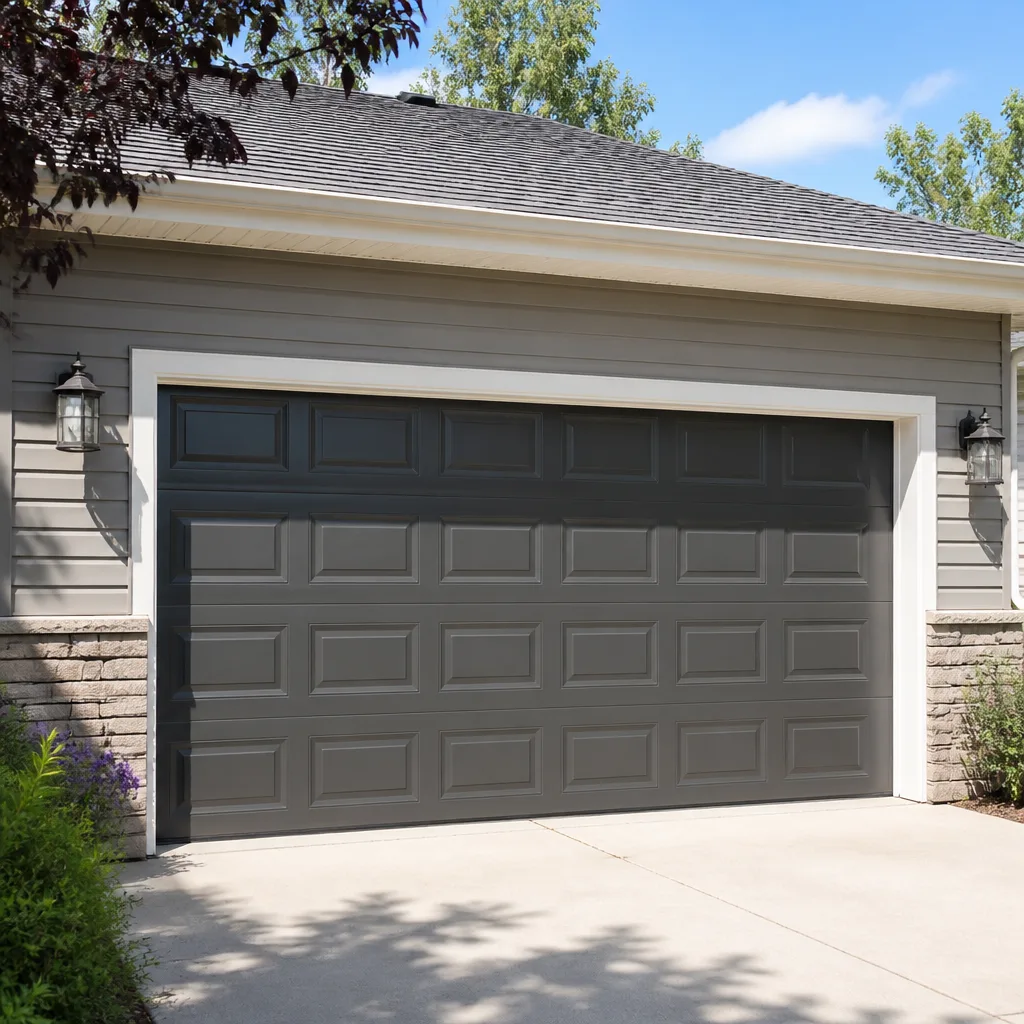 Raised-panel steel
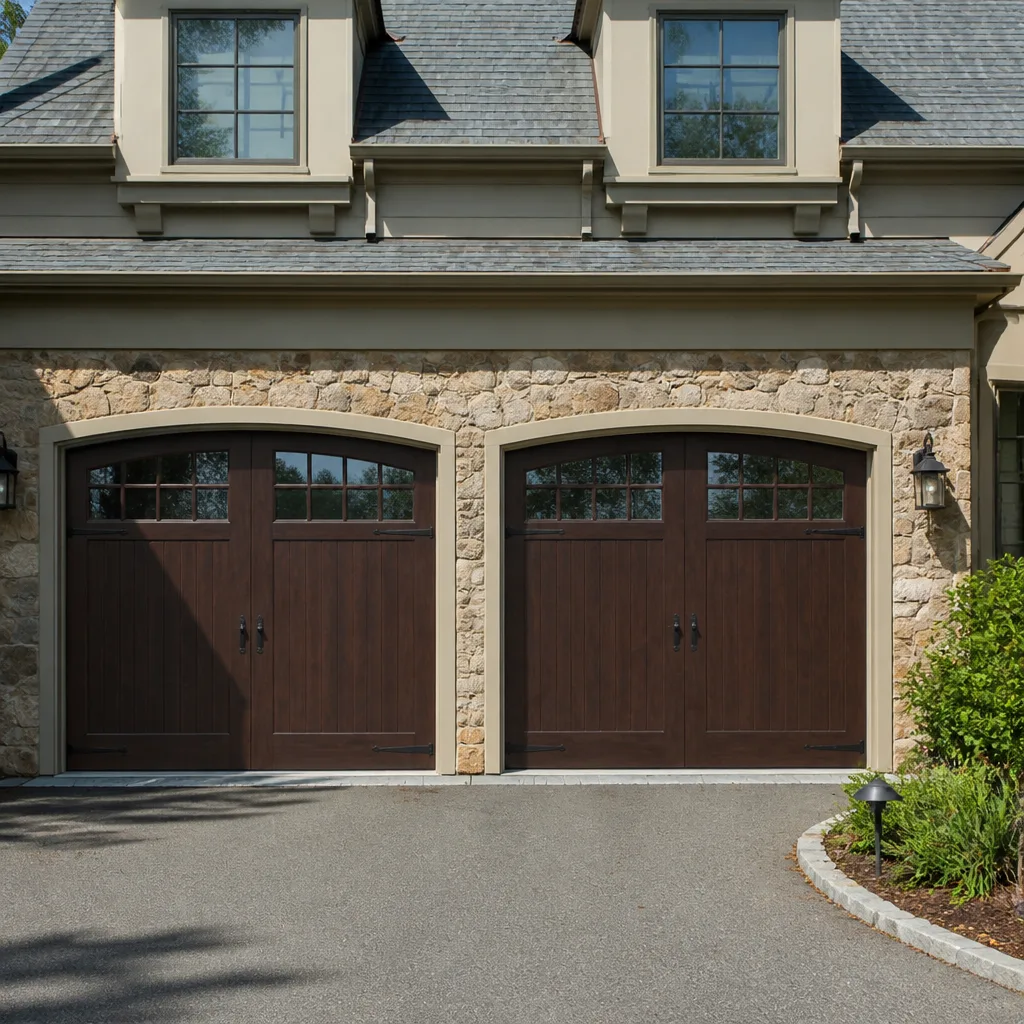 Carriage house
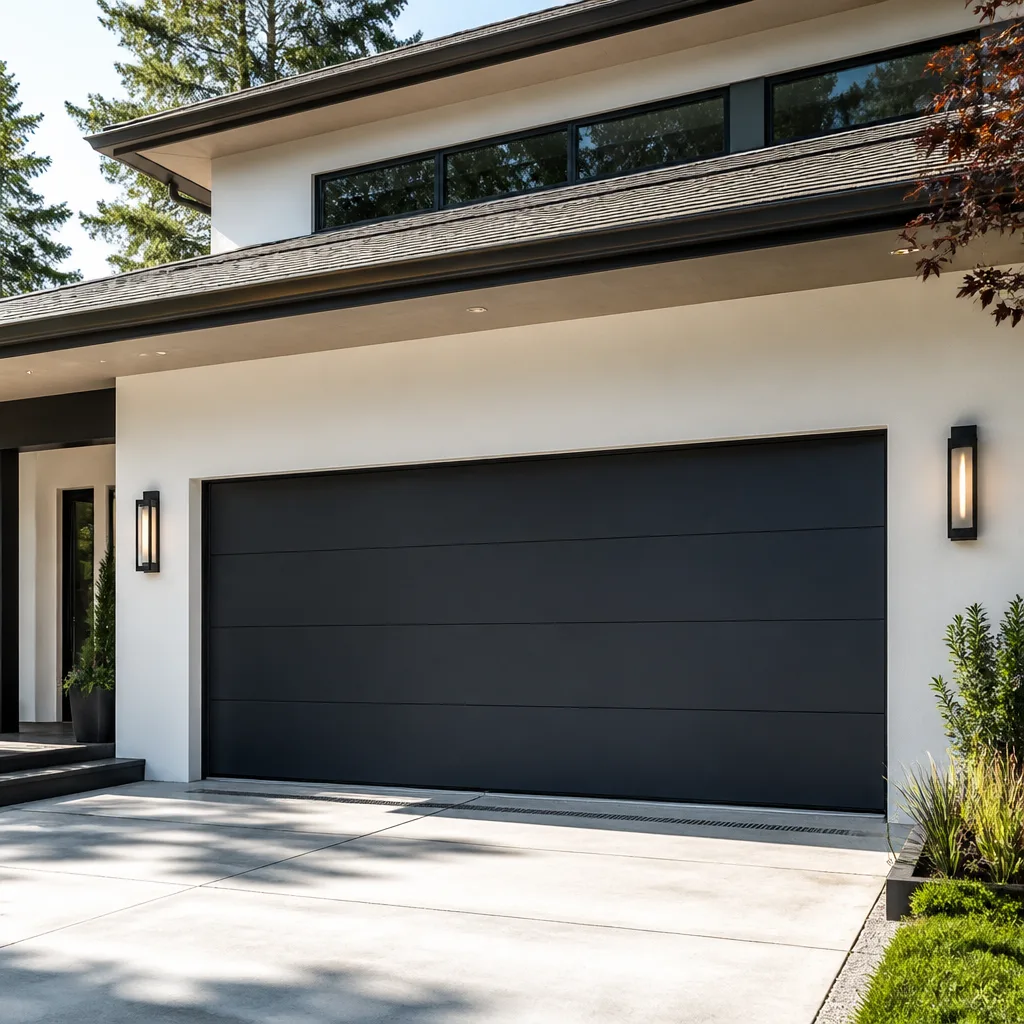 Modern flush
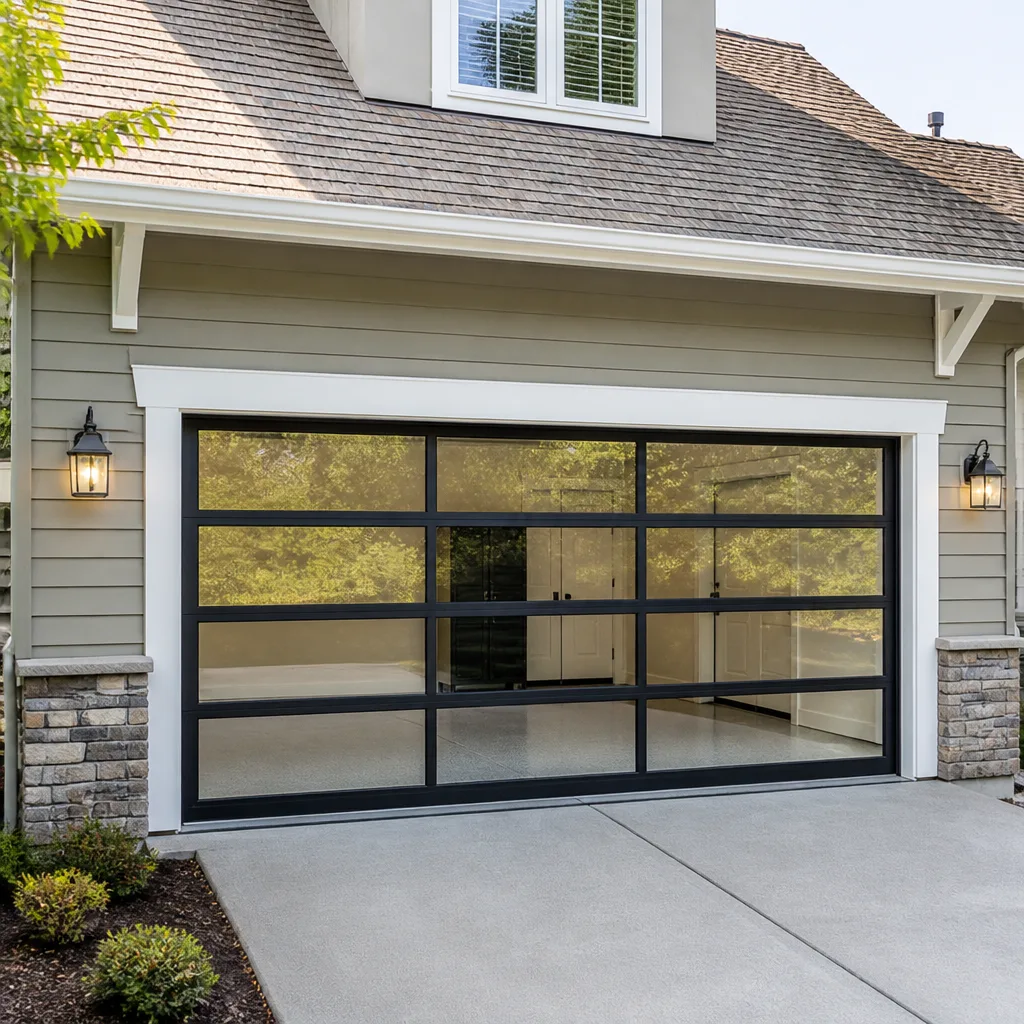 Full-view glass
 LiftMaster openers
 Chamberlain openers
Full 25-point door and opener safety check with every visit - springs, cables, rollers, tracks, and your LiftMaster or Chamberlain opener included
You get a price before we start. It does not change when the pro arrives.
Get your free estimateGarage Door Repair Troubleshooting in Spring Branch: Common Problems and How to Fix Them
A garage door that “won’t open” could be caused by any one of a dozen unrelated problems, and the fix for each one is completely different. That’s the part most homeowners miss. Treating a stripped gear, a snapped spring, a dead photo eye and a bent track as the same failure is how people end up paying for a repair that never touches the actual cause. In this guide, we map the symptoms you’re seeing to the mechanical category behind them, so you know whether you’re looking at a ten-minute adjustment or a job that needs a trained technician with the right tools. You’ll learn what to check, what to leave alone, and when to call for garage door repair in Spring Branch.
Quick Answer
Garage door problems break down into four mechanical categories: the door itself (springs, cables, tracks, rollers, panels), the opener (motor, gears, logic board, sensors), the balance system, and the safety system. Most failures trace back to springs, cables or rollers long before the opener is at fault. A door that won’t open, grinds, or reverses is usually a mechanical issue. Torsion springs and cables under tension carry real injury risk and shouldn’t be serviced by a homeowner. Given the humidity in this part of Texas, hardware in Spring Branch rusts faster than in dry climates, so spring and roller failures show up sooner than you might expect.
Styles & brands we work with
- Raised-panel steel
- Carriage house
- Modern flush
- Full-view glass
- LiftMaster openers
- Chamberlain openers
Table of Contents
- The Four Mechanical Categories Behind Every Garage Door Failure
- The Symptom-to-Cause Diagnostic Tree
- Springs and Cables: The Jobs You Should Never Do Yourself
- Why the Opener Is Usually the Last Place to Look
- How Houston-Area Humidity Changes the Failure Timeline
- What to Have on Hand vs. What to Tell a Technician
- Parts Availability and Brand Fluency in Spring Branch
- When Troubleshooting Stops and Repair Begins
The Four Mechanical Categories Behind Every Garage Door Failure
Every garage door complaint you can name – the door won’t move, it moves halfway, it shakes, it rattles, the opener clicks – lands in one of four buckets. Identifying the bucket first tells you what to check next. Skip this step and you’ll diagnose by guesswork, which usually means replacing a part that wasn’t broken.
Here are the four categories and what lives in each:
- The door and its hardware – springs, cables, rollers, hinges, panels, bottom brackets, the track itself. This is where the majority of real failures live.
- The balance system – the relationship between spring tension and the actual weight of the door. A door out of balance strains everything else.
- The opener – motor, drive gear, belt or chain, logic board, capacitor, travel limits, and for modern units the Wi-Fi module. Openers are usually reacting to a problem, not creating one.
- The safety system – photo eyes, the safety reverse, the pressure sensor built into the opener. When a door goes down and comes right back up, this is where to look.
Once you know the category, narrowing it to a specific part is straightforward. A door that grinds going up but runs smooth coming down sits in the hardware category and points at rollers or hinges. A door that reverses before it touches the floor belongs in the safety category. A door that opens two feet and stops is almost always a balance or spring issue, not the opener. Learning to sort your symptom into a bucket cuts out most of the wrong turns homeowners make in Spring Branch and everywhere else.
We work on all four categories as core services, which means we don’t send door work to one contractor and opener work to another. If you’d rather start with the general service page, our garage door repair overview covers what a visit includes.
The Symptom-to-Cause Diagnostic Tree
The fastest way to sort out a garage door problem is to match what you hear and see to a known pattern. Start at the top and work down. Each symptom below lists the most likely causes in order, from the ones you can check safely to the ones that need a technician.
- Loud bang from the garage, then the door won’t lift. This is almost always a broken torsion spring. Stop. Don’t try to force the door. The spring stores tension even when it looks relaxed.
- Door is crooked, one side higher than the other. A snapped or slackened cable on one side. The door is no longer level and the opener will strain. Do not run the opener on a crooked door.
- Grinding or squealing as the door travels. Dry or seized rollers, or worn hinges. Often fixable with the right lubricant, and worth checking before calling.
- Door goes up partway and stops on its own. Usually spring tension or a worn roller binding in the track. Rarely the opener.
- Opener hums or clicks but the door doesn’t move. A stripped drive gear inside the opener, or a broken spring the opener can’t overcome. Check the door balance first.
- Door closes partway, then reverses. Photo eyes out of alignment, blocked, or the down limit set too high. Look at the sensors first.
- Door shakes hard or the opener runs unevenly. Worn rollers, bent track, or a loose hinge. Address before the opener burns out from the extra strain.
Run through that list in order. Most homeowners in Spring Branch land on the right category within a couple of minutes. Pull the emergency release rope to test a door by hand only when the door is closed and you’re checking balance, and never pull it while the door is up. If the door feels heavy or drops on its own, it’s out of balance and needs a technician rather than a trip to the hardware store.
Springs and Cables: The Jobs You Should Never Do Yourself
Torsion and extension springs, the cables that run alongside them, and the brackets they attach to are the one part of a garage door system with real injury risk. We say this plainly to every homeowner who calls us: a spring holds the full weight of the door even when the door is down and looks relaxed. Releasing that tension incorrectly can send the spring, the winding bars, or the cable whipping with enough force to break bone.
There are two spring systems on residential doors in Spring Branch:
- Torsion springs – mounted horizontally above the door on a metal shaft. Modern doors use one or two. Winding and winding down these springs requires winding bars and specific technique.
- Extension springs – mounted along the horizontal tracks on each side and stretch as the door closes. Older Spring Branch homes still have plenty of these, and they often have a safety cable running through the middle of each spring.
If you don’t know which type you have, look above the door. If you see a metal shaft with coiled springs wrapped around it, it’s torsion. If you see springs running along the side tracks, it’s extension. Either way, the diagnostic step stops at visual inspection. Replacing a spring, adjusting cable tension, or unwinding a torsion spring without the right tools is a job we won’t recommend to anyone. A trained technician sets winding bars, uses the correct wire size and length, and can tell you whether a single spring or a matched pair is the correct replacement.
Spring work is a named specialty for us because it’s the most common serious failure we see and the easiest for an untrained person to mishandle. Our technicians have up to 12 years of experience, which in this trade means handling a lot of torsion jobs. If you suspect a spring is the issue, get a free estimate before anything else. Spring Branch Garage Door Repair handles both torsion and extension spring replacement, and we’ll tell you exactly what the door needs on the visit.
Why the Opener Is Usually the Last Place to Look
Openers get blamed for almost everything. In our experience, most “broken openers” are actually working fine and simply being asked to lift a door the springs can no longer balance. If you replace the opener before fixing the balance, the new unit fails too. That’s how people end up replacing two openers and still having a door that won’t open.
Check the mechanical side first, in this order:
- Balance the door by hand. Disconnect the opener using the emergency release, lift the door to about halfway, and let go. A balanced door holds position. A door that drops means the springs are weak or broken.
- Look at the springs. A broken torsion spring shows a visible gap in the coil. A broken extension spring shows an obvious stretch or dangling length.
- Check the rollers and hinges. Look for cracked nylon wheels, seized bearings, or hinges pulling apart.
- Inspect the track. Look for dents, bends, or a section that’s come loose from the wall.
- Then look at the opener. Only after the door moves freely by hand should you suspect the motor, gear, or logic board.
If the door moves smoothly by hand and the opener still fails to lift it, then the opener is the problem. Common opener failures include a stripped nylon drive gear (older units with a lot of use), a dead capacitor, a locked logic board, or a disconnected safety sensor. Wi-Fi-enabled openers from LiftMaster, Chamberlain, Genie and Craftsman can also fall offline or drop their pairing with the app, which sends people to the phone thinking the opener is broken when it’s a software issue. Our garage door opener repair service handles both legacy analog units and modern smart units from those four brands.
How Houston-Area Humidity Changes the Failure Timeline
Spring Branch sits in a humid, subtropical climate. That single fact changes how fast garage door hardware wears out compared to what most national advice assumes. The problem isn’t the heat – it’s the moisture in the air. Repeated humidity cycles accelerate surface rust on steel springs, hinges, rollers, and the bolts that hold everything together. Rust pits the steel, the pits become stress points, and a spring that might have lasted longer in a drier climate fatigues faster here.
What that means in practice for Spring Branch homeowners:
- Springs fail sooner than the manufacturer’s published lifespan. Surface rust turns into visible pitting long before a spring snaps.
- Rollers seize silently. Nylon rollers crack and steel rollers rust at the bearing. A seized roller drags on the track and strains the opener.
- Hinges and bolts corrode. A rusted hinge is stiffer than a clean one, adding resistance the opener has to overcome.
- The bottom seal and weatherstripping dry out and crack faster. That’s an easy DIY replacement and worth doing to keep moisture and pests out of the garage.
The practical takeaway: don’t wait for a symptom to lubricate. A garage door in Spring Branch benefits from a proper lubricant on springs, hinges, rollers and the torsion shaft at least twice a year, ideally going into the humid season and again after it. Use a garage door specific lubricant, not WD-40 in the classic blue can, which is a solvent rather than a lasting lubricant. Silicone spray on the rollers and a lithium or white-lithium grease on the springs and hinges is a reasonable combination for the typical home. It won’t stop rust entirely, but it slows it.
What to Have on Hand vs. What to Tell a Technician
Some garage door fixes are safe for a homeowner. Some are not. It helps to know which is which before you decide to call or dig in. Here’s the clean split.
Safe to handle yourself:
- Replacing the bottom weather seal or the threshold seal.
- Lubricating springs (visually), hinges, rollers and the torsion shaft.
- Wiping photo eye lenses and realigning sensors that got bumped.
- Replacing a remote battery or reprogramming a remote.
- Tightening loose bolts on the hinges and the door frame, using hand tools only.
- Reconnecting a door to the opener after the emergency release was pulled.
Call a technician:
- Any spring work, torsion or extension, broken or not. Unwinding tension is dangerous.
- Replacing or adjusting cables, bottom brackets, or the drums the cables wind onto.
- Straightening a bent track.
- Any situation where the door has come off the track.
- A door that’s out of balance after you’ve checked it by hand.
- Opener internal repair, like a stripped gear or dead logic board.
When you call, tell us the model and brand of your door and opener if you can see it, then describe the exact symptom. “The door opens two feet and stops” gives us more information than “the door is broken.” Things that help: whether the opener hums or clicks, whether either spring looks broken, whether the door is level, and when the problem started. If you’re in Spring Branch and the door has failed today, call (844) 660-0146. We answer 24/7. Fast dispatch from 7am to 7pm, Sunday through Friday. The estimate is free, and the price is agreed before any work starts.
Parts Availability and Brand Fluency in Spring Branch
Most garage door repairs slow down for one reason: the technician arrives without the part. A roller here, a hinge there, a specific spring wire size, a drive gear for a specific opener model. When the part isn’t on hand, the visit turns into a return trip and the door sits broken for another day. We stock and sell garage door parts directly, which cuts out that third-party order and lets us complete the visit on the same trip when the part is in stock.
It also means we can work on the door and opener already installed on your house rather than trying to steer you toward the brand we prefer. We work on eight of the most widely installed garage door and opener brands in residential homes:
- Openers: LiftMaster, Chamberlain, Genie, Craftsman
- Garage doors: Clopay, Amarr, Wayne Dalton, Raynor
Openers cover both ends of the spectrum. Modern Wi-Fi-enabled units from LiftMaster, Chamberlain, Genie and Craftsman need a different diagnostic approach than legacy analog units from the same brands, and we handle both. On the door side, a Clopay or Amarr steel door has different panel and hardware availability than a Wayne Dalton or Raynor door, and knowing which brand is on your house tells us what parts the visit will need before the technician rolls out.
If you’re weighing a replacement rather than a repair, our garage door installation service covers the full swap, including hauling off the old door, so there’s no separate trip or extra contractor to schedule.
When Troubleshooting Stops and Repair Begins
There’s a point in any troubleshooting where the diagnostic step becomes more trouble than it’s worth. Knowing where that line is saves money and, in the case of springs and cables, prevents injury.
Stop and call a technician when any of these apply:
- The door is off the track, crooked, or hanging at an angle. Forcing it back on can damage the panel or injure you.
- A spring looks broken. Visible gap in a torsion coil or a stretched extension spring means the door is unsupported.
- The door feels heavy when you lift it by hand. That’s a balance problem, and the springs are under tension.
- A cable is loose, damaged, or clearly off its drum. Cables are under tension even when slack.
- The opener has power but won’t move the door after you’ve confirmed the door moves smoothly by hand.
- The door won’t reverse on the safety test. Test the reverse by placing a roll of paper towels in the door’s path and closing it. If the door doesn’t reverse, stop using the door.
- You’ve checked everything twice and ruled out the obvious. At that point the diagnosis is costing more than the repair.
If you get to that point in Spring Branch, we’d rather you call than keep going. The estimate is free and we’ll tell you honestly whether it’s a part, a repair, or a replacement.
Common Mistakes to Avoid
- Blaming the opener first. Nine out of ten “dead opener” calls turn out to be a balance or spring problem. If you replace the opener without fixing the door, you’ll be replacing the opener again soon.
- Using WD-40 as a lubricant. The classic blue can is a solvent, not a lasting lubricant. It’ll clean a squeaky hinge for a week and then leave it drier than before. Use a garage door specific lubricant instead.
- Forcing a crooked door back up. If the door is off the track or hanging at an angle, the opener can bend the panel, snap the cable, or the whole door can come down. Leave it alone.
- Unwinding a torsion spring “just to see.” Torsion springs are under full tension. There’s no safe way to check one by hand. Visual inspection only.
- Waiting on a rusted spring until it snaps. In Spring Branch’s humidity, a pitted spring is close to failure. If you can see visible rust, plan the replacement before the failure, not after.
- Replacing a single spring when the door uses two. Torsion springs on modern doors are set up as a matched pair. Replacing one leaves the other at the same fatigue point, and the door fails again. Replace both together.
- Ignoring the safety reverse. A door that fails the reverse test is a real safety risk. If it doesn’t reverse on a roll of paper towels, stop using the door until it’s fixed.
See the difference
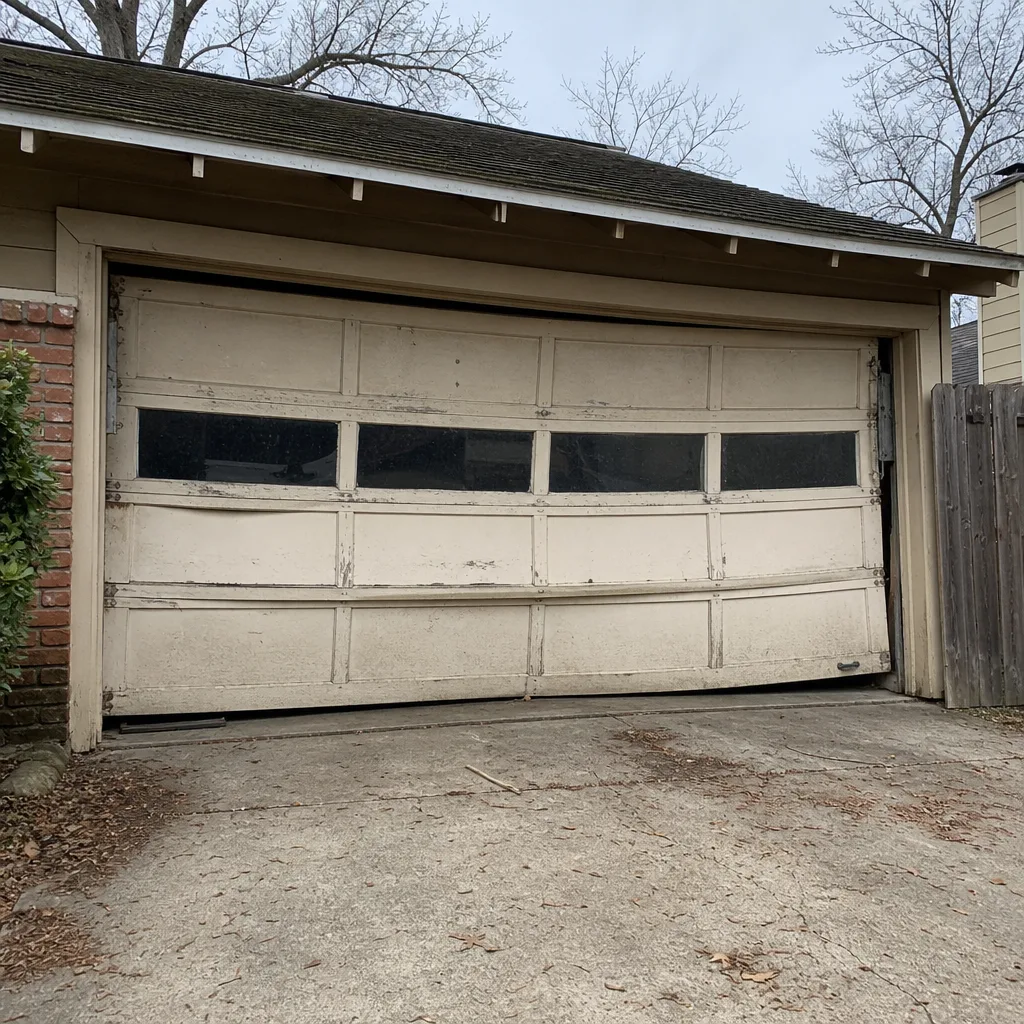 Before
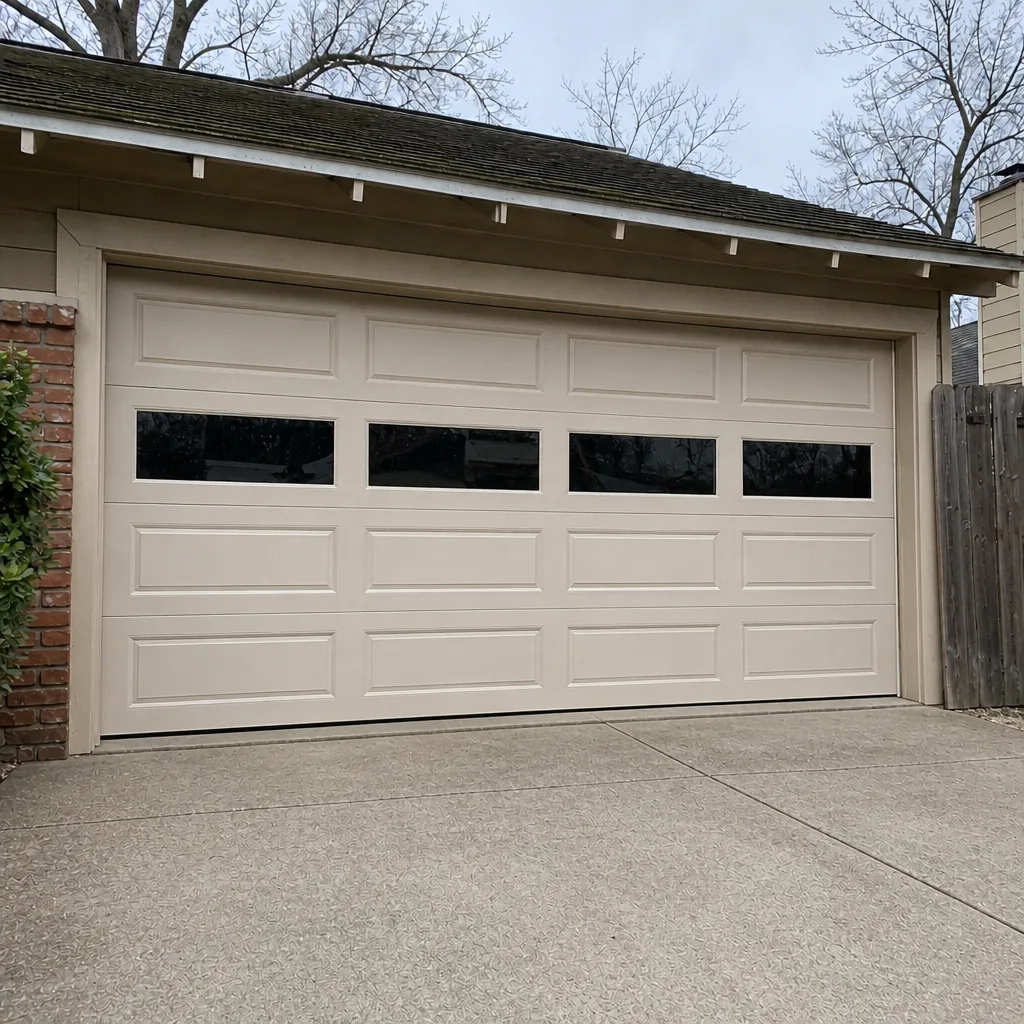 After
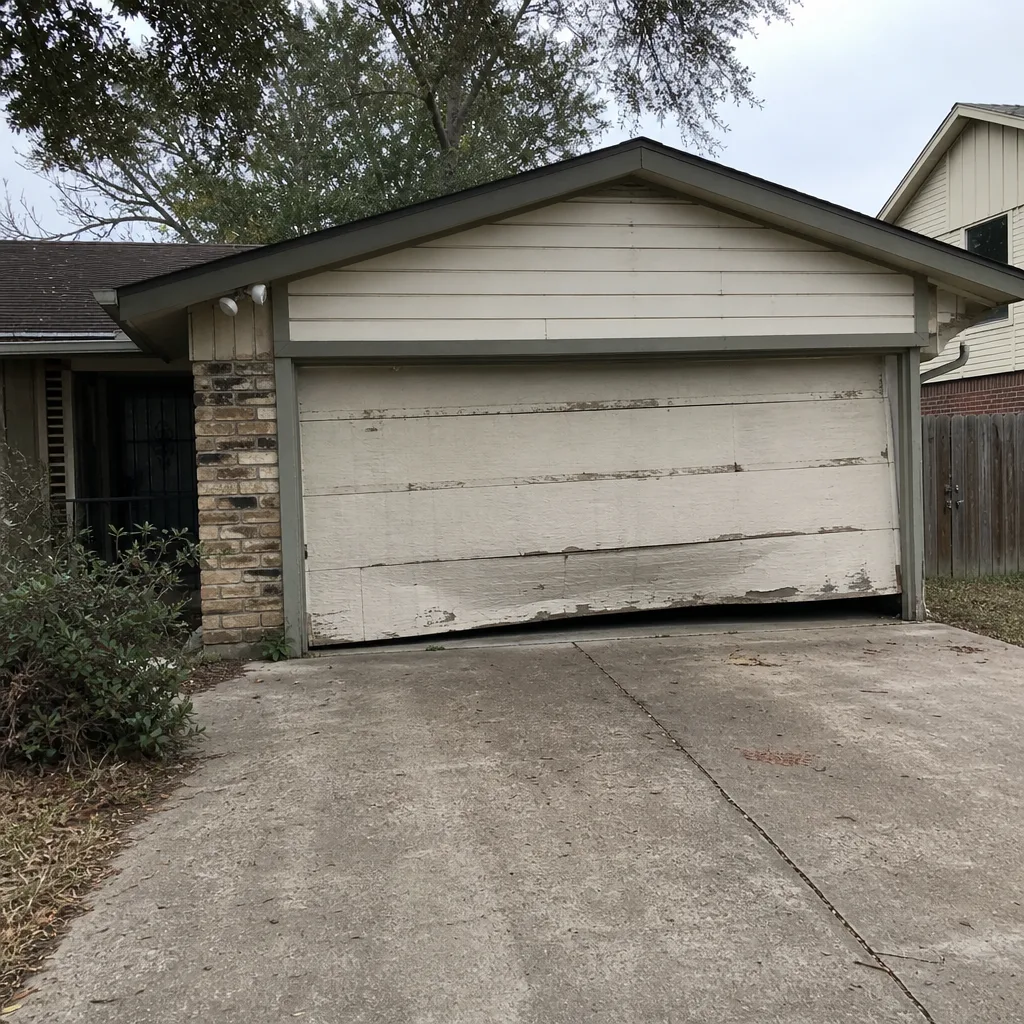 Before
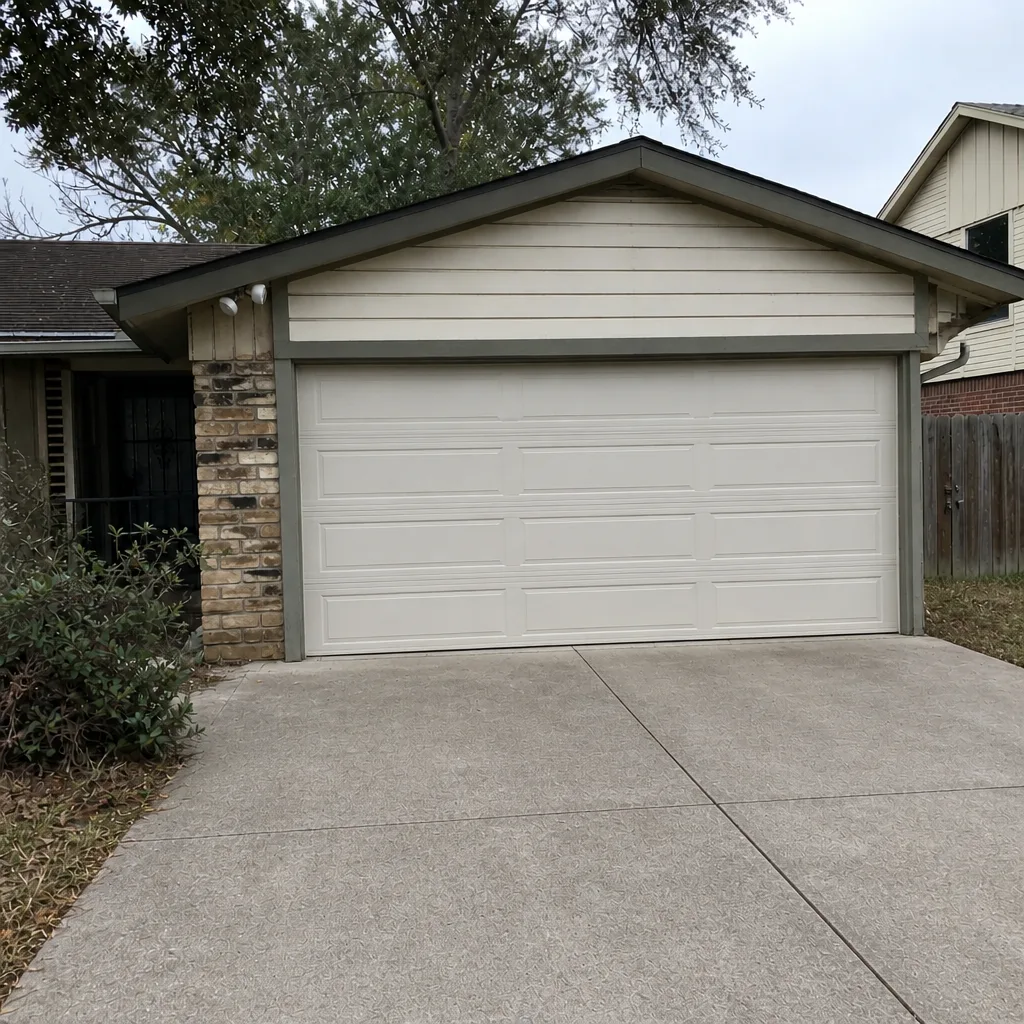 After
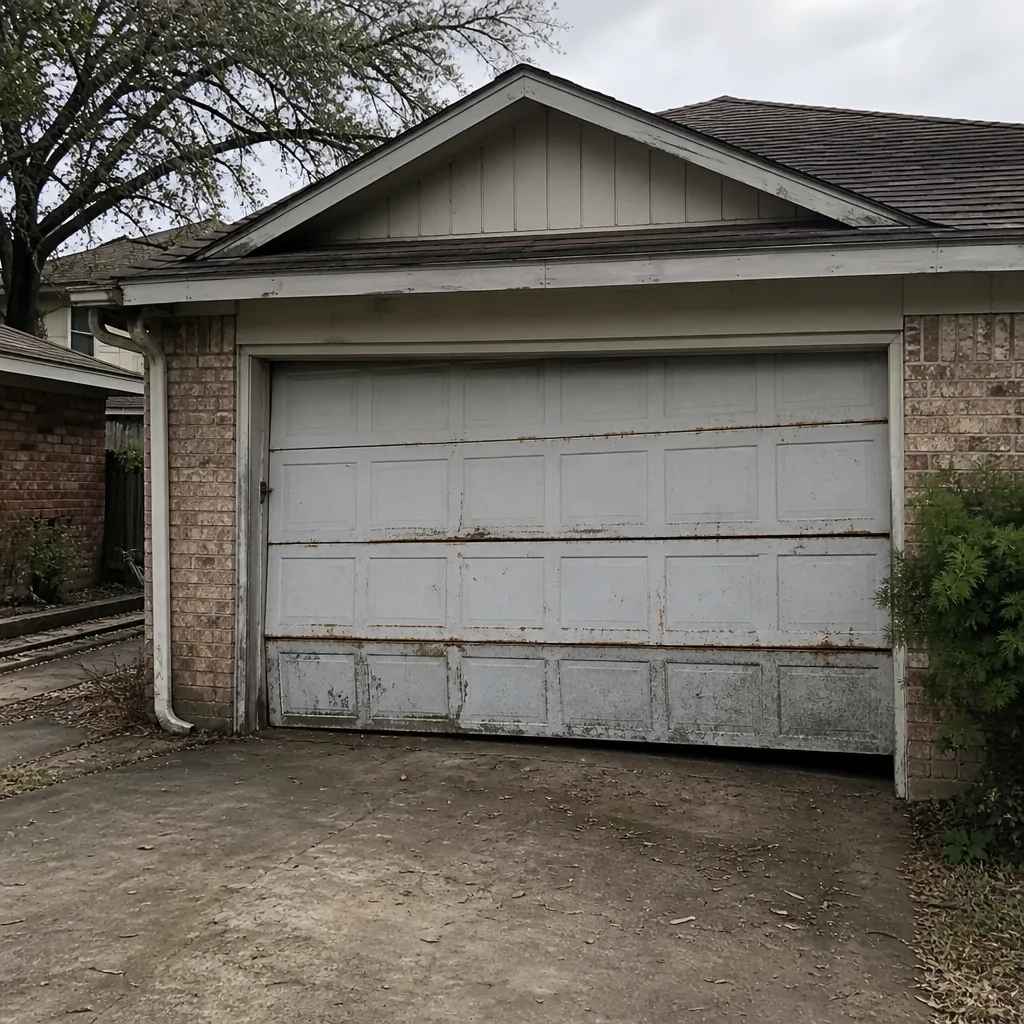 Before
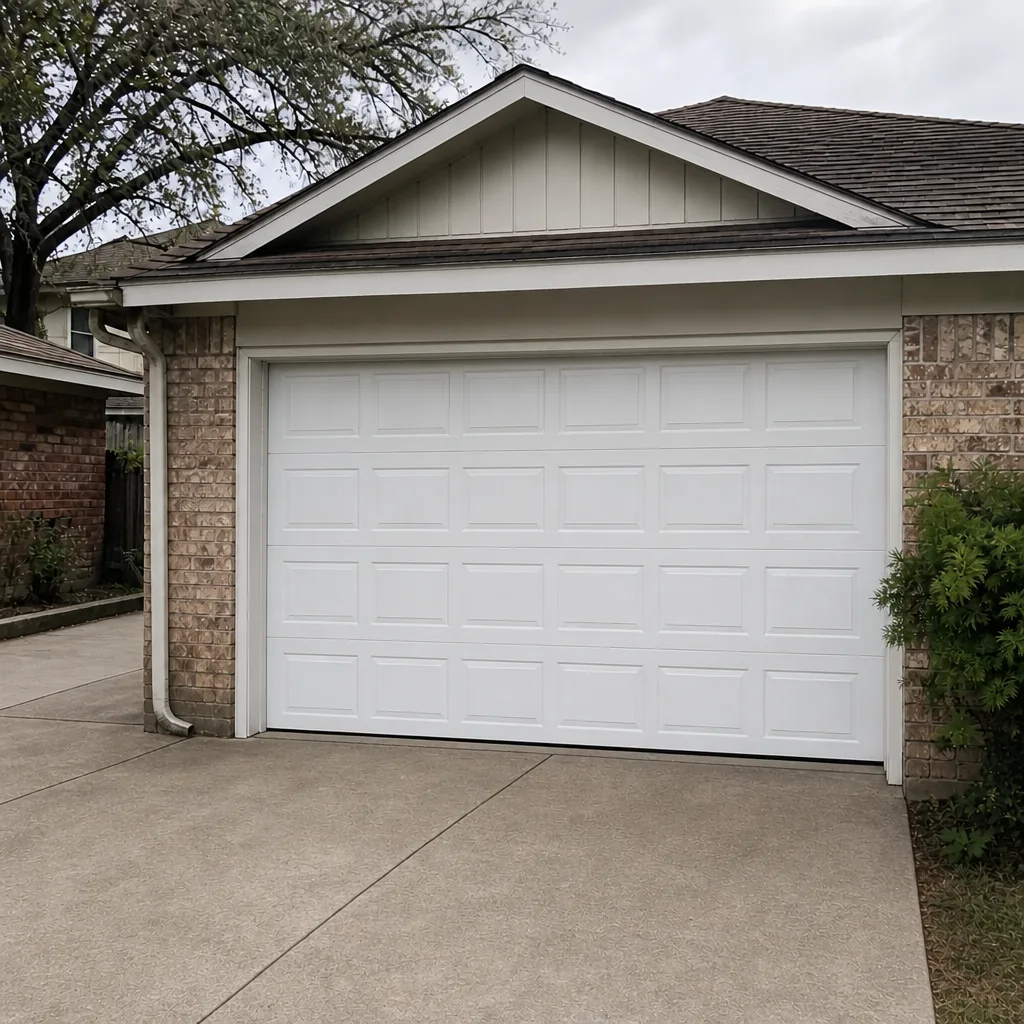 After
When to Call a Professional
Call a professional for anything involving springs, cables, track straightening, or door panels off the frame. Also call when the opener has power but the door won’t move after you’ve confirmed it moves freely by hand, when the door reverses on its own, or when you’ve tested the safety reverse and it fails. If you’re not sure, call and describe it. We’ll tell you what’s likely and whether it’s a same-day issue. Spring Branch Garage Door Repair offers free estimates in Spring Branch. Call (844) 660-0146. We answer 24/7. Fast dispatch from 7am to 7pm, Sunday through Friday. Our technicians have up to 12 years of experience, the local pro is licensed and insured as their state requires, and the price is quoted and agreed before any work starts.
Frequently Asked Questions
Garage door repair in Spring Branch is priced per job based on the specific fault and the parts required, so there’s no single number that applies to every door. A simple roller or lubricant fix is on the low end; spring replacement, panel work, and opener repair run higher because of parts and labor. Call (844) 660-0146 for a free estimate – the price is quoted and agreed before any work starts, so you’ll know the total before we begin.
Yes, same-day service is often available for repairs in Spring Branch when the schedule allows. Call (844) 660-0146. We answer 24/7. Fast dispatch from 7am to 7pm, Sunday through Friday. If your call comes outside dispatch hours, it’s booked into the next opening, Sunday through Friday, 7am to 7pm. Springs, openers and off-track doors are the most common same-day calls.
Yes, a torsion or extension spring holds the full weight of the door and is under heavy tension even when the door looks relaxed. Never try to release, unwind or replace a spring yourself. Call a trained technician. In Spring Branch, our spring repair service handles both torsion and extension springs, and the price is quoted and agreed before any work starts.
Most often it’s a balance problem, a weak or broken spring, or a seized roller binding in the track, not the opener itself. Test the door by hand with the opener disconnected: if it feels heavy or drops, the balance system needs attention. Call (844) 660-0146 for a free estimate and we’ll tell you what’s causing it.
At least twice a year in this climate, going into the humid season and again after. Houston-area humidity accelerates rust on springs, hinges and rollers, and regular lubrication slows it. Use a garage door specific lubricant, not a solvent spray. If you see visible rust pitting on a spring, plan for replacement rather than waiting.
No. The estimate is free, and the price is agreed with you in writing before any work starts. If the diagnosis turns up an additional problem – a worn roller, a seized hinge – you’ll be told before the work proceeds, and you can approve or decline. Call (844) 660-0146 for a free estimate.
Yes. The local pro we connect you with is licensed and insured as their state requires. Our technicians have up to 12 years of experience, and they handle the full scope of garage door work: repair, spring replacement, opener repair, parts, and installation. Call (844) 660-0146 for a free estimate.
The Bottom Line
Most garage door problems sort into four categories: the door and its hardware, the balance system, the opener, and the safety system. Springs, cables, rollers and hinges cause the majority of failures, and the opener is usually reacting to a mechanical problem rather than creating one. Springs and cables under tension are the jobs that need a technician; lubrication, seal replacement, sensor cleanup and remote work are the fixes you can safely do yourself. In Spring Branch, the humidity means rust moves faster than most national guides assume, so check and lubricate the hardware regularly. When the door stops moving or the reverse test fails, call (844) 660-0146 for a free estimate. We answer 24/7. Fast dispatch from 7am to 7pm, Sunday through Friday. The price is quoted and agreed before any work starts.
Written by the team at Spring Branch Garage Door Repair.